


Morgan Silver Dollar Value Guide: Price Factors & Chart
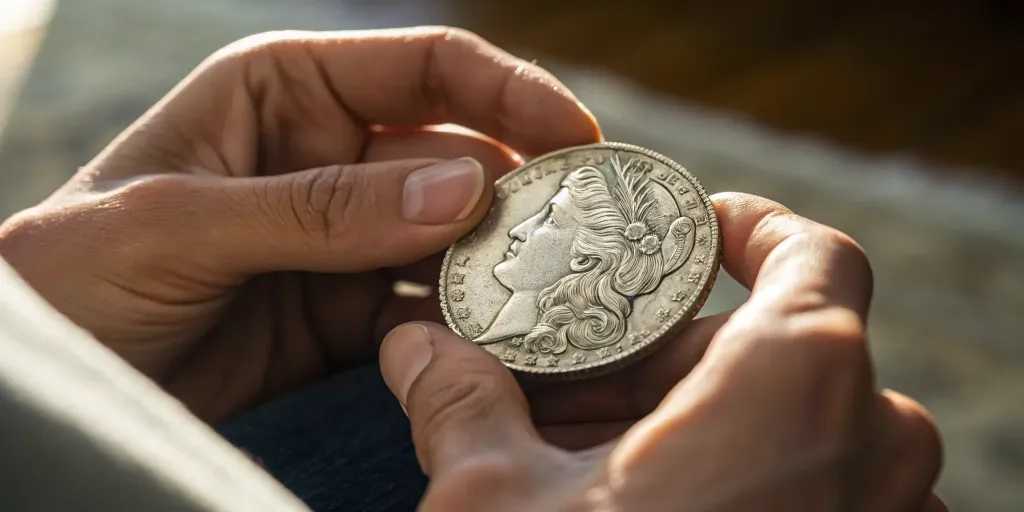
Morgan silver dollars are among the most collected U.S. coins because they combine silver content, American history, and real numismatic variety. The value of Morgan silver dollars depends on more than age: date, mint mark, condition, eye appeal, rarity, and the current silver market all matter. If you want a practical morgan silver dollars value guide, start by identifying the coin correctly, estimating its grade honestly, and comparing it with current market references rather than relying on face value.

How much is a Morgan silver dollar worth?
A Morgan silver dollar is usually worth at least its silver melt value, but collectible examples can be worth far more. Each coin contains about 0.7734 troy ounces of fine silver; with silver quoted around $58.75 per troy ounce on October 8, 2026, the melt value calculation is roughly $45.44 before any collector premium, dealer spread, or selling costs. (bulliondata.com)
That melt figure is only the floor. A common circulated coin may trade close to its metal value plus a premium, while a scarce date in high grade can move into hundreds, thousands, or more. Professional price guides such as PCGS and NGC publish changing coin-market references, but PCGS specifically notes that its listed prices are average dealer asking prices and only a starting point, not a guaranteed sale price. (pcgs.com)
Why Morgan dollars remain so collectible
The U.S. Mint struck Morgan silver dollars from 1878 to 1904 and again in 1921. The coin was designed by Mint Engraver George T. Morgan, with Liberty on the obverse and an eagle with arrows and an olive branch on the reverse. (usmint.gov)
Collectors like the series because it offers many levels of participation. A beginner can own an attractive common-date example without chasing extreme rarity, while an advanced collector can pursue Carson City coins, prooflike surfaces, die varieties, or high-grade registry-quality pieces. That wide appeal helps explain why morgan silver dollar prices can vary so dramatically from one coin to the next.
The main factors that determine morgan silver dollar value
The value of a Morgan silver dollar is built from several layers. Silver content sets a baseline, but collectors usually pay for scarcity, preservation, and demand.
- Date and mint mark: The year and mint facility can make a major difference. Mint marks are usually found on the reverse below the wreath; no mint mark indicates Philadelphia.
- Condition: A heavily worn coin and an uncirculated coin of the same date can sit in completely different price categories.
- Rarity and survival: Mintage matters, but surviving population in collectible grades often matters more.
- Eye appeal: Luster, attractive toning, clean fields, and strong strikes can raise demand.
- Market timing: Silver prices, collector trends, and auction activity can all affect what buyers are willing to pay.
- Authentication: Counterfeits and altered coins exist, so valuable examples may need professional grading.
A simple rule helps: common, worn Morgan dollars often behave partly like silver bullion, while scarce or high-grade Morgan dollars behave more like collectibles.
A practical morgan silver dollar value chart
Use this morgan silver dollar value chart as a broad orientation tool, not a final appraisal. Actual value changes with silver, condition, grading service, buyer demand, and whether you are looking at retail asking prices, auction results, or dealer buy offers.
| Type of Morgan silver dollar | Typical value driver | What to check first |
|---|---|---|
| Common circulated dates | Silver content plus modest collector demand | Wear, damage, and current silver melt value |
| Common uncirculated dates | Grade, luster, bag marks, and eye appeal | Whether the coin is truly Mint State |
| Carson City examples | Popular mint mark and collector demand | Authenticity, grade, and surface quality |
| Scarce dates or varieties | Lower availability in desirable grades | Date, mint mark, variety attribution |
| Prooflike or deep mirror prooflike coins | Reflective fields and contrast | Certification and surface preservation |
| Damaged or cleaned coins | Problems may reduce collector premium | Scratches, polishing, harsh cleaning, bends |
This type of chart is useful because it keeps you from asking only, “How old is it?” Age matters, but it is not the whole answer. A later common date in excellent condition may outperform an older coin with heavy wear or damage.
What makes some Morgan silver dollars worth money?
The Morgan dollars most likely to command strong premiums are coins with a desirable combination of scarcity, grade, originality, and demand. A rare date can disappoint if it is damaged, while a common date can become valuable if it survives in exceptional condition. This is why serious collectors look beyond the date and study the entire coin.
Condition is especially important. Coin grading uses a scale from heavily worn circulated grades through Mint State levels, and small differences at the high end can produce large price differences. For example, a coin with booming luster, minimal contact marks, and a strong strike may attract more attention than a technically similar coin with dull surfaces or distracting marks.
Mint mark also plays a role. Carson City Morgan dollars, marked “CC,” are especially popular with collectors because of their Old West association and strong demand across many dates. Still, not every CC coin has the same value, and not every Philadelphia, New Orleans, San Francisco, or Denver issue should be dismissed. The right date-and-grade combination is what matters.
How to identify your Morgan dollar before pricing it
Before checking morgan silver dollar prices, make sure you have the exact coin. A quick identification process can prevent big mistakes.
- Confirm it is a Morgan dollar. Look for Liberty facing left on the front and an eagle with outstretched wings on the back.
- Read the date clearly. The year appears on the obverse under Liberty.
- Find the mint mark. Check the reverse below the wreath. Possible mint marks include CC, O, S, and D; no mark means Philadelphia. The Denver mint mark appears only on 1921 Morgan dollars.
- Inspect the condition. Note whether the hair above Liberty’s ear, cotton leaves, eagle breast feathers, and high points are worn.
- Look for problems. Cleaning, rim damage, holes, deep scratches, or artificial toning can reduce value.
- Compare multiple sources. Review current price guides, recent sales, and, for better coins, professional opinions.
The goal is not to become a professional grader overnight. It is to avoid treating every Morgan dollar as either “just silver” or “automatically rare.” Most coins fall somewhere in between.
Silver melt value versus collector value
Melt value is the metal value of the silver inside the coin. Collector value is what someone may pay for the coin as a collectible. These numbers can be close for common worn coins, but they can separate dramatically for better dates, high grades, and certified examples.
This distinction matters when selling. A bullion buyer may focus on melt and pay based on silver content. A coin dealer or collector may pay more if the coin has numismatic appeal. On the other hand, if a coin is cleaned, damaged, or very common, its collectible premium may be limited even if it looks old.
Smart ways to research Morgan silver dollar prices
A reliable estimate comes from comparing several market signals. No single source tells the whole story, especially because price guides may show asking prices while completed auctions show what buyers actually paid.
Use this quick checklist:
- Check the current silver spot price and calculate melt value.
- Identify the exact date and mint mark.
- Estimate grade conservatively.
- Compare PCGS and NGC guide information for similar coins.
- Look for recent sold listings, not just active asking prices.
- Separate certified coins from raw coins when comparing.
- Consider professional grading only when the potential value justifies the cost.
If you are using a morgan silver dollar value chart online, pay attention to the date it was updated. Silver moves daily, and collector demand changes over time. A chart can be a helpful map, but the market is the road.
Common mistakes that can reduce value
The biggest mistake is cleaning a coin. Many older silver dollars look dark, toned, or dull, but polishing can leave hairlines and remove original surfaces. Collectors usually prefer original surfaces, even when they show age.
Another mistake is assuming every old silver dollar is rare. Many Morgan dollars were saved in quantity, and some dates are common in attractive grades. The reverse mistake is just as risky: spending a scarce coin as ordinary bullion because it looks worn. When in doubt, identify it carefully before selling.
Finally, avoid pricing a coin from one dramatic online listing. Anyone can ask an unrealistic price. A stronger estimate comes from completed sales, reputable guides, and a realistic assessment of condition.
The takeaway for collectors and sellers
Understanding morgan silver dollar value starts with three questions: What exactly is the coin, what condition is it in, and what is the current market doing? Silver content gives every genuine Morgan dollar a meaningful baseline, but date, mint mark, grade, and originality determine whether it is simply a silver dollar or one of the silver dollars worth money.
If you are building a collection, buy the best quality you can understand and verify. If you are selling, slow down long enough to identify the coin properly and compare current references. A thoughtful approach will give you a clearer answer to “how much is a Morgan silver dollar worth” than any single number ever could.