


1921 Silver Dollar Value: Morgan vs. Peace Differences
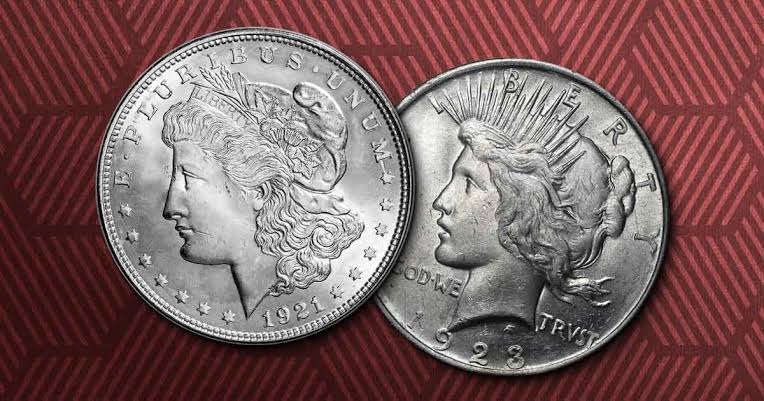
A 1921 silver dollar is more than an old one-dollar coin. It can be either a Morgan Silver Dollar or a Peace Silver Dollar, and that single difference has a major impact on value. This guide explains how to identify your coin, what affects the 1921 silver dollar value, and how to think about selling, buying, or holding one.
What is a 1921 silver dollar worth?
The short answer: it depends on whether you have a 1921 Morgan dollar or a 1921 Peace dollar, plus the coin’s condition, mint mark, originality, and current market demand. Recent NGC guide excerpts show a 1921 Morgan Dollar in circulated condition valued around $56 to $71 as of September 2026, while a 1921 Peace High Relief Dollar in circulated condition was listed around $125 to $525 as of August 2026. Those are guide ranges, not guaranteed offers, and real sale prices can move with eye appeal, grading, dealer inventory, and silver prices. (ngccoin.com)
That is why the question “how much is a 1921 silver dollar worth” needs a little investigation before you attach a price. A worn common 1921 Morgan silver dollar value may be relatively close to typical collector-grade Morgan pricing, while a problem-free 1921 Peace dollar can command a stronger premium because it is the first-year, high-relief issue. If you want the most realistic estimate, identify the type first, then compare your coin to recently sold examples in the same grade.
Morgan vs. Peace: the detail that changes everything
The term “1921 silver dollar” can refer to two different United States coins. The Morgan Silver Dollar was first struck from 1878 to 1904 and then returned for one final year in 1921; the Peace Silver Dollar began in 1921 and continued in later years, with interruptions, through 1935. The U.S. Mint notes that the original Morgan and Peace dollars were both 90% silver and 10% copper, but their designs, mintages, and collector demand are not the same. (usmint.gov)
A 1921 Morgan Silver Dollar shows Liberty wearing a cap and crown on the obverse, with an eagle inside a wreath on the reverse. A 1921 Peace Silver Dollar shows Liberty with a radiant crown, while the reverse features an eagle at rest with the word “PEACE” below. If you are researching the 1921 United States silver dollar value, this identification step is the foundation for everything that follows.

How do you identify which 1921 silver dollar you have?
Look at the design first, then check for a mint mark. The 1921 Morgan may have no mint mark, a “D” for Denver, or an “S” for San Francisco. The 1921 Peace dollar was struck at Philadelphia, so it has no mint mark; it is also known for its high-relief design, meaning the raised details stand higher above the coin’s fields than on later Peace dollars.
On Morgan dollars, the mint mark is on the reverse near the bottom, above the “DO” in “DOLLAR.” No mint mark usually means Philadelphia. On Peace dollars, the lack of a mint mark is normal for 1921, so do not assume “no mint mark” automatically means a common coin.
Use this quick identification checklist:
- Liberty with cap and wreath reverse: 1921 Morgan silver dollar.
- Liberty with radiant crown and “PEACE” on reverse: 1921 Peace silver dollar.
- No mint mark on Morgan: Philadelphia issue.
- “D” on Morgan: Denver issue.
- “S” on Morgan: San Francisco issue.
- No mint mark on 1921 Peace: Philadelphia, high-relief issue.
The main factors behind 1921 silver dollar value
Collectors do not value every coin from the same year equally. Two coins with the same date can sell for very different amounts because one has better surfaces, stronger strike, cleaner fields, or a more desirable holder. This is especially true for large silver dollars, where scratches, polishing, rim bumps, and cleaning are easy to spot.
Condition and grade
Condition is usually the biggest driver of value after type. A heavily worn coin may still be collectible, but sharp hair detail, clean fields, and original luster can raise interest significantly. Coins are often described as circulated, about uncirculated, or mint state, with professional grades using the 1-to-70 Sheldon scale.
Original surfaces
Many older silver dollars were cleaned, polished, or dipped over the decades. A shiny coin is not always a better coin. Collectors often prefer natural toning or original surfaces over an unnaturally bright coin with hairline scratches.
Strike quality
Strike matters, particularly for the 1921 Peace dollar. PCGS explains that the 1921 High Relief Peace Dollar required higher striking pressure and that high-relief dies failed faster than expected, making strike detail an important part of evaluating examples. A well-struck coin with strong central detail can be more desirable than a weakly struck piece in a similar technical grade. (pcgs.com)
Silver content and market movement
Because these coins contain silver, their baseline value is influenced by the metal market. However, collector demand can push prices well above melt value, especially for attractive, scarce, or certified coins. For a simple melt estimate, collectors often multiply the coin’s actual silver content by the current silver spot price, then remember that collectible value may be higher or lower depending on market conditions.
The 1921 Morgan silver dollar value in context
The 1921 Morgan is popular because it is the final year of a beloved series. It is also widely available compared with many earlier Morgan dates, so common circulated pieces are often valued more modestly than scarce dates or high-grade examples. The 1921 Morgan silver dollar value can still rise quickly for coins with strong luster, minimal marks, attractive toning, or premium certified grades.
For many owners, the practical question is not “Is it rare?” but “Is this particular coin above average?” A coin with honest wear may be easy to sell but unlikely to bring a dramatic premium. A sharply struck, uncleaned coin with strong eye appeal may deserve a closer look, especially before selling it as a generic silver dollar.
The 1921 Peace silver dollar value in context
The 1921 Peace dollar is a different story. It is a first-year issue, a one-year high-relief type, and a favorite among collectors building Peace dollar sets or 20th-century type collections. PCGS describes the 1921 High Relief Peace Dollar as a key date in the series and cites a mintage of 1,006,473 pieces, which helps explain why even circulated examples often bring stronger premiums than common-date Peace dollars. (pcgs.com)
When researching the 1921 Peace silver dollar value, pay close attention to surface problems. Cleaning, heavy scratches, rim damage, or altered surfaces can reduce the amount buyers are willing to pay. A certified example may be easier to evaluate, but raw coins can still be desirable when they are original and accurately described.
Should you have a 1921 silver dollar graded?
Professional grading may be worthwhile if the coin appears valuable enough to justify the cost, if authenticity is a concern, or if you plan to sell to serious collectors. It may not be necessary for a common, heavily circulated 1921 Morgan unless there is something special about its condition, variety, or appearance.
Consider grading when:
- You have a 1921 Peace dollar that appears problem-free.
- The coin looks uncirculated with strong luster and limited contact marks.
- You suspect a better variety or unusual feature and need attribution.
- You plan to sell online and want buyer confidence.
- You inherited coins and need a neutral opinion before accepting an offer.
Before submitting, compare the likely value in certified grades with grading, shipping, and insurance costs. If the spread between raw and certified value is small, a trusted local coin dealer’s opinion may be a better first step.
A practical checklist before buying or selling
If you are trying to answer “what is a 1921 silver dollar worth,” slow down and document the coin carefully. Good photos and accurate details help you avoid undervaluing a better coin or overpaying for a problem piece.
Use this checklist:
- Confirm whether it is a Morgan or Peace dollar.
- Check the mint mark, if it is a Morgan.
- Weigh and measure the coin if authenticity is uncertain.
- Look for cleaning, polishing, scratches, dents, or rim damage.
- Compare only against sold prices, not asking prices.
- Match condition as closely as possible when comparing.
- Get more than one opinion before selling a high-grade or 1921 Peace dollar.
- Avoid cleaning the coin, even gently, before appraisal.
Final takeaway
The 1921 silver dollar value starts with identification. A 1921 Morgan and a 1921 Peace dollar share the same date and silver composition, but they occupy different places in the collector market. Once you know the type, mint mark, condition, and originality, you can make a much better estimate of value and decide whether to hold, grade, insure, or sell your coin.