


Current Silver Price Today: Check Live Updates (2026)
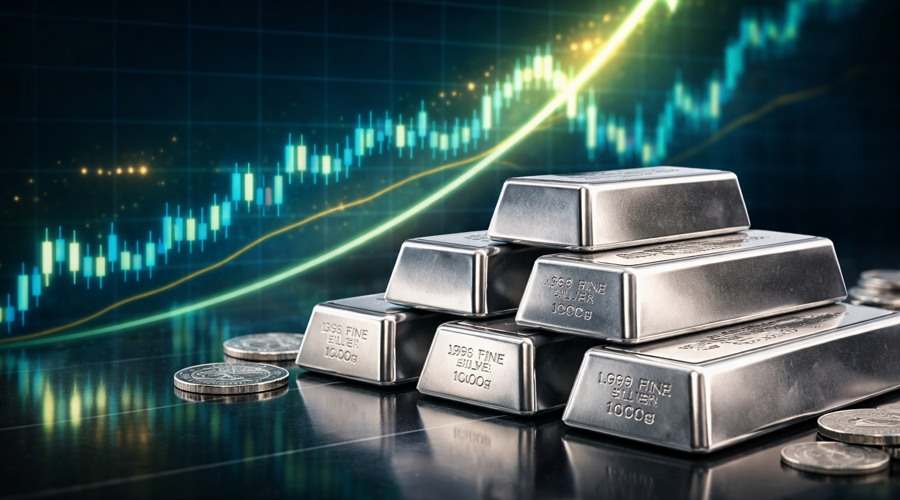
Silver prices are usually quoted as a live spot price for 1 troy ounce silver, then converted into grams, kilos, pounds, coins, bars, or sterling items. As of October 8, 2026, 10:39 a.m., Kitco listed the price of silver today at $59.08 per troy ounce, though live market quotes can move throughout the trading day. This guide explains what that number means, how to estimate melt value, and why the amount you receive or pay may differ from the headline spot price.
How much is an ounce of silver?
An ounce of silver is worth the current spot price when people are talking about a troy ounce, not a regular household ounce. At the spot quote used here, how much is an ounce of silver comes to about $59.08 for one troy ounce of pure silver, while the 1 troy ounce 999 fine silver value is about $59.02 because .999 fine silver is 99.9% pure.
That small purity adjustment matters most when you are pricing bars, rounds, or coins that clearly state “.999 fine silver.” In everyday buying and selling, many people treat a 1 oz .999 round as essentially one ounce of silver, then adjust for dealer premiums, condition, collectibility, or refining costs. The key is to separate metal value from retail price: spot tells you the value of the silver content, while the final price may include fabrication, shipping, dealer spread, and demand.
Spot price is the starting point, not the final price
The silver spot price is the market reference price for unfabricated silver, usually quoted in U.S. dollars per troy ounce. It is the number most calculators, dealers, and charts begin with, but it is not always the exact amount you can buy or sell for. A dealer normally sells above spot and buys below spot so they can cover business costs and market risk.
This is why two people can search the price of silver today and see slightly different numbers. Live quote providers update at different times, and silver trades globally, so small differences are normal. What matters is using a current, reputable quote and applying the same formula consistently when comparing coins, bullion, flatware, jewelry, or scrap.
Quick silver value conversions
The following estimates use the $59.08 per troy ounce spot reference above. These are melt-value estimates before premiums, fees, shipping, taxes, assay charges, or dealer margins.
| Silver amount or type | Approximate melt value |
|---|---|
| 1 troy ounce pure silver | $59.08 |
| 1 troy ounce .999 fine silver | $59.02 |
| Silver price per gram, pure | $1.90 |
| Sterling silver price per gram | $1.76 |
| 1 kilo pure silver | $1,899.47 |
| 1 kilo .999 fine silver | $1,897.57 |
| 1 avoirdupois pound pure silver | $861.58 |
| 1 troy pound pure silver | $708.96 |
These values come from standard precious-metal weight conversions: one troy ounce is about 31.103 grams, and one kilogram contains about 32.1507 troy ounces. At $59.08 per troy ounce, the silver price per gram is about $1.90, and a kilo of pure silver is about $1,899.47.
Understanding troy ounces, grams, kilos, and pounds
Silver is measured in troy ounces because precious metals use the troy weight system. This often confuses people because a troy ounce is heavier than the standard ounce used for groceries, but a troy pound has only 12 troy ounces. If you are checking a coin, round, or bar, look for wording such as “1 troy ounce,” “.999 fine,” or “fine silver.”
For small items, grams are often easier. To estimate value by gram, divide the spot price by 31.103, then multiply by the item’s purity. For larger holdings, kilos are common: how much is a kilo of silver worth depends on spot, but at $59.08 per troy ounce, a kilogram of pure silver is about $1,899.47.
Pounds require extra care. If someone asks how much is a pound of silver worth, they may mean a regular avoirdupois pound, which is about 14.583 troy ounces, or a troy pound, which is exactly 12 troy ounces. At the same spot price, a regular pound of pure silver is about $861.58, while a troy pound is about $708.96.
How much is sterling silver worth?
Sterling silver is worth 92.5% of the current pure silver value by weight, before any adjustment for workmanship, resale demand, or refining costs. Using the same spot quote, the 925 sterling silver price today is about $1.76 per gram, making the sterling silver price per gram lower than pure silver because sterling contains 7.5% other metals.
This means the answer to how much is sterling silver worth depends on three things: total weight, silver purity, and the buyer’s payout rate. A 100-gram sterling item does not contain 100 grams of pure silver. Its silver content is about 92.5 grams, so the melt estimate would be 92.5 multiplied by the pure silver price per gram.
Sterling pieces may also have value beyond metal content. A complete flatware set, signed designer piece, antique object, or desirable jewelry item might sell for more than melt value to the right buyer. Damaged, monogrammed, mismatched, or heavily worn pieces are more likely to be priced close to scrap value.
Simple formulas for estimating silver value
You do not need a complicated calculator to make a practical estimate. Use a fresh spot price, identify the purity, and make sure your weight unit is correct.
- For pure silver by troy ounce: spot price × troy ounces.
- For .999 fine silver: spot price × troy ounces × 0.999.
- For pure silver by gram: spot price ÷ 31.103 × grams.
- For sterling silver: spot price ÷ 31.103 × grams × 0.925.
- For kilos: spot price × 32.1507 × number of kilos.
- For regular pounds: spot price × 14.5833 × number of pounds.
For example, if a sterling bracelet weighs 40 grams, the rough melt estimate is: $59.08 ÷ 31.103 × 40 × 0.925, or about $70.28. That is not necessarily what a buyer will pay, but it gives you a realistic starting point before negotiating.
Why retail silver prices can differ from melt value
Melt value is useful, but it does not tell the whole story. A silver bar, coin, round, tea set, chain, or collectible item has a market context. Buyers and sellers adjust prices based on liquidity, authenticity, demand, and the cost of turning an item into saleable metal.
Common reasons the final price differs from spot include:
- Dealer premium: Bullion coins and bars often sell above spot because of minting, handling, and market demand.
- Buyback spread: A dealer may pay below spot to manage resale and price-movement risk.
- Purity uncertainty: Unmarked or questionable items may require testing before a buyer offers full value.
- Condition and collectibility: Some coins and antique pieces trade above melt; damaged or common items may not.
- Refining and assay costs: Scrap silver may be discounted because it must be processed.
- Local taxes and shipping: The out-the-door purchase price can include costs beyond the silver itself.
This is especially important when comparing bullion to sterling. A 1 oz .999 round is straightforward because the weight and purity are usually stamped on the item. A sterling tray, necklace, or spoon may need weighing, purity confirmation, and a realistic scrap discount.
A practical checklist before buying or selling
Before you make a decision, slow down and verify the basics. Silver is easy to misprice when the unit, purity, or quote time is unclear.
- Check the current spot price from a live source on the day you plan to buy or sell.
- Confirm the unit of weight: troy ounces, grams, kilos, regular pounds, and troy pounds are not interchangeable.
- Identify purity: .999 fine, .925 sterling, coin silver, and plated items have very different values.
- Weigh items accurately after removing non-silver parts if possible, such as stones, handles, or filled bases.
- Separate bullion from collectibles so you do not sell a premium coin or desirable piece as scrap.
- Ask how the payout is calculated if selling to a shop, refiner, or online buyer.
- Compare more than one offer for larger lots, especially sterling flatware or mixed scrap.
If an item is silver-plated, it typically has little to no melt value compared with sterling or fine silver. Look for marks such as “sterling,” “925,” “999,” or “fine silver,” but remember that marks can be misread or faked. When the value is meaningful, testing is worth the extra step.
The main takeaway on today’s silver value
The current silver quote gives you the baseline, but your real-world value depends on purity, weight, and transaction type. Based on a spot reference of $59.08 per troy ounce on October 8, 2026, one gram of pure silver is about $1.90, one gram of sterling is about $1.76, and one kilo of pure silver is about $1,899.47.
Use spot price as your anchor, then adjust for the item in front of you. A stamped bullion round, a sterling bracelet, a kilo bar, and a box of old flatware can all contain silver, but they are not priced the same way. The smartest move is to calculate melt value first, then consider premiums, discounts, and the reason someone is buying the item in the first place.