


Current Worth of 30 Pieces of Silver: A Historical Insight
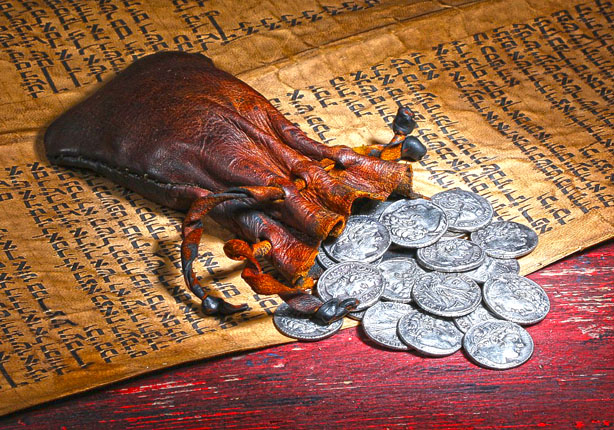
The phrase “thirty pieces of silver” is remembered less as a coin count and more as a symbol of betrayal. Still, many readers naturally wonder what those coins would be worth in modern money. The short answer is that the silver content alone would likely be worth hundreds of U.S. dollars today, while the historical and symbolic value is far greater.
How much is thirty pieces of silver worth today?
If you are asking how much is thirty pieces of silver worth today by silver weight alone, a reasonable modern estimate is roughly $750 to $1,800, depending on what kind of “pieces of silver” you assume. At the current silver spot price of about $59.27 per troy ounce on October 8, 2026, thirty one-ounce silver coins would be worth about $1,778 in melt value, before dealer premiums or collectible value. The better historical estimate, however, often uses shekel-sized silver coins, which would put the value closer to the high hundreds rather than thousands. (metalcharts.org)
That range matters because the Bible does not give us a modern mint description, serial number, or exact purity report. “Pieces of silver” can refer to units of silver money, and many historical discussions connect Judas’s payment with thirty shekels. In Exodus 21:32, thirty shekels of silver appears as compensation connected with the death of a servant, and Matthew 26:15 describes Judas receiving thirty pieces of silver. (biblegateway.com)
Why the answer depends on the coin
The question sounds simple: multiply thirty coins by today’s silver price. The difficulty is that ancient money was not as standardized for modern readers as a stack of U.S. quarters or one-ounce bullion rounds. Coins varied by region, weight, metal purity, and historical period.
When people search for 30 silver coins value today, they may mean one of three different things:
- Melt value: the value of the actual silver content.
- Purchasing-power value: what the money could buy in its original setting.
- Collectible value: what an authentic ancient coin might sell for today.
These are not the same. Melt value is the easiest to estimate because it uses weight and spot price. Purchasing power is harder because ancient wages, food costs, taxes, and social conditions do not convert cleanly into modern dollars. Collectible value is different again; a genuine ancient coin’s price depends on rarity, condition, provenance, and demand, not only silver content.
A practical modern calculation
The most useful way to estimate the value of 30 pieces of silver today is to create a few scenarios. This does not prove exactly what Judas received, but it shows why modern answers vary.
| Assumption | Approximate silver amount | Estimated melt value today |
|---|---|---|
| 30 one-troy-ounce silver coins | 30 troy oz | About $1,778 |
| 30 shekel-sized silver coins | About 12.7–13.3 troy oz fine silver | About $750–$790 |
| 30 smaller silver coins | About 3–4 troy oz | About $180–$240 |
These estimates use silver’s current spot price as a reference point. Spot price means the current market price for a troy ounce of raw precious metal, and silver is normally quoted in U.S. dollars per troy ounce. (help.jmbullion.com)
So, if someone asks how much is 30 silver coins worth today, the cleanest answer is: if each coin were a modern one-ounce silver coin, the melt value would be about $1,778. But if the question is about the biblical thirty pieces of silver, the likely silver-weight answer is probably lower, because ancient shekel-sized coins were not thirty full troy ounces.
The biblical background gives the amount its meaning
The number thirty is not just a financial detail. Matthew’s account says Judas agreed to hand Jesus over for thirty pieces of silver. Older biblical background gives that amount a sharper edge: Exodus 21:32 names thirty shekels of silver in a legal setting involving compensation for a servant. (biblegateway.com)
That connection is why many interpreters see the payment as deliberately insulting. It was not presented as a heroic ransom, royal tribute, or fortune. It was a price associated with low social valuation, which is part of the moral force of the story.
This is also why the phrase has outlived the coins themselves. In everyday speech, “thirty pieces of silver” means the price of selling out a person, principle, or trust. The amount is remembered because it seems so small beside the enormity of the betrayal.
Silver weight, spot price, and “melt value”
For modern readers, melt value is the most concrete number. It asks: if the coins were melted and sold only for metal, what would the silver be worth?
Here is the basic formula:
- Find the silver weight of each coin.
- Multiply by thirty.
- Adjust for purity if the coin is not pure silver.
- Convert grams to troy ounces if needed.
- Multiply by the current silver spot price.
For example, if a shekel-sized coin contained roughly 14 grams of silver before purity adjustment, thirty coins would weigh about 420 grams gross. After adjusting for high but not perfect purity, the fine-silver content could land around 13 troy ounces. At about $59 per troy ounce, that produces an estimate in the neighborhood of the upper hundreds.
This is why a historically informed answer to how much is 30 pieces of silver worth today is usually not the same as pricing thirty modern bullion coins. A modern one-ounce silver round is designed around a troy-ounce bullion standard. An ancient coin belonged to a different monetary world.
The collectible value could be much higher
Melt value is not the same as market value for an ancient artifact. If someone truly owned authentic coins from the relevant period, their price would depend on authentication, preservation, rarity, inscriptions, historical context, and legal provenance. In that case, the thirty pieces of silver worth today could be far above the raw metal value.
That said, it would be misleading to claim a fixed collectible price without evaluating the coins. Ancient coins are not priced like identical modern bullion rounds. Two coins with similar silver weight can have very different values if one is common and worn while another is rare, well-preserved, and fully documented.
For ordinary educational purposes, silver melt value remains the safest estimate. It answers the basic metal question without pretending to appraise museum-grade artifacts.
What the modern number does and does not tell us
Modern dollar conversions are useful, but they can also create false certainty. A number like $760 or $1,778 feels precise, yet it does not fully explain what the payment meant in its own time.
A better way to read the amount is through three lenses:
- Metal value: the silver content gives us a modern baseline.
- Legal and cultural meaning: the amount echoes a low valuation in biblical law.
- Moral symbolism: the phrase represents betrayal for personal gain.
That is why the answer to how much is 30 silver coins worth today can never be only a calculator result. The silver had value, but the story’s power comes from the contrast between the payment and the person betrayed.
Common mistakes when estimating the value
One reason the internet gives different answers is that people often mix methods. A post might calculate thirty modern silver rounds, while another estimates ancient shekels, while another tries to convert wages. Each method can be useful, but only if it is labeled clearly.
Avoid these common mistakes:
- Assuming every “piece” was a one-ounce coin. That is convenient, but not necessarily historical.
- Using today’s coin premiums as if they existed in antiquity. Retail premiums belong to the modern bullion market.
- Treating melt value as purchasing power. Silver weight does not automatically tell us what the money felt like to an ancient person.
- Ignoring purity. Ancient coins could contain high silver content, but purity still matters.
- Claiming one exact answer. The source text gives the amount, not a modern assay report.
These cautions help keep the estimate honest. They also explain why searches for how much is thirty pieces of silver worth today produce a range instead of a single permanent number.
A balanced answer for today’s reader
If you want the simplest modern estimate, say this: thirty pieces of silver would likely be worth several hundred dollars by silver content, and possibly around $750 to $790 if understood as shekel-sized high-silver coins at today’s spot price. If you instead imagine thirty modern one-ounce silver coins, the value would be about $1,778.
Both answers can be mathematically valid, but they answer different questions. The first is more historically sensitive. The second is a straightforward bullion exercise.
The deeper point is that the biblical phrase was never meant to impress readers with a fortune. It has endured because it names the terrible smallness of a betrayal price. The modern silver calculation is interesting, but the moral meaning is the part that still speaks most loudly.