


Valuable Silver Quarters: Worth, Value & Collectible Guide
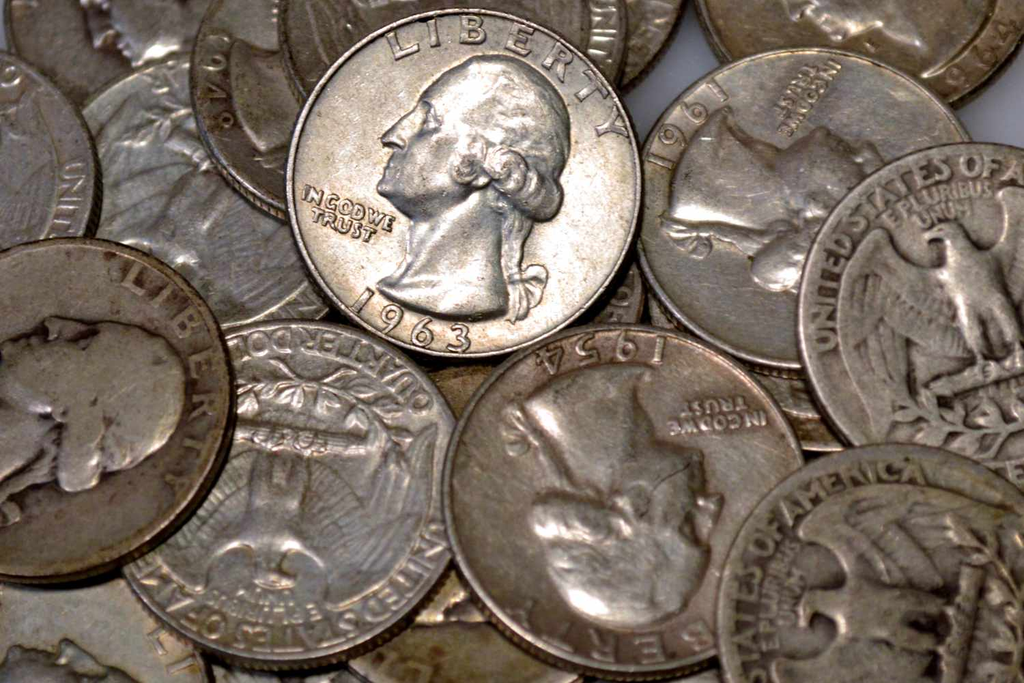
Silver quarters can be worth anywhere from their bullion value to six or even seven figures when rarity, condition, and demand all line up. For most U.S. collectors, the hunt starts with pre-1965 coins: many circulating quarters dated 1964 and earlier were made with 90% silver, while key dates and elite condition examples can rise far above melt value. As of early October 2026, a common 1932–1964 silver Washington quarter had a melt value of roughly $11, but rare-date price guides show certain silver quarters worth thousands, hundreds of thousands, or more. (coinflation.com)
What makes a silver quarter valuable?
A silver quarter becomes valuable when it has more than metal content working in its favor. The biggest drivers are low survival numbers, collector demand, historical importance, mint mark, die variety, eye appeal, and certified grade. That is why a worn common-date Washington quarter may trade near silver value, while a scarce 1901-S Barber quarter or 1827/3 Capped Bust quarter can become a trophy coin.
For practical purposes, “valuable silver quarters” usually fall into three groups: early federal quarters from the 1790s through 1830s, rare Carson City and San Francisco issues from the Liberty Seated and Barber eras, and key-date 20th-century coins such as the 1916 Standing Liberty and 1932-D Washington quarter. Current guides from PCGS and NGC show how dramatic the spread can be, with early-quarter auction records reaching $1.74 million and price-guide levels for some rarities extending deep into six figures. (ngccoin.com)
The top 10 silver quarters worth money
The ranking below focuses on regular-issue U.S. silver quarters that are famous for collector value, not just bullion content. Values are best read as guideposts, because exact market prices depend on grade, certification, originality, and the timing of the sale.
| Rank | Silver quarter | Why collectors chase it | Value perspective |
|---|---|---|---|
| 1 | 1796 Draped Bust Quarter | First-year U.S. quarter and a one-year Small Eagle type | NGC lists certified auction results up to $1.74 million for a PCGS MS66 example. (ngccoin.com) |
| 2 | 1873-CC Liberty Seated Quarter, No Arrows | Classic Carson City rarity with only a handful known | PCGS identifies 5 known and lists guide values from $185,000 in lower listed grade levels to seven figures in higher grades. (pcgs.com) |
| 3 | 1827/3 Capped Bust Quarter, Original | Proof rarity and one of the most legendary early quarters | PCGS lists 9 known and price-guide levels from $200,000 to $650,000, with Cameo examples even higher. (pcgs.com) |
| 4 | 1871-CC Liberty Seated Quarter | Low-survival Carson City issue with strong demand | PCGS guide levels run from $12,500 in lower grades shown to $575,000 in high listed grades. (pcgs.com) |
| 5 | 1823/2 Capped Bust Quarter | Scarce overdate with major early-type appeal | NGC’s early-quarter auction list includes an 1823/2 proof sale at $396,562.50. (ngccoin.com) |
| 6 | 1872-S Liberty Seated Quarter | Tough San Francisco issue, especially in better condition | PCGS lists values from $3,250 in lower grades shown to $125,000 in top listed grades. (pcgs.com) |
| 7 | 1901-S Barber Quarter | The key Barber quarter and rare in any collectible grade | PCGS shows about $2,100 in Poor-1 and up to $550,000 at the highest listed levels. (pcgs.com) |
| 8 | 1916 Standing Liberty Quarter | First-year type coin with strong design and key-date demand | PCGS lists the regular 1916 from $5,250 in Good-4 to $75,000 in MS67, with Full Head examples much higher. (pcgs.com) |
| 9 | 1896-S Barber Quarter | One of the “big three” Barber quarter keys | PCGS shows values from $450 in Poor-1 to $185,000 in the highest listed grade. (pcgs.com) |
| 10 | 1932-D Washington Quarter | The essential key date for the Washington silver quarter series | PCGS lists the 1932-D from $160 in VF25 to $1,100 in MS60 on the viewed grade page, while higher Mint State grades can be more valuable. (pcgs.com) |
Why Washington silver quarter value gets so much attention
Washington quarters are popular because they are familiar, widely collected, and still turn up in inherited jars, old albums, and bulk 90% silver lots. The silver Washington series runs from 1932 through 1964, and most common circulated pieces are primarily tied to melt value. The important exception is the key-date group, especially the 1932-D and 1932-S.
The 1932-D often leads Washington silver quarter value discussions because it combines low mintage, first-year status, and strong album demand. The 1932-S is also important, with PCGS listing it from $125 in VF25 to $425 in MS60 on the same Washington quarter guide page. Common later-date examples, such as many 1940s–1964 quarters, may still be collectible silver coins, but in circulated condition they are usually valued much closer to bullion unless they are unusually high grade, beautifully toned, or a recognized variety. (pcgs.com)
How much is a 90 silver quarter worth?
A 90% silver quarter is worth at least its silver melt value, plus any collectible premium for rarity or condition. Most standard U.S. silver quarters from 1932–1964 weigh 6.25 grams and are 90% silver, and melt calculators commonly use about 0.1808 troy ounce of silver per coin. In early October 2026, Coinflation showed a 1932–1964 Washington silver quarter melt value of about $11.10, so that is a useful floor for common-date circulated coins. (coinflation.com)
Here is the simple way to think about silver quarter value:
- Common circulated 1932–1964 Washington quarter: usually tracks silver melt closely.
- Key-date Washington quarter: can be worth many times melt, especially 1932-D and 1932-S.
- Barber, Standing Liberty, and Seated Liberty keys: value depends heavily on date, mint mark, and grade.
- Early Bust quarters: often need professional authentication because even low-grade examples can be expensive.
- Damaged or cleaned coins: may still be valuable, but usually trade below problem-free certified examples.
Key details to check before selling
Before you decide what a silver quarter is worth, slow down and identify it carefully. A small mint mark or faint overdate can change the entire value category. This matters most for coins that look old, heavily worn, or unusually sharp for their age.
Use this checklist:
- Read the date clearly. Separate pre-1965 silver issues from modern clad quarters first.
- Find the mint mark. Look for D, S, O, or CC depending on the series and date.
- Identify the design type. Draped Bust, Capped Bust, Seated Liberty, Barber, Standing Liberty, and Washington quarters have different value patterns.
- Check for key dates. Dates such as 1796, 1827/3, 1873-CC No Arrows, 1901-S, 1916, and 1932-D deserve extra research.
- Look for problems. Cleaning, scratches, holes, bends, and environmental damage can reduce the premium.
- Consider certification. If a coin appears to be a major rarity, authentication by a respected grading service can protect both buyer and seller.
Condition can change everything
Grade is often the difference between a coin that is “nice” and a coin that is genuinely rare. For example, the same issue can trade at a modest premium in low circulated condition but command a major price if it is certified Mint State, has strong strike detail, or carries a desirable designation such as Full Head on Standing Liberty quarters. PCGS price tables for the 1916 Standing Liberty quarter illustrate that spread clearly, with regular-grade values rising sharply by grade and Full Head examples listed higher still. (pcgs.com)
The same principle applies across the top 10. A 1901-S Barber quarter is valuable even when worn, but the market changes dramatically for attractive certified examples. Early quarters also bring authentication concerns because counterfeits, altered dates, and repaired coins exist; if a supposed rarity appears in a raw collection, treat it carefully and avoid cleaning it.
The practical takeaway
The most valuable silver quarters are not valuable simply because they contain silver. Their real premiums come from scarcity, history, grade, and collector demand. Start by separating common 90% silver coins from key dates, then verify mint marks and condition before making assumptions.
If you find a 1932-D Washington quarter, a 1916 Standing Liberty quarter, a 1901-S Barber quarter, or any early Bust or Carson City silver quarter, do not sell it as ordinary silver. Check multiple current guides, compare certified auction results, and consider professional grading before you decide on a price.