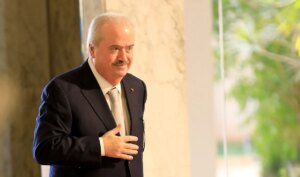
Member of the “Loyalty to the Resistance” bloc, MP Hussein Jishi, considered that the proposal to limit arms in light of the continued Israeli military presence and attacks on Lebanon falls within the framework of an “existential conspiracy” against the Lebanese people, stressing that “the resistance will not allow this, no matter how heavy the sacrifices are.”
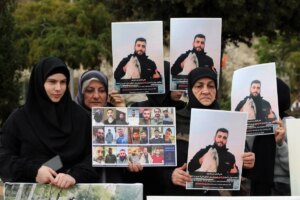
Jishi’s words came during a tribute ceremony held by Hezbollah for the martyr Muhammad Ali Baydoun, “Abu Ghazi,” in the town of Shehabiya, in the presence of members of the leadership of the first Jabal Amel region, families of the martyrs, figures, figures, religious scholars, and crowds of people, according to what was reported by the National News Agency. Jishi delivered his speech after reciting verses from the Holy Quran.
Jishi spoke of the great harms resulting from the framework agreement, warning of the danger of approaching the conflict with Israel, which he described as “existential and ideological,” all the way to linking the presence of the Israeli army in Lebanese territory, which he considered legally condemnable, to the issue of weapons that the current authority classifies as illegal.
He believed that the agreement encouraged attacks on Lebanon, which he said began in 1948, coinciding with the establishment of Israel, which he described as a “temporary entity.” He recalled the Houla massacre in 1948 and the Abbasiya Mosque massacre in 1978, referring to what he described as declared Israeli ambitions in Lebanon, and citing statements he attributed to Benjamin Netanyahu, in which he said more than once that he was on a “spiritual mission” to create “Greater Israel” that includes all of Lebanon.
In presenting his objections, Jishi considered that the framework agreement goes beyond the Armistice Agreement with Israel in 1949, and the Arab initiative to end hostility with it, which emerged from the Arab Summit in Beirut in 2002. He also saw that it goes beyond the Taif Agreement, which he said confirms hostility to Israel and allows Lebanon to use all means to remove the Israeli army from its territory.
He added that the agreement goes beyond international law, which he said criminalizes any country’s control of the territory of another country by force, stressing that Israel has no connection to the weapons present in Lebanon. He considered that direct communication with it violated the Lebanese law issued in 1955, which he said criminalized all forms of communication with Israel.
Jishi pointed out that the damage also includes obstructing Lebanon’s right to sue Israel for the crimes it committed against the Lebanese, including killing, demolishing homes, and destroying livelihoods and the economy, in addition to granting Israel and the United States the right to evaluate the army’s performance in implementing what is required of it in the experimental areas, imposing measures in towns that the Israeli army did not originally enter, such as Faron, Ghandouriyah, and Srifa, and preventing the people from returning to their homes.
Regarding the indirect damages, he spoke of a sharp division among the Lebanese, saying that most of those concerned in Lebanon expressed their opposition to the framework agreement. He considered that the agreement legitimizes the Israeli military presence, noting that Netanyahu thanked the Lebanese government more than once for that.
Speaking about sovereignty, Jishi stressed that “sovereignty is an indivisible whole,” reminding President Joseph Aoun and Prime Minister Nawaf Salam that nations are built by adhering to unity between institutions and the people, and by solidarity in confronting the external enemy. He said that the authority does not have the right to seek support from abroad against what he described as the majority of the people who support resistance to Israel and want to live in dignity.
He believed that the authority, which he described as incapable of protecting the Lebanese people and their livelihoods, has no right to criminalize the resistance in light of the continued killing, demolition, destruction and bombings on a daily basis. He accused it of sometimes being content with media denunciation and watching the killing of children, women, and the elderly without taking a practical stance, while continuing direct negotiations, which he described as “futile and absurd,” considering that they constitute a cover for Israeli crimes against the Lebanese.
Jishi addressed the President of the Republic, the Prime Minister, and some Lebanese, whom he described as followers of the American-Israeli project, stressing that sovereignty begins with liberating the land and removing the Israeli army from it, deterring attacks, protecting the people and their livelihoods, and arming the national army with sufficient capabilities and giving it the political decision to confront Israel.
He stressed that taking refuge by restricting weapons in light of the continued Israeli military presence and attacks falls, as he put it, within the framework of “the existential conspiracy against the proud, resistant people of Lebanon,” stressing that “the resistance will not allow this, no matter how heavy the sacrifices are,” concluding by saying: “And God has men if they will.”