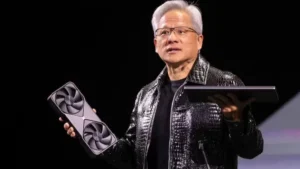


Chinese companies working in the field of artificial intelligence are seeking to rent computing capabilities based on Nvidia processors in data centers outside China. The move comes amid growing concerns that a scandal involving the company’s CEO, Jensen Huang, could push authorities in Washington to tighten restrictions on the remote use of these advanced processors.
These efforts highlight the Chinese technology sector’s concern about the possibility of closing a major loophole in US export controls. Washington imposes strict restrictions on exports of the latest artificial intelligence chips from NVIDIA to China, with the aim of maintaining American superiority in this vital sector, but Chinese companies have remained able to access these processors remotely by renting computing power outside the country.
Three informed sources, who requested to remain anonymous due to the sensitivity of the issue, reported that one of the major Chinese cloud computing companies had internally discussed plans to obtain additional capacity from NVIDIA chips abroad, while other companies contacted data center operators to reserve similar capacity. Two sources added that smaller laboratories specializing in artificial intelligence are considering similar steps, including contacting major providers of rented computing services in the Southeast Asia region.
These companies fear that the case related to Jensen Huang will give additional political momentum to a US bill known as the “Remote Access Security Act,” which gives the Department of Commerce the authority to regulate access via cloud computing to technologies subject to restrictions. The US House of Representatives approved this project last January by a majority of 369 votes to 22, and it is currently awaiting possible approval by the Senate.
NVIDIA’s advanced processors are an essential foundation for training and running large artificial intelligence models that underpin chatbots and other generative artificial intelligence products. Any potential restriction of access to this processing via external cloud services would complicate Chinese developers’ efforts to obtain advanced computing capabilities independent of the direct import of chips.
It is reported that Jensen Huang had admitted to cheating on his wife. In the same context, the New York Times indicated that the woman with whom he had a relationship was Alice Huang, a former executive at the Singapore-based cloud computing company Megaspeed, noting that the US authorities concluded that she was working as a Chinese intelligence agent.
The post A Chinese trick to circumvent Washington’s sanctions and obtain NVIDIA processors amid the espionage crisis appeared first on the Lebanon Today website.