At a very sensitive time, while Ukraine was recording a series of military and diplomatic successes, an intense political and military conflict erupted within its leadership, after the dismissed Minister of Defense, Mykhailo Fedorov, broke his silence, directing unprecedented public criticism to the senior leadership of the army and its commander, and provoking a crisis that threatens the country’s unity from within.
In a report published by journalist Eli Leon, in the Israeli newspaper “Maariv”, Fedorov held an extraordinary press conference inside an underground parking lot in Kiev, during which he attacked the leadership of the Ukrainian army and the Commander-in-Chief of the Armed Forces, General Oleksandr Sirsky.
According to a report by the New York Times, the explosion at the top of the Ukrainian leadership constitutes the most serious leadership crisis since the dismissal of former Chief of Staff Valery Zaloghny in 2024.
Fedorov is considered one of the most prominent faces of the young generation within the Ukrainian leadership, and his name has also been linked to the leadership of the revolution witnessed by the drone war in the country.
The dismissed minister accused General Sersky of strategic shortsightedness and obstructing the progress of young leaders who adopt innovative military methods.
Fedorov said that the decision-making process within the army is currently based on personal loyalty to veteran generals, rather than on data coming from the battlefield.
He revealed that, during his tenure, he worked to eradicate widespread corruption in defense procurement deals, which, according to his account, led to the emergence of his opponents and enemies within the institution.
The exposure of the internal confrontation came at a clearly ironic time, a few weeks after Ukraine recorded a number of remarkable achievements.
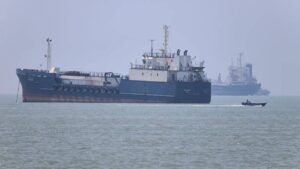
These achievements included stabilizing the front line using advanced drone tactics, targeting 116 ships in the Black Sea and the Sea of Azov, in addition to guaranteeing a loan worth 90 billion euros from the European Union.
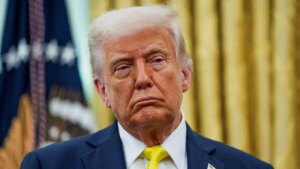
Last week, during a meeting held in the Turkish capital, Ankara, US President Donald Trump praised Ukrainian President Volodymyr Zelensky’s management of the war.
Trump also proposed a path to transport critical interceptor missiles that Ukraine urgently needs.
But behind the scenes, the disagreement between Fedorov’s drone strategy and Sirsky’s traditional military approach has reached a boiling point.
Zelensky, who chose to dismiss Fedorov, explained in an official statement that he had to choose one of the two sides, with the aim of allowing the leadership to continue its work in preparation for future negotiations.
Meanwhile, the repercussions of the crisis began to extend from decision-making centers to the streets of Kiev and the ranks of the army.
One of the parks of the Ukrainian capital witnessed a rare demonstration in support of Fedorov, an indication that the dispute is no longer confined within the military and political leadership.
Simultaneously, senior officers announced their resignations or issued public positions in support of the dismissed Minister of Defense.
Among them were the Deputy Commander of the Air Force, Colonel Pablo Yelizarov, and the Commander of the Joint Forces, General Mykhailo Drabati.
In light of the escalation of the crisis, the Ukrainian Parliament delayed the vote on appointing a new Minister of Defense.
In return, Zelensky offered the position to General Yevhen Khumra, head of the domestic intelligence agency.
The New York Times report quoted a warning issued by political analyst Volodymyr Yermolenko, in which he summarized the seriousness of the crisis to the security of the Ukrainian state.
“Ukraine’s biggest enemy is internal division,” Yermolenko said. “Our history has taught us that this can be fatal.”
Thus, Kiev finds itself facing a very dangerous equation: increasing successes in confronting its opponents abroad, matched by an internal division that may turn into a loophole that threatens what it has achieved on the battlefields and diplomacy.