“Lebanon Debate” – Samar Yamout
With the extension of the truce between Israel and Hezbollah for an additional 45 days, the question returns again as to whether Lebanon has a real opportunity to establish a long-term ceasefire, or whether what is happening is nothing more than an extension of the reality of controlled clashes within certain limits. Is the latest truce different from the two that preceded it, with the continuation of Israeli raids and military operations in the south?
In light of the talk about American pressure and communications to establish a broader truce, questions arise about the ability of this truce to hold, especially since the United States, according to observers, is moving between giving Israel a military margin and not pushing it towards a comprehensive escalation, and between trying to provide political gains to the Lebanese state to keep the negotiation process in place.
Field and political realities raise a basic question: What are the actual obstacles to establishing a long-term truce, and does “Israeli freedom of action” inside Lebanon constitute the most prominent knot, at a time when the party refuses to return to the stage of assassinations and open raids that preceded the truce, while Israel links any final cessation of operations to the issue of “Hezbollah’s” weapons and regional developments linked to Iran?
In this context, the military and strategic expert, Brigadier General Hassan Jouni, considered that “the extended truce is practically an extension of the reality of the firing, the scope of which has been controlled and not a complete cessation,” explaining that the clash between Israel and “Hezbollah” has become relatively confined to southern Lebanon, with the “initial exclusion” of Beirut, the southern suburbs, and the Bekaa, although Israel “reserves the right to attack targets in the suburbs whenever it sees that there is a threat,” according to its own interpretation. For the American document.
In an interview with “Lebanon Debate,” Johnny pointed out that the reality on the ground that has existed since the announcement of the ceasefire is the same as the one that was extended for an additional 45 days, without any fundamental amendment to the terms, considering that “what we are witnessing is an open clash and fighting within the scope of southern Lebanon, from southern Sidon to the border.”
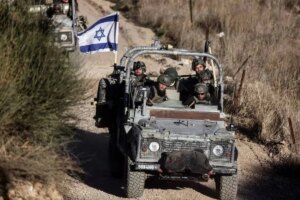
Military operations take the form of “intense Israeli air attacks and limited ground operations, matched by Hezbollah with limited but effective operations, especially through assault drones and explosive devices that cause losses to the Israeli army.” Johnny points out that the party “imposed a relatively limited but existing equation of attrition,” while the Israeli army continues “widespread, painful, and pressing operations of destruction at an increasing pace.”
The United States cannot be considered a neutral mediator, but rather a partner of Israel in the ongoing war in the region against Iran, and in the opinion of the military expert, Washington is trying to balance “between giving Israel a margin of movement and not completely restricting it, and offering some gains to the Lebanese state with the aim of convincing the Lebanese interior of the feasibility of negotiations.” He stressed that any real settlement remains linked to regional developments, especially to the relationship between Iran and the United States, noting that “the crisis-ridden Lebanese reality will remain awaiting the clarity of the image of confrontation or understanding between Washington.” And Tehran, because this has a direct impact on Hezbollah.
In the file of mutual conditions, Johnny stressed that “there are no direct negotiations or messages exchanged between Israel and Hezbollah,” explaining that the party considers any action against the Israeli army an “act of resistance” as long as the Israeli army is present inside Lebanese territory, while Israel considers that it will continue its operations until “Hezbollah is disarmed” in one way or another.
Johnny believed that the main problem currently is the Israeli freedom of action, indicating that Hezbollah may stop its operations if Israel stops its military operations completely, but it refuses to return to the period before March 2, when Israel was carrying out assassinations and raids continuously. Johnny concluded by stressing that “the United States is the only party truly capable of controlling the pace of the conflict in Lebanon,” considering that “diplomatic pressure could be sufficient to prevent escalation if Washington seriously applies it to Israel.”
Based on these facts, all scenarios remain open, in light of the fragility of the current truce and its connection to regional balances that go beyond the Lebanese arena. The possibility of the Israeli escalation returning to what it was before the extension of the truce, or even to more extensive levels since the beginning of the war, remains at any moment.