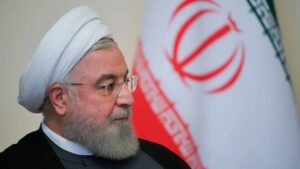
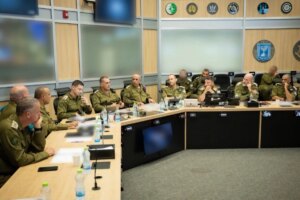
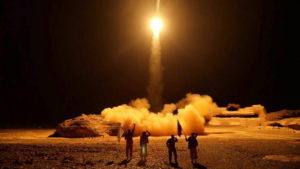
The Speaker of the Islamic Shura Council, Muhammad Baqir Qalibaf, confirmed that Iran has moved to a new stage in the rules of engagement, declaring the end of what he described as the stage of “proportionate responses,” and stressing that the recent military operations against the aggressors’ bases are only the beginning of this stage.
IRNA reported that Ghalibaf said, in a speech before the Islamic Shura Council, that any violation of Iran’s national interests and security would henceforth be met with “faster, tougher and harsher” responses.
He pointed out that Iran is continuing what he described as the path of “resistance and jihad” in the face of pressure on the people, considering that the cohesion of national forces and the steadfastness of citizens will enable the country to confront challenges in the military, diplomatic, and economic fields.
Qalibaf added that the military strikes that targeted American bases, in his words, depressed the American leadership, which prompted it to use artificial intelligence to produce false propaganda materials with the aim of covering the reality of the battlefield.
On the internal level, he saw that the current confrontation is not limited to the military side, but rather extends to production and living capacity, noting that the sharp fluctuations in economic conditions impose great pressure on citizens.
He stressed the need to adopt strategic solutions and urgent and sustainable measures, by enhancing local production and investing in the technological capabilities of young cadres, within the framework of the year that the Iranian leadership called “the year of the resistance economy in light of national unity and national security.”
He also called for developing new capabilities to manage imports intelligently, stimulate production processes, and benefit from the energies of national elites, in light of what he described as attempts to disrupt supply chains and manage energy resources through tightening sanctions.
Qalibaf stressed that maintaining “internal cohesion” and “external deterrence” constitute two basic pillars in confronting challenges and adversaries, considering that any behavior or statement that weakens these two pillars contradicts the directives of the Leader of the Islamic Revolution, Ayatollah Sayyed Mojtaba al-Husseini Khamenei.
He explained that the call to avoid showing weakness, whether at the individual or institutional level, represents a strategic direction in various fields, stressing that this does not mean ignoring problems or abstaining from criticizing performance, but rather requires putting their solution at the top of institutional and strategic priorities.