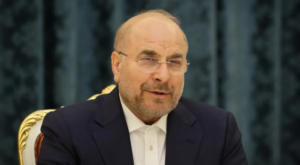
Former Iranian President Hassan Rouhani sparked widespread controversy within Iran, after he called for consultation with the people about ending the war, and criticized linking Iranian policy to the issue of revenge, in positions that raised objections within conservative circles.
Iranian media and conservative figures saw Rouhani’s statements as a skepticism about the “defense and deterrence” approach adopted by Tehran, especially in light of escalating regional tensions.
His critics considered that calling for a referendum or consultations on ending the war might be understood as a retreat in the face of external pressure, while his talk about the Strait of Hormuz and revenge was interpreted as a weakening of Iran’s deterrence cards.
Rouhani’s positions have raised concerns within political and conservative circles who fear that these proposals will be used to justify making concessions on files that Tehran considers related to national security and national sovereignty.
These statements reveal a division within the Iranian elite regarding how to get out of the state of exhaustion, as the hard-line movement adheres to a tougher position that uses the Strait and deterrence as pressure cards, while some moderates, including Rouhani, see that the continuation of the war without a clear horizon will cause greater damage to the economy and society.
This debate also reflects the chronic tension between reformists and conservatives, which intensifies as the human and economic cost of war rises.
Hassan Rouhani, who assumed the presidency of Iran between 2013 and 2021, is considered one of the most prominent faces of the moderate reformist movement, and is famous for his role in the 2015 nuclear agreement. After the end of his term, he remained present in the Iranian political scene, despite the decline of his influence in light of the dominance of the conservative movement and the institutions associated with it.