Attention is turning to Ankara, as the leaders of 32 member states of NATO will meet tomorrow, Tuesday, in a historic two-day summit, with the participation of US President Donald Trump, amid sensitive military and political issues extending from Ukraine and Iran to the future of defense industries within the alliance. However, the most prominent concern in Israel revolves around the possibility of Turkey returning to the F-35 fighter program, and what this may mean about the arrival of sensitive Israeli technologies into the hands of Turkish President Recep Tayyip Erdogan.
According to a report by journalist Eli Leon in the Israeli newspaper “Maariv”, the annual NATO summit, which will be held on Turkish soil for the first time since 2004, will address a series of pressing geo-strategic challenges, from continuing military and economic support for Ukraine, to demanding European countries to increase their defense budgets, all the way to developing a common position towards the Iranian nuclear threat.
But for the host, Turkish President Recep Tayyip Erdogan, the summit represents a rare opportunity to parlay the international platform into showcasing Turkey’s growing arms industry, and especially to push for a dramatic deal with the United States that returns Ankara to the F-35 stealth fighter program.
According to parallel reports by Reuters and Agence France-Presse, the Ankara summit will include a forum dedicated to defense industries, which is expected to form a platform for announcements of huge arms deals worth tens of billions of dollars. As for the central Turkish goal, it is to achieve defense independence, and at the forefront of that is the “KAAN” project, which is a fifth-generation Turkish stealth fighter that is supposed to replace the old fleet of “F-16” aircraft in the Turkish Air Force.
Reports suggest that the Trump administration is heading, in the coming days, to approve a huge deal worth more than $700 million, under which Turkey will obtain advanced F110 jet engines from General Electric for its main air project. Despite sharp objections from officials in the US Congress to the repercussions of the move, it is expected that the administration will attempt to overcome parliamentary obstacles.
In parallel with the American track, Erdogan is taking advantage of the presence of leaders in Ankara to push for an important rapprochement with France and Italy. Turkey is expected to accelerate its contacts with French President Emmanuel Macron and Italian Prime Minister Giorgia Meloni regarding the purchase of European air defense systems “SAMP/T,” amid officials speaking of broad political readiness on all sides to complete this path.
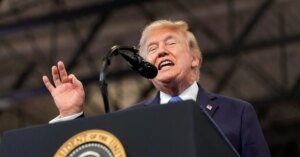
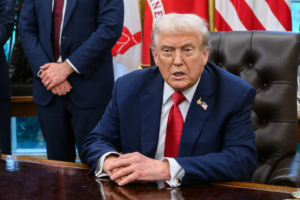
The most sensitive issue within the corridors of the summit is the possibility of Türkiye returning to the F-35 program. Ankara was excluded from the program in 2019 and was subjected to harsh sanctions after its decision to purchase S-400 air defense systems from Russia. Trump increased Turkish expectations when he was finally asked about the summit and Ankara’s ambitions, and he replied in his usual style that “maybe he will do something that will make them very happy.”
This phrase has revitalized Turkish hopes, as reports indicate that US Defense Secretary Pete Hegseth is currently conducting a careful review to see whether it is possible to return Türkiye to the program without violating American law. One of the proposed solutions is based on an agreement under which Türkiye sells the S-400 systems it owns to a third country, such as South Korea, to avoid returning them to Russia.
In addition to the interests of the host country, NATO leaders will discuss the most pressing global issues, with the participation of guests including Ukrainian President Volodymyr Zelensky. The alliance is expected to reaffirm its commitment to Kiev, with a formal pledge to provide 70 billion euros in military and training aid to Ukraine through 2026.
Meanwhile, Trump is expected to continue his hard line toward European allies. European leaders will try to prove their commitment, by presenting data indicating an increase of $139 billion in defense investments over the past year, with the aim of reaching the ambitious ceiling of spending 5% of GDP on defense by 2035.
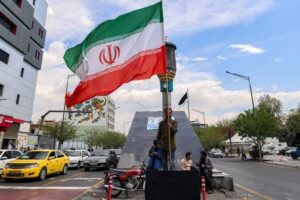
Iran also emerges as a key issue at the summit table, as NATO’s draft final statement includes a firm message against Tehran, with an explicit call to respect freedom of navigation in the Strait of Hormuz, and an affirmation that the allies will never allow Iran to obtain a nuclear weapon.
On the other hand, the increasing heat in relations between Washington and Ankara, and the possibility that Turkey will eventually obtain American stealth fighters, raise deep and tangible concern among its neighbors, according to what the “Euractiv” website reported last week. Israel, Greece, and Cyprus see Erdogan’s growing military power as a direct and dangerous threat to the delicate military and technological balance in the Mediterranean basin.
In Israel, which is closely following developments, concern is particularly focused on the possible leakage of advanced technologies. Security authorities indicate that many sensitive and vital technological components in the F-35 systems, including the outer wings and the unique helmet display system for pilots, are developed and produced by Israeli defense companies, led by “Elbit.” The mere perception that sensitive Israeli equipment might be integrated into fighters operated by the Turkish Air Force raises strong objection in Jerusalem.
Israel’s ambassador to Greece, Naam Katz, recently expressed this concern sharply, arguing that Turkey’s aggressive behavior in the Middle East makes it ineligible to participate in a prestigious program of this kind. Israeli Prime Minister Benjamin Netanyahu also made it clear that Israel takes Erdogan’s threats seriously, and will raise the issue before the Americans.
At the same time, Greece is putting strong pressure on Washington. Alexis Tsipras, leader of the Left Party and former Greek Prime Minister, called on the US ambassador to his country to stop supplying advanced weapons to Türkiye.
Thus, all eyes are turning to Ankara, as the NATO summit does not appear to be just a meeting of allies, but rather a station where new maps of power in the Middle East and the Mediterranean may be drawn, from Ukraine and Iran to the question of military technology that may find itself in Erdogan’s hands.