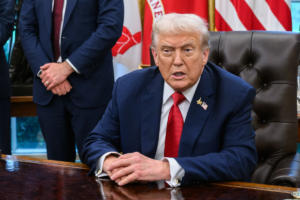
U.S. President Donald Trump affirmed that the United States’ control over Greenland is “necessary” to complete the air and missile defense system called the “Golden Dome,” indicating that this Arctic island is a crucial element in U.S. national security calculations.
In a post on social media, Trump emphasized that “the United States needs Greenland for national security purposes,” adding that it is “essential for the Golden Dome system we are building.” He went further, saying that NATO would be “much stronger and more effective” if Greenland were under U.S. administration, considering that “any option less than that is unacceptable.”
Trump’s statements come ahead of the reception of senior Danish and Greenlandic diplomatic officials at the White House, where talks on the future of the island are scheduled to take place with U.S. Vice President J.D. Vance and Secretary of State Marco Rubio.
For his part, Danish Defense Minister Troels Lund Poulsen sought to allay American concerns, confirming to Agence France-Presse that Denmark is working to strengthen its military presence in Greenland and is in discussions with its partners about “increasing NATO’s presence in the Arctic.”
Trump also urged NATO to “take the lead” in establishing a multi-layered missile defense system, warning that failure to do so would create an opportunity for international competitors to fill the void. He said, “If we don’t do it, Russia or China will, and that won’t happen.”
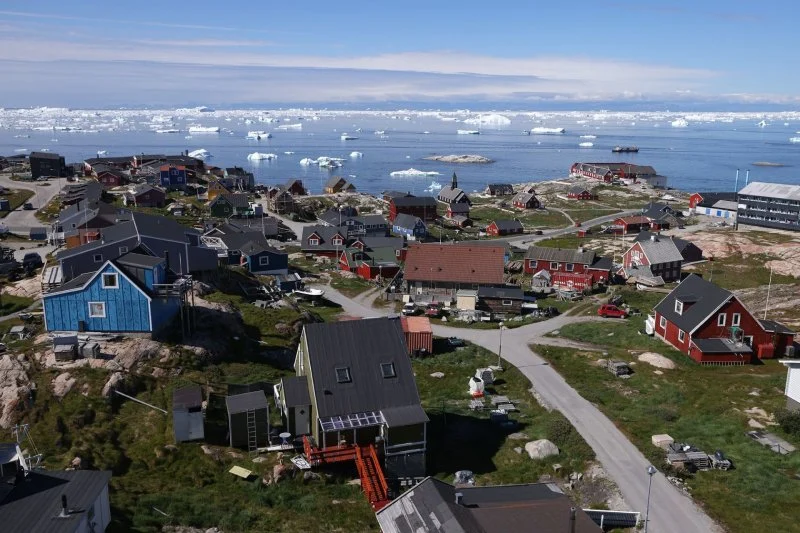
The issue of Greenland is back in the geopolitical spotlight due to its strategic location in the Arctic, its reserves of natural resources, potential navigation routes, as well as its importance in early warning and missile defense systems. With the escalating competition between major powers for influence in the polar regions, the island has become a meeting point of American-Atlantic interests with Danish sovereignty, at a time when NATO is seeking to strengthen its presence in the North to keep pace with global security changes.