Iran and Hezbollah are waging two parallel wars of attrition under the umbrella of comprehensive confrontation, in an attempt to show strength and avoid retreat, while the options available to them are narrowing under the weight of the economic crisis in Tehran and the mounting pressure on the party inside Lebanon.
According to an analysis by retired Colonel Or Horowitz in the newspaper “Israel Hayom”, hundreds of kilometers separate Iran and Lebanon, but the scene in the two squares appears similar. After intense and unprecedented wars in recent years, the two fronts are currently moving slowly, in an area that falls below the threshold of war and above the level of ceasefire, waiting to find out which party will blink first.
In Iran, US policy oscillates between applying maximum economic pressure and continuing a limited military confrontation in the Strait of Hormuz. The writer believes that the United States has not yet succeeded, and perhaps will not succeed, in subduing Tehran and pushing it to make concessions, amid Washington’s declining patience, the approaching midterm elections, and the decline in President Donald Trump’s popularity.
On the other hand, the US administration does not seem willing to expand the confrontation and turn it into a wide-ranging war that may further destabilize the global economy. But this equation does not give Iran a comfortable position, as the regime is facing, according to the analysis, the most serious economic crisis in its history, coinciding with internal divisions and a decline in its popularity.
The writer points out that concern appeared in the statements and steps of Iranian officials, especially after the Iranian Ministry of Economy established on September 6 a “command room for the economic war.”
There were also reports of protests by retirees and teachers in Tehran and other cities, during which the protesters chanted that “the salary will run out within a week.” Despite Tehran’s attempts to show stability and confidence, it realizes that its actual battle is not limited to the Strait of Hormuz, but rather relates to “production and citizens’ livelihoods,” according to what Iranian Parliament Speaker Mohammad Bagher Qalibaf said a few days ago.
According to the analysis, Iran does not know how long it can hold out, after finding itself in an unprecedented situation. Therefore, it is trying to follow two parallel paths: responding forcefully to any American use of military force, and working at the same time to address the worsening economic crisis.
In parallel, the writer believes that a clear equation has begun to crystallize, based on Iran refraining from firing at Israel, because it is aware of the cost of the response, and because targeting the weakest regional link, i.e. the global economy and the United States’ Arab allies, most notably Jordan, seems more appropriate for it. He adds that this “strange dance” may continue for an unknown period.
In Lebanon, the circumstances are different, but the result seems similar. The writer considers that Hezbollah is facing an unprecedented attack on the origin of its presence inside the country, without possessing the tools that would enable it to get out of this impasse.
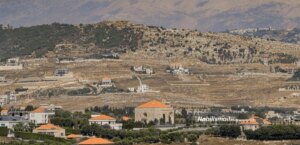
He describes the Israeli army’s announcement of imposing “operational control” on the Ali al-Tahir Heights as a public insult to the party, after it had pledged to respond in the event of a development of this kind, and hinted at the possibility of Iranian intervention, which did not happen.
Under these circumstances, according to the article, the party resorts to launching drones towards Israeli army forces inside Lebanese territory, in a move that the writer considers a clear violation of the ceasefire, but it remains limited in what allows the party, from its point of view, to try to prevent Israel from expanding its military operations in Lebanon.
The analysis considers that Hezbollah, in turn, is waging a war of attrition that allows it to show that it is not standing idly by in the face of what it has been exposed to, while avoiding expanding the confrontation in a way that might deepen the impasse it faces inside Lebanon.
But the success of this approach remains limited, in light of the widespread criticism directed at the party. The writer quotes “An-Nahar” newspaper as saying that Hezbollah knew that the Ali al-Taher Heights would fall, but refused to hand it over to the Lebanese army, and therefore “preferred to hand it over to Israel.”
He also points out that another article in “Nidaa Al Watan” newspaper questioned Hezbollah’s ability to protect the Lebanese, at a time when it failed to defend one of its most important military complexes.
Janoubia website, which is affiliated with the Shiite opposition to Hezbollah, also reports on the escalation of criticism within the Shiite environment regarding the blood provided by the sect for the sake of the Palestinians, the absence of economic compensation, and the expansion of displacement, as well as objection to Iranian interests that are said to excessively control the party’s decisions.
The writer believes that Hezbollah is trying to show stability, but its ability to continue doing so is not guaranteed. Iran cannot accept American conditions without appearing to surrender, but it also cannot tolerate an all-out war. On the other hand, Hezbollah cannot hand over its weapons without losing its source of power, nor can it resume the war without causing further destruction to itself and its popular base.
Thus, the time factor turns into increasing pressure on both sides, while attrition, which previously constituted a strategic tool for the Iranian axis, turns into a point of weakness that threatens it.
The writer concludes that Israel and the United States have the strongest hand in this “poker game,” but the challenge lies in making good use of this advantage, in light of a complex political reality and the approaching elections in Israel and the midterm elections in the United States.