The Governor of Baalbek-Hermel, Bashir Khader, sponsored a dialogue meeting launched by the Lebanese Society for Studies and Training (LOST), in cooperation with the World Food Programme, within the “Participatory Evaluation of Livelihoods and Resilience” project, which aims to enhance the priorities of local communities, identify their needs and challenges, and explore proposed solutions in the areas of livelihoods, agriculture, recovery, adaptation to climate change, and enhancing resilience in the Baalbek-Hermel Governorate.
Khader, the founder of the Lebanese Society for Studies and Training, Dr. Rami Al-Lakkis, the Director of the World Food Organization, Alison Uman-Laoi, and the Director of the World Food Program, Maria, participated in the meeting, in the presence of the Philippine Ambassador to Lebanon, Marlo Miranda, along with mayors, farmers, and representatives of civil and civil society organizations.
Khader stressed the importance of relying on one’s own capabilities with regard to food security, in partnership with international bodies, in order to access available resources and achieve an economic cycle, in light of weak financing in a region that depends primarily on tourism and agriculture.
He said: “Tourism and agriculture are the two main pillars that the Romans have relied on for 2,000 years, and it is inappropriate for us to remain where we are in 2026, compared to what the Romans have done.”
Khader touched on the allegations about the existence of tunnels in Baalbek Citadel, expressing his regret that some people tend to believe them, and asserted that there are no tunnels at all.
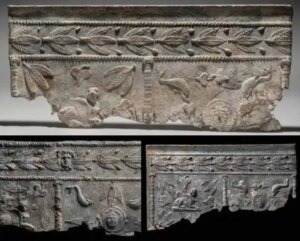
He added: “From here we confirm what is certain: in Baalbek there are monuments and statues, and there are distinctive archaeological caves in the caves of flour, and whoever wants to visit them should visit them. Baalbek Citadel does not belong to the Lebanese, but rather belongs to humanity, civilization and culture.”
For his part, Al-Laqis stressed that the aim of the meeting is to survey the opinions of municipalities and determine people’s choices regarding livelihoods, development and human capabilities, plans and programmes.
He stressed the role of women in local production in a way that suits the 21st century, noting that the Baalbek-Hermel region was divided into 26 human settlement districts to meet their demands, which requires social integration commensurate with the scale of the challenges and achievements.
He explained that the societal division includes 3 committees representing municipalities, women, and farmers, with the aim of coming up with an action plan that defines priorities and challenges, to be submitted to donor countries and embassies to obtain private funding.
In turn, Anderson stressed that one of the most important things being worked on is listening to people’s priorities, requests and needs and responding to them, noting that there are ideas and funding for some projects that are of interest to local communities.
She also confirmed the existence of cooperation with the Lebanese Association for Studies and Training, describing it as a pioneer in launching initiatives.