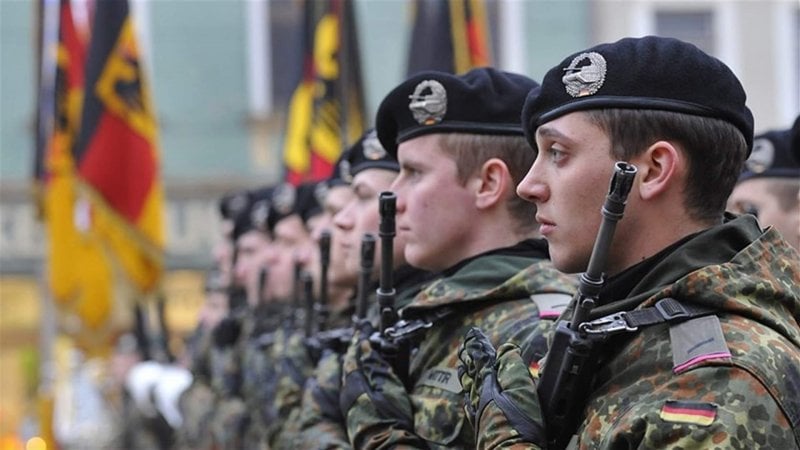
The commander of the German armed forces, General Carsten Breuer, rejected the idea of applying a “random conscription lottery,” stressing in statements to DW the need to examine all young people to determine those eligible for service, warning that the random system could negatively affect motivation and the level of training. He called for focusing on attracting skilled young people in vital technological fields such as cybersecurity.
German Defense Minister Boris Pistorius announced that every young man aged 18 will be required, starting next January, to fill out a form to assess his readiness for military service, while keeping conscription optional, but with the possibility of subjecting all young people to mandatory checks by mid-2027. However, expectations indicate that these measures will not achieve the desired goal, as the number of volunteers currently does not exceed ten thousand annually.
According to a poll conducted by the “Forsa” Institute, more than half of Germans support the resumption of compulsory conscription, while 63% of young people oppose it, considering that “no one can be forced to kill another human being.” Also, 76% of the participants rejected the idea of a “military lottery,” which led to the Social Democratic Party (SPD) withdrawing its support for any similar proposal.
In contrast, parties such as the Green Party have called for a civil alternative in the form of a “mandatory social service year” that includes both genders, which requires a complex constitutional amendment. Youth organizations also urged the government to provide incentives and expand the scope of public discussion, warning against imposing conscription without involving the young generation in the dialogue.
The German army seeks to make service more attractive by increasing salaries and providing funding for military driving licenses. The war in Ukraine has affected the view of many in Germany towards the importance of national defense, reviving the debate about Berlin’s military role in Europe after decades of hesitation.