

Why China is Hoarding Record Amounts of Gold — and What It Means for Global Prices
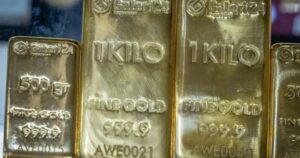
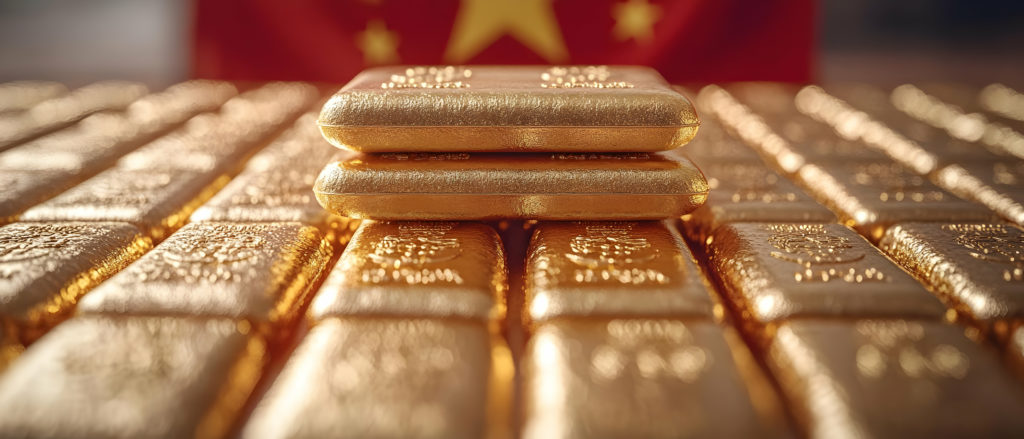
China is accumulating gold at an unprecedented pace. From the central bank’s strategic vaults to the pockets of everyday consumers, the rush for the precious metal is setting new historical benchmarks. This relentless buying spree is driven by a complex mix of geopolitical maneuvering, domestic economic anxiety, and a structural shift away from US dollar dominance.
As China continues to scoop up physical bullion, its actions are providing a crucial floor for global gold prices, even as macroeconomic headwinds—like high US interest rates—threaten to pull them down. Here is a deep dive into why China is buying record amounts of gold and how it shapes the future of the precious metals market.
1. The Record-Breaking Gold Rush in Numbers
The sheer volume of China’s gold imports highlights a systemic shift in wealth preservation:
- A 23-Month Buying Streak: The People’s Bank of China (PBOC) has added gold to its reserves for 23 consecutive months. In September alone, the PBOC purchased approximately 23 tonnes—its largest monthly acquisition in almost three years.
- Shattering Import Records: In the first eight months of 2026, China spent a staggering $158.8 billion to import more than 1,000 tonnes of gold. To put this in perspective, this eight-month total has already eclipsed the $96.5 billion spent on 886 tonnes throughout the entirety of 2025.
- Surging Premiums: According to Aakash Doshi, head of gold strategy at State Street Investment Management, consumer gold imports hit a record in the first eight months of this year. Surging onshore premiums indicate “stronger winter seasonal demand” is already taking hold.
Despite a recent price pullback—with gold falling over 8% in September to around $4,176 an ounce after hitting a record above $5,500 in January—demand remains remarkably resilient. Doshi projects gold prices could rebound to $4,750 to $5,500 per troy ounce by the end of Q1 2027, sustained by this robust buying.
2. The Central Bank’s Motive: De-Dollarization and Geopolitics
For the PBOC, the primary driver behind this gold accumulation is geopolitical. Beijing is actively working to reduce its reliance on the US dollar and Western financial systems.
- Weaponization of the Dollar: Carsten Menke, an analyst at Julius Baer Group, points to “the weaponization of the U.S. dollar and the related desire to be less dependent on U.S. Treasuries as a reserve asset” as the PBOC’s main motive.
- The Russian Lesson: When Western governments froze the Russian central bank’s assets following the 2022 invasion of Ukraine, it served as a stark warning to other nations. It demonstrated how foreign-held reserves can be weaponized during geopolitical conflicts, whereas physical gold held in domestic vaults remains secure and insulated.
- Dumping US Treasuries: As China diversifies its foreign-exchange reserves into gold, it has simultaneously been offloading US debt. Chinese holdings of US Treasuries dropped to an 18-year low of $618 billion in July.
Furthermore, Menke estimates that Beijing’s ambition to build a deeper domestic gold market prompted it to buy around 190 tonnes by the end of August, which includes an estimated 110 tonnes of unreported purchases.
3. The Retail Motive: A Lack of Safe Alternatives
While the central bank buys for strategic reasons, Chinese citizens and corporations are purchasing gold out of economic necessity. Anxious about a shaky domestic economy, consumers are aggressively buying gold jewelry, bars, and coins as a safe haven.
Domestic investors are currently facing a severe lack of viable alternatives for wealth preservation:
- The Real Estate Slump: The property market, which was traditionally the primary store of wealth for Chinese households, remains locked in a multi-year downturn.
- Struggling Equities: The domestic stock market offers little relief; the benchmark CSI 300 index is down roughly 8% this year, a sharp contrast to the S&P 500’s 13% gain.
- Low Yields: Returns on bank deposits and government bonds are uninspiring amid tepid borrowing demand. China’s one-year government bond yield has fallen to around 1.2%, significantly lower than the US equivalent at roughly 4.46%.
Because domestic yields are so low, “The opportunity cost of holding gold is also much lower in China than in many Western markets,” explains Ole Hansen, head of commodity strategy at Saxo Bank.
4. What This Means for Global Gold Prices
China’s insatiable appetite for gold is acting as a powerful structural shock absorber for the global market.
Normally, when US interest rates and bond yields rise, the price of non-yielding assets like gold drops. However, massive Chinese buying has helped bullion withstand these pressures, preventing a much deeper price collapse.
Ewa Manthey, a commodities strategist at ING Bank, notes that “Chinese buying has become an important source of structural support for gold prices.” Because central banks purchase with a long-term horizon, they are significantly less price-sensitive than retail traders, providing a steady baseline of demand. This dynamic explains why gold prices have maintained summer levels despite sharper-than-expected increases in interest rate expectations and bond yields.
The Road Ahead: Will the Buying Stop?
Despite the record purchases, there is still ample room for growth. As of August, China, the world’s fifth-largest gold holder, owned 2,387 tonnes. This is still less than one-third of the gold stockpiles held by the United States.
According to Saxo Bank’s Hansen, domestic demand could cool if confidence is restored in China’s property and equity markets, if higher domestic interest rates make bank deposits more attractive, or if a weaker yuan makes gold prohibitively expensive at home.
However, a larger, systemic shift would only occur if central banks worldwide lost interest in diversifying their reserves and if global geopolitical tensions noticeably eased. As Hansen concludes, “neither appears particularly imminent,” suggesting China’s gold rush is likely to remain a dominant force in the market.