“Lebanon Debate”
Foreign Minister Youssef Raji’s revelation that he had stopped working at the ministry’s headquarters due to “security warnings” raised a series of questions, not only about who might target him, but also about the way the state and the minister himself dealt with the issue.
What is confirmed so far is that Raji confirmed that he received security warnings, without revealing their source or nature. As for the possibility that it is linked to his positions on Hezbollah, it remains a political conclusion that has not been confirmed by the security services or any results of an official investigation.
According to sources close to him, about two months ago, Raji received advice not to go to Bustros Palace, due to fears related to the exposure of the building and the ease of monitoring its entrances. Since then, he has been following the Ministry’s work from his home, after informing the Prime Minister and the security services and requesting that his protection be strengthened.
But this narrative opens the door to accountability. If Raji was in danger personally, why was his protection not enhanced to allow him to return to his office? If the Foreign Ministry building is under threat, what about the employees, diplomats, and auditors who continue to frequent it?
It was possible to adopt an alternative government headquarters, tighten protection around the ministry, or change the minister’s transportation methods and times. As for running a sovereign ministry from the minister’s home for about two months, it may protect Raji temporarily, but it does not address the root of the security problem.
The mystery increases because Raji revealed the warnings after he was asked about the reasons for his absence from the Ministry’s headquarters, and about his limited participation in some negotiations and foreign visits. This raises a legitimate question as to whether warnings alone explain his absence, and why the state has not announced the issue since it occurred.
As for the question of why Raji was targeted and not other ministers and politicians, there is no official answer. But what distinguishes him is his transformation into the forefront of the diplomatic confrontation with Iran, especially in the file of the Iranian ambassador-designate, Muhammad Reza Raouf Shaibani.
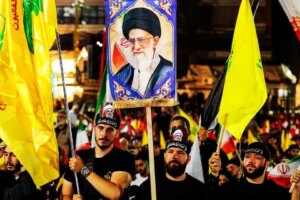
On March 24, the Ministry of Foreign Affairs withdrew approval for Shaybani’s appointment, considered him persona non grata, and demanded that he leave Lebanon before March 29. The decision raised a strong objection from Hezbollah, which accused Raji of acting from a partisan background, while Lebanese forces and foreign countries welcomed it.
But Tehran practically refused to expel Shibani, so he remained in Beirut without Lebanon recognizing him as ambassador. Later, he was granted civil residency for 6 months, without regaining his diplomatic status.
Thus, Raji succeeded in dropping Shibani’s diplomatic status, but he was unable to get the state to implement the other part of the decision, that is, expel him from Lebanon, so he found himself facing an official settlement that allowed the man to stay.
There is no evidence linking Shaibani, the Iranian embassy, or Hezbollah to the security warnings. But the ambassador’s file reveals the extent of the disputes that Raji has accumulated, and it also reveals the limitations of his ability to transform his positions into decisions implemented by state institutions.
The warning justifies precaution, but it does not justify running the Foreign Ministry from home for two months. Raji had to impose a solution within the state, not live with his absence from the ministry.