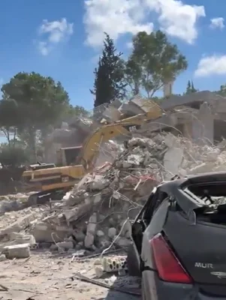
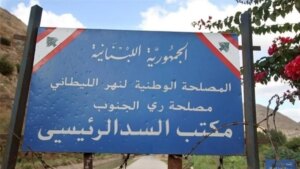
Parliament Speaker Nabih Berri condemned the Israeli attacks that targeted the city of Nabatieh, Arab Salem, and several southern areas, especially the destruction of Ghandour Hospital in Nabatieh Al-Fawqa and targeting the Ministry of Finance’s office in the city, considering that Israel is continuing an escalatory approach based on targeting civilians, homes, and public facilities.
Commenting on the recent attacks, Berri said that the shedding of civilian blood, including children, women, and security personnel, in Mifdoun, Ramadi, and Midoun, and then at dawn today in Arab Salem, in addition to the destruction of Ghandour Hospital and the targeting of the Ministry of Finance office in Nabatieh, is in addition to Israel’s continued destruction of homes and villages in the districts of Nabatieh, Marjayoun, Bint Jbeil, and Tyre.
He considered that these attacks, by their nature and scale, constitute condemned and denounced state crimes, stressing that their continuation, according to him, proves that Israel “has not adhered to any ceasefire formulas,” and that it is “evading all rules, agreements, and understandings.”
Berri added that Israel “is continuing to turn the south, its people, and their property into a ballot box with blood, in the race for the upcoming elections,” considering that the Israeli scene is now witnessing a competition, as he put it, “over who kills and who destroys more.”
The Speaker of the House of Representatives stressed that what is happening in the south not only represents an international responsibility that requires urgent intervention to stop the attacks, but also represents a national responsibility, calling on all Lebanese parties to stand by the south.
Berri said: “The issue of the South is the issue of all Lebanese, and defending it is defending Lebanon.”
He concluded by saying: “Mercy to the martyrs and a speedy recovery to the wounded.”
Berri’s position comes in the wake of a massive wave of Israeli raids that targeted Nabatieh, its surroundings, and other southern areas, and led to the death of civilians, injuries, and major damage to homes and public facilities, including Ghandour Hospital and a building belonging to the Ministry of Finance.