“RED TV”
At a stage in which the Union of Beirut Families Associations seeks to redefine its role between civil work and public presence, the elected president of the Union, Engineer Walid Kebbi, set a clear title for the next stage: distancing the Union from political alignments and turning it into a pressure force that works in the interest of Beirut and its people, without canceling the right of any member to have his opinion or his political affiliation.
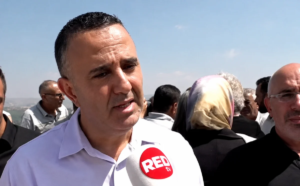
In an interview on the “THE HIGHLIGHT” program on RED TV, Kibbi stressed that “the union must remain under the state’s roof in everything, from the judiciary and security to accountability,” stressing that the primary goal is to serve the capital and pay attention to its people’s life and development issues.
He explained that the name “Union of Beirut Family Associations” is due to the nature of affiliation with it, as individuals are not affiliated directly, but rather each family establishes its own association before joining the union.
He pointed out that the union currently includes 94 family associations, making it one of the largest family organizations in Beirut, pointing out that work in the next phase will focus on increasing the number of affiliated families, visiting them, and encouraging them to join the union.
Kibbi stressed that families want an orientation away from politics within the union, explaining that “every family includes people from different political affiliations, and we do not want to transfer the political dispute to within the union, but rather political work must remain elsewhere.”
He added that what is required is not for the Union to be absent from public affairs, but rather for it to stop playing a direct political role, and instead to turn into a pressure force to make the voice of the people of Beirut heard in the issues of development, medicine, security, education, electricity, housing, and basic services.
He stressed that the list of “Independent Families of Beirut” is independent with regard to the work of the union specifically, noting that every person has his own political opinion and is free to have it, “but when we enter the union we must be politically neutral and work in the interest of Beirut.”
Regarding the “Our Strength in Our Union” list, Kibbi explained that it includes some people affiliated with specific political movements, while the majority of its members are independent, considering that this reflects the nature of the Beirut fabric, which includes multiple political trends.
Kibbi refused to consider his list’s victory as a victory over any party, and said: “Our success is not a victory over anyone, nor over political Haririism, but rather we all succeeded and Beirut succeeded with us,” stressing that the competition within the union is a voluntary family competition whose goal is to serve Beirut and its families.
In this context, he pointed out that among the 94 associations affiliated with the Union is the Makhzoumi Family Association, which is honorarily headed by Representative Fouad Makhzoumi, pointing out that Makhzoumi informed them that he stands by any approach that aims to keep politics away from the work of the Union, and is ready to help with whatever it needs.
He added that this openness prompted communication and meetings with various parties, but some tried to consider his group affiliated with Makhzoumi because of the presence of his family association within it, which Kabi rejected, stressing the independence of work within the union.
Kebbi spoke about his relationship with the martyr Prime Minister Rafik Hariri, noting that he began working with him in 1983, that is, before he assumed the presidency of the government, and worked alongside him in the fields of engineering and finance, before Hariri asked him, after his arrival to the presidency of the government, to engage in political work.
He revealed that preparations for establishing the Federation of Beirut Family Associations began in 1997, when the necessary papers were collected and the project was launched with only 16 families, before the number rose today to 94 families.
Regarding the great media interest in the recent elections, Kibbe believed that this is normal because Beirut is the capital, and because the electoral competition was very intense, which gave the election widespread momentum.
He added that Beirut society, despite its many families, is interconnected by lineage and affinity relationships, saying that “the people of Beirut, even if they are from different families, are relatives and married to each other, as if we were facing one Lebanese village but on the level of a city.”
Kebbi stressed that he will work during his term to enhance harmony between families, away from challenges and disagreements.
Speaking about the electoral process, he explained that the Election Supervision Committee was appointed by the previous Administrative Committee, and included 3 people headed by Engineer Bassam Bargout, whom he described as known for his integrity.
He stressed that the counting process took place transparently, and that everything was recorded and photographed in the presence of representatives of the parties, noting that the results surprised many because his group ran in the elections on behalf of families, while the second list, according to him, chose to work on a political basis.
He added: “We do not agree very much with this approach, but they are free, and in the end this is an election.”
He revealed that after the results were announced, everyone was satisfied with them, before lawyer Abdul Latif Junoon filed an objection the next day before the urgent matters judge, claiming that 30 papers were not counted for him.
Kibbi explained that adding these votes to the objector’s result, even if they had occurred, would not have given him access to the position of the first to fail, noting that the Elections Commission returned and confirmed the result to show that it was completely identical to the result that was announced at the beginning.
He continued that a second objection was submitted the next day, this time on the pretext that a member of the oversight committee did not sign the report, but the urgent matters judge considered that the case did not bear the character of urgency.
Kebbi considered that the aim of these objections was to disrupt the meeting of the 18 winning members and prevent them from distributing positions within the union.
Regarding the distribution of responsibilities, he revealed that he was elected president unanimously, explaining that he was careful in the vice-presidential elections not to nominate anyone from his list, which allowed competition between two people from the opposite list, before Mrs. Nada Yamout won the position.
Mr. Ziad Dandan also assumed the position of Secretary, Bassem Nomani assumed the position of Treasurer, while Jamil Al-Hout assumed the position of Accountant.
He pointed out that lawyer Rami Itani, who is from the competing list, became the union’s representative to the government, stressing that participation must be “through actions, not slogans.”
He explained that the term of the current body ends on September 9, and that the new elected body will assume its duties after the end of that term.
Kibbi concluded by stressing that the priority in the next stage will be for the people of Beirut and their daily concerns, considering that voters voted in favor of the independence of the union, and that what actually concerns them is electricity, housing, education, medical care, security, and other life issues.
He said: “I call for us to be held accountable after 3 years of our term,” setting the performance of the new body and the results of its work as a standard for judging its experience.