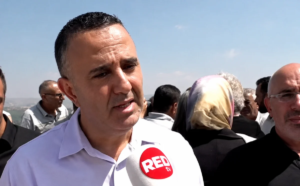
The head of the Federation of Ovens and Bakeries Syndicates in Lebanon, Nasser Sorour, warned that continued partial dealing with the issue of Syrian workers may lead to a labor and security crisis, calling for a comprehensive treatment based on settling the conditions of those who meet the conditions and organizing their work in accordance with applicable laws.
Sorour pointed out, in a statement, that the situation of tens of thousands of Syrian workers now needs to be settled, including workers in vital sectors, most notably bakeries, stressing that what is required is not to violate the law or exempt anyone from accountability, but rather to find a mechanism that makes implementing the law possible and effective.
He proposed giving workers a specific time period to regularize their residency and work conditions according to clear conditions, allowing the state to restrict their names, places of work, and employers, and collect due fees and guarantees, with anyone who remains in violation after the expiration of the deadline becoming subject to prosecution.
He also called for the formation of a national committee that includes the Ministries of Labour, Economy and Finance, the National Social Security Fund, Public Security, and the relevant unions, most notably the Federation of Bakers Unions, with the aim of preparing a draft decree specifying the sectors in which work is permitted, the proportions of Lebanese and foreign workers, and the conditions and cost of work leave.
Sorour stressed the need to protect the Lebanese worker in parallel with regulating the conditions of foreign workers and maintaining the continuity of vital sectors, considering that the problem does not lie in the absence of laws, but rather in the presence of large numbers of workers outside the legal framework.
He said: “Legalize those who can be legalized, regulate those who deserve to be regulated, and prosecute those who reject the law,” considering that this approach does not mean leniency, but rather aims to enable the state to impose its authority and regulate the labor market.
Sorour addressed the President of the Republic, General Joseph Aoun, the Speaker of the House of Representatives, Nabih Berri, the Prime Minister, Nawaf Salam, the Minister of Labor, Mohamed Haidar, and the Director General of Public Security, Major General Hassan Choucair, calling for action before reaching a “labor and security crisis that no one wants.”
The Syrian labor file is one of the most prominent files related to the Lebanese labor market, especially in sectors that rely heavily on foreign labor, at a time when demands are increasing to regulate this labor, protect Lebanese job opportunities, and control legal violations.
Sorour concluded by stressing that “the law is not protected by chaos, but rather by its organization and application.”