Al-Monitor newspaper published a new report that addressed the dilemma facing Israel in southern Lebanon, as it seeks to confront Hezbollah without entering into a confrontation with Iran or angering US President Donald Trump, who is pushing towards completing the path of Israeli withdrawal and strengthening negotiations between Lebanon and Israel.
According to the report translated by “Lebanon 24”, Israeli political and security sources believe that the experimental project based on the withdrawal of the Israeli army from two villages in southern Lebanon and the deployment of the Lebanese army in its place does not achieve the results required by Israel, due to the failure of Lebanese forces to enter private homes to search for “Hezbollah” weapons.
The report indicated that the White House supported the ceasefire agreement between Lebanon and Israel in November 2024 and the path to its implementation, pointing out that Trump announced during his meeting with Lebanese President Joseph Aoun in the Oval Office on July 21 his readiness to speak with Hezbollah if requested.
The report believes that completing the Israeli withdrawal from southern Lebanon may be in Trump’s political interest ahead of the US midterm elections in November, but the recent escalation may hinder this path, at a time when Israel, according to Al-Monitor, is approaching the possibility of reopening the battle front with Hezbollah.
One of the most prominent points of tension is currently concentrated in the Ali al-Tahir Heights in southern Lebanon, where a senior Israeli security source told Al-Monitor that Israeli forces have been besieging dozens of Hezbollah members and an unknown number of Iranian Revolutionary Guard members for more than two months.
The source claimed that the site includes a large underground command center belonging to Hezbollah, noting that Israeli forces control the roads leading to it and carried out air and ground bombardments in its vicinity.
This coincides with the continuation of negotiations between Lebanon and Israel under American sponsorship, which aim, according to the report, to reach a peace agreement and disarm Hezbollah.
The first direct meeting between the two sides was held in Washington on April 14, followed by 6 other meetings in Washington and Rome, while the eighth round is expected to be held in early September in the Italian capital.
Fear of an Iranian response
According to the Israeli security source, Israel does not intend to simply withdraw from the vicinity of Ali al-Taher Heights, allowing Hezbollah members and the Iranians to leave the facility, but at the same time it realizes that launching a comprehensive attack on the underground site may push Iran to respond with drones or missiles.
He added that such a scenario might force Israel to respond to Iran, which threatens to reignite fighting at the regional level. For this reason, and in parallel with American pressure to complete the withdrawal, Israel is carrying out limited operations in the vicinity of Ali al-Tahir instead of launching a large-scale attack.
In this context, the report referred to a warning from the Secretary of the Iranian Supreme National Security Council, Mohsen Rezaei, to Israel, as he considered that targeting Beirut and the southern suburbs constitute “red lines” for Iran.
Rezaei said that controlling and occupying Lebanese lands is difficult, considering that Israel will find itself forced to withdraw from southern Lebanon.
The Al-Monitor report also pointed to an escalation on the Lebanon front on the night of August 26, when Hezbollah launched two explosive drones towards the Israeli forces surrounding Ali Al-Taher, according to the Israeli account.
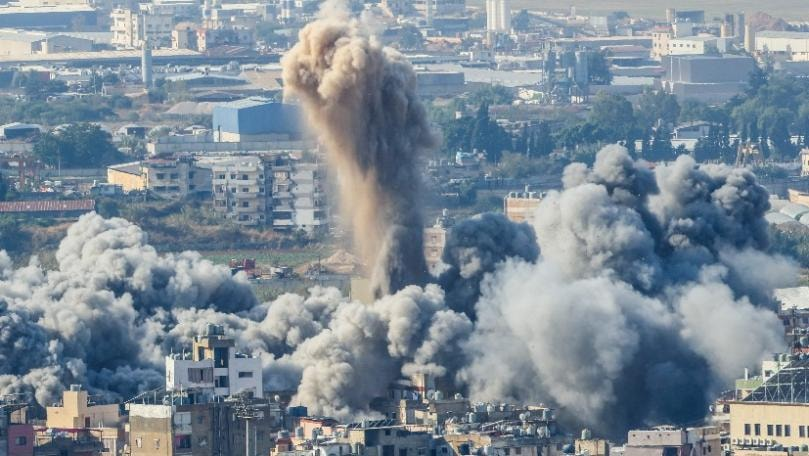
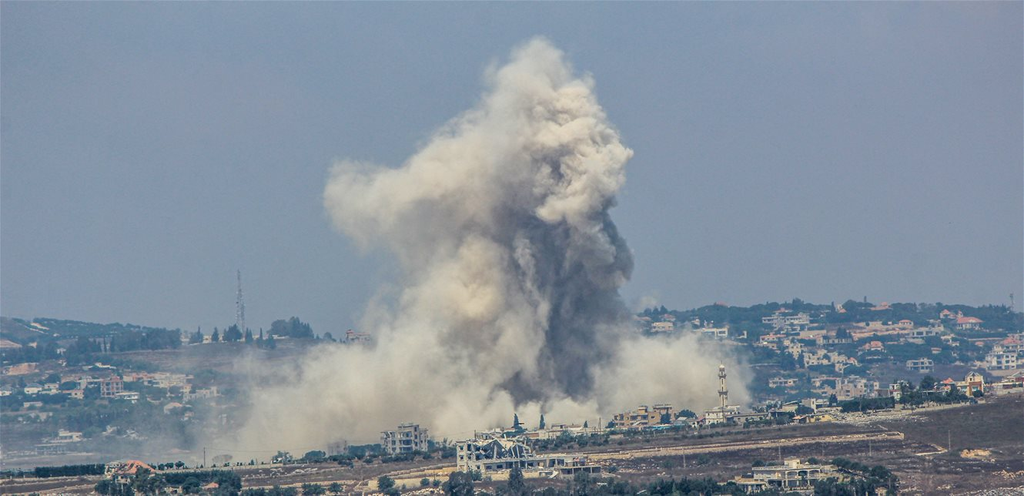
Israeli forces shot down one of them without recording any injuries, before responding with an air strike hours later, which, according to the National News Agency, resulted in the death of a woman and the injury of 6 people.
Dispute over houses
The Israeli security source believes that one of the most prominent obstacles to removing Hezbollah from southern Lebanon lies in the use of private homes to store weapons, according to his claim.
A senior Israeli military official told Al-Monitor that the Lebanese army has “a lot of good intentions, but its ability is very limited,” considering that Lebanese military elements do not enter private homes in villages whose residents are described as being linked to Hezbollah to varying degrees.
He stated that not searching homes means, from the Israeli point of view, not being able to find the missiles and weapons that Israel says Hezbollah stores inside them.
The official also claimed that Israel has monitored, in recent months, the resumption of Iran’s attempts to smuggle weapons to Hezbollah via Syria.
Questions about the Italian initiative
The report touched on the Italian initiative aimed at finding an alternative to UNIFIL forces after the end of their mission in Lebanon at the end of this year.
The Israeli military official expressed his skepticism about the feasibility of the initiative, considering that the international and multinational forces that deployed over the years in Lebanon, Gaza, Sinai, and the West Bank were not, in his opinion, a decisive factor in confronting organizations such as “Hezbollah.”
He said that Israel “is not betting” on a new international force performing the task in its place or in place of the Lebanese government, adding: “Hezbollah is not going anywhere, and we will have to deal with it sooner or later.”
Politically, Al-Monitor quoted an Israeli source as saying that Prime Minister Benjamin Netanyahu is dealing with the Lebanese file with caution, as he does not want to anger Trump, and at the same time he does not want to make concessions on the Hezbollah file that might make him appear weak to the Israeli voter ahead of the October 27 elections.
The report referred to a poll published by the newspaper “Maariv” on Friday, which showed that the “Likud” party led by Netanyahu won 20 seats in the Knesset, compared to 25 seats for the new “Yashar” party.
The source concluded that Israel’s acceptance of the Italian initiative requires American guarantees proving that the proposed force will be different from the UNIFIL experience, otherwise, according to him, Israel will not have a political motive to agree to it.