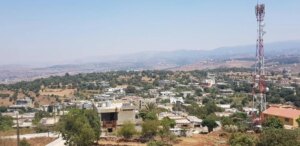
Culture Minister Ghassan Salama announced, after meeting with President Joseph Aoun at Baabda Palace, that he placed him in the picture of the “big battle” that Lebanon fought to include the five castles of Jabal Amel on the World Heritage List, during the Heritage Committee meeting held in Korea last week.
Salama explained that Lebanon was faced with the task of convincing the members of the committee, who represent 21 countries, of its right to include the castles, and said: “We were able to obtain their consensus on this important decision regarding these basic landmarks of Lebanese history.”
He pointed out that he discussed with President Aoun the upcoming visit of the Director-General of UNESCO to Beirut, which is expected to include a number of sites that Lebanon is keen to protect and restore, in addition to the meeting discussing a number of public affairs issues.
In response to a question about protecting antiquities from Israeli attacks, Salama revealed that “the battle over the castles of Jabal Amel was specifically with the Israelis,” explaining that Israel was not a member of the committee, but that countries within it represented its point of view.
He added that Lebanon worked to convince these countries to either vote alongside it or abstain from voting, before it was ultimately able to obtain a consensus from the committee members in favor of the resolution.
Regarding the protection of other archaeological sites, Salama indicated that Lebanon added a number of them to the list of sites covered by what is known as “enhanced protection,” according to a decision taken at UNESCO early last April.
He explained that including the sites within this mechanism puts them under the attention of the international community and the countries that supported granting them protection, stressing that UNESCO does not have forces to defend archaeological sites on the ground.
He pointed out that placing signs for “enhanced protection” on the ground and the targeted landmarks removes, as he put it, any excuse from those who attack these sites that he was not aware of their nature, as they become protected and clearly defined.
In another cultural file, Salama revealed that he informed President Aoun of the near completion of construction of the Grand Opera House in Dbayeh, and the possibility of Lebanon receiving the building from the Chinese side, which provided a donation worth more than $80 million for its construction.
He explained that he discussed with the President of the Republic the most appropriate mechanism to complete the transfer of the building from the Chinese contractor, which is currently completing construction work, to the Lebanese side.
Salama revealed that President Aoun promised that the opening of the opera house would be under his auspices next fall, after the work is completed and the procedures for handing over the project are completed.
The protection of Lebanese archaeological sites is gaining increasing importance in light of the damage inflicted on a number of areas during the Israeli attacks, while UNESCO mechanisms, including World Heritage Regulations and Enhanced Protection, constitute international tools to confirm the cultural and historical value of sites and enhance the legal protection granted to them.