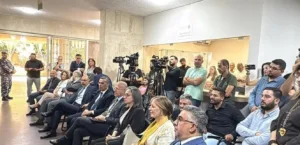
The project was launched during a ceremony sponsored by the Minister of Environment, Tamara El-Zein, with the participation of the European Union Ambassador to Lebanon, Sandra de Waal, the Director General of the Ministry of Industry, Adel Girgis Al-Shabab, representing the Minister of Industry, and the resident representative of the United Nations Development Program, Blerta Aliko, along with representatives of ministries, municipalities, and the private sector.
The United Nations Development Program explained that the studies cover the sectors of medical, electronic and green waste, slaughterhouse waste, paper and cardboard, in addition to waste-derived fuel (RDF), while the GIS platform provides a national database that helps concerned parties monitor infrastructure, identify gaps, and direct policies and investments.
Al-Zein stressed that the initiative enhances governance and institutional coordination, and supports decision-making based on reliable data, which helps the National Solid Waste Management Authority and municipalities implement sustainable solutions.
In turn, the youth considered that the waste sector constitutes an untapped investment opportunity, noting that the expansion of sorting, recycling and composting contributes to creating job opportunities and revitalizing the industry, stressing that the goal is “to move from waste treatment to manufacturing.”
For her part, De Waal stressed the importance of using these tools to support environmental reforms and guide investments, while Alico stressed that investing in reliable data constitutes an essential foundation for developing the waste management sector and promoting the circular economy.
The ceremony included a presentation of the results of specialized studies on electronic waste and health care waste. Ellard indicated that Lebanon produces about 40,000 tons of electronic waste annually, and proposed establishing 12 local collection centers and a national center for sorting and treatment.
Ascom, it presented the national guidelines for healthcare waste management, which includes classification of hazardous waste and equipping the Karantina facility to treat infectious waste.