In a new escalation of the war of words between Tehran and Washington, the former commander of the Iranian Revolutionary Guard, Mohsen Rezaei, attacked US President Donald Trump, saying that he “lives in false hope” that the Iranian people can surrender under American military pressure and threats.
Rezaei, a member of the Expediency Discernment Council in Iran, mocked Trump’s way of managing the Iranian file, especially after he talked about a military attack that was scheduled against Iran before it was postponed.
Rezaei wrote on his account on the “X” platform: “He sets a deadline for a military attack and then cancels it himself, in the false hope that the Iranian people and their officials will surrender.”
He added that “the strong grip of the armed forces and the great Iranian people will force them to retreat and surrender,” in a message that carried a clear tone of challenge to the United States.
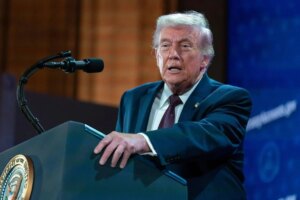
Rezaei’s position comes after Trump’s statements in which he announced that a large-scale attack against Iran was scheduled for Tuesday, before it was postponed at the request of UAE President Mohammed bin Zayed Al Nahyan, Saudi Crown Prince Mohammed bin Salman, and Qatari Emir Tamim bin Hamad Al Thani, to make way for diplomatic efforts.
At the same time, Trump stressed that he had ordered the US military to remain ready to carry out a “comprehensive and large-scale attack” at any moment if negotiations with Tehran failed.
Rezaei’s statements reflect the extent of the escalating tension between Iran and the United States, at a time when the region is witnessing one of its most sensitive stages in years, with continued military build-ups, mutual threats, and indirect negotiations through regional mediations.
Mohsen Rezaei is considered one of the most prominent Iranian security and military figures, and his positions often reflect a hard-line trend within the Iranian establishment, especially in files related to the confrontation with Washington and Israel.
On the other hand, the Trump administration is trying to use military and economic pressure to push Iran towards a new agreement related to its nuclear program and regional influence, while Tehran asserts that it will not make concessions under threat.
As the Gulf and Pakistani mediations continue, the region seems stuck between the possibility of reaching a temporary settlement that reduces the escalation, or returning to the specter of open military confrontation if the current negotiations collapse.