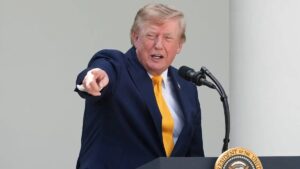
In a remarkable escalation of criticism within American circles, former US National Security Advisor John Bolton launched a sharp attack on the performance of President Donald Trump, against the backdrop of his handling of Iran’s closure of the Strait of Hormuz.
Bolton said, “Anyone who looks at the map realizes that the Strait of Hormuz constitutes a strategic choke point,” considering that Trump did not pay enough attention to the opinions of experts on this issue, and if he had, he would have realized the importance of this vital corridor.
In an interview with the “New Order” program, Bolton indicated that closing or disrupting the Strait must be among the basic scenarios that are taken into account, especially in light of the tension with Iran, pointing out that this possibility was on the table during Trump’s first term.
Bolton touched on the course of the confrontation with Tehran, considering that regime change in Iran should be a primary goal, noting that Israeli Prime Minister Benjamin Netanyahu had put forward the same idea on more than one occasion.
He also stressed that the Joe Biden administration wasted several opportunities over the past years, by seeking to revive the nuclear agreement, which gave Tehran time to strengthen its capabilities, including developing underground facilities and expanding its military programs.
In the context of his criticism, Bolton pointed out that the possibility of Iran targeting the Gulf states should have been part of the strategic calculations, considering that ignoring these scenarios reflects a defect in judgment.
He also hinted that Trump did not adequately adhere to the advice given to him in the national security files, despite its availability, which contributed to the complexity of the scene.
These statements come in light of the escalation of tension in the region, as the Strait of Hormuz is one of the most prominent hotspots of conflict, due to its vital importance in transporting global energy, which makes it a strategic pressure card in any confrontation between Washington and Tehran.