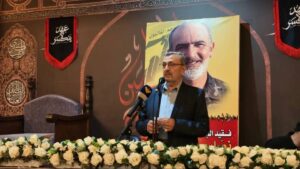
Sheikh Ahmed Al-Laqis is not a guardian of the Lebanese American University, nor a partner in its management, nor an authority who has the right to amend its regulations from a religious platform. However, he decided to address it in language that did not resemble dialogue, saying that if the issue of the prayer of about 300 students was not resolved, “people will resort to another solution.”
This is not an innocent claim to a religious right, but rather a veiled threat issued by a man who uses the title of “sheikh” and the mosque’s audience to impose his will on an independent educational institution.
What is the “other solution” that he is waving? Breaking into the university? Besiege it? Move the street against her? Who authorized him to speak on behalf of the people or use them as a stick to raise against an institution that is not subject to his authority?
Al-Laqis did not act as a person with the right to resort to the administration or the law, but rather as an influential person who issues a warning: either do what I want, or confront the street. This is the same logic of the militia, even if this time he came out of a mosque instead of a military room.
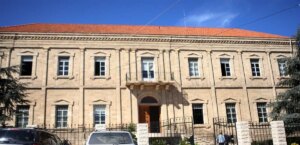
The most dangerous thing is that the narrative on which the escalation was based is not true at all. The university did not prevent students from praying, and the issue is not related to persecuting worshipers or depriving them of practicing their rituals, but rather requesting the allocation of fixed places for prayer inside the campus.
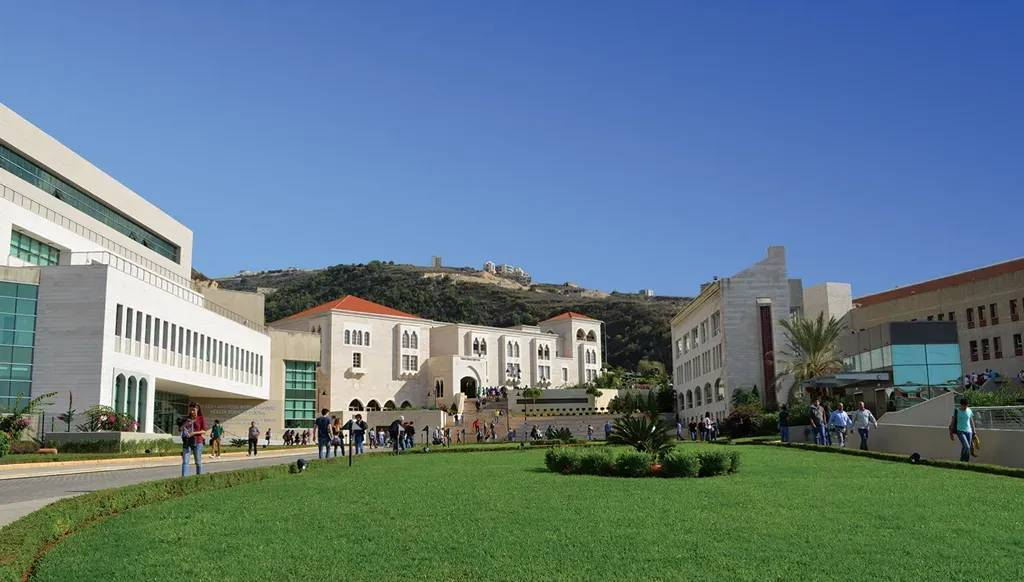
The Lebanese American University is a private, secular, non-profit institution that does not allocate space for the practice of religious rituals, and applies this rule equally to all of its students and employees, regardless of their affiliations. Therefore, there is no targeting of Muslims and no derogation of their rights, but rather a declared internal system that applies to everyone.
The university is also an academic institution with Christian roots dating back to the nineteenth century, before it developed into a secular, pluralistic university that receives students from different sects. Its openness is not a permission to cancel its identity or impose new rules on it by the force of the pulpit and the street.
Here the pretext falls completely. Prayer was not banned, students were not persecuted for their beliefs, and the decision does not target a specific religion. All the matter was that a man wearing the robe of a sheikh decided to turn an administrative request into a sectarian issue, then used a mysterious phrase to intimidate the university at the beginning of the academic year and before the student elections.
Al-Laqis took a personal religious right, confiscated it from its owners, and turned it into a show of power. Instead of taking the path of dialogue with the administration, he chose the platform, and instead of resorting to order and law, he waved at “the people” and “the other solution.”
As for Christian silence, it is shameful. Parties and authorities displaying their defense of freedoms and the privacy of institutions swallowed their tongues in the face of the first serious threat, with the exception of Fares Saeed, who supported the students’ right, but rejected public escalation and called for addressing the issue away from the language of the street.
But what is more dangerous than Lakkis himself is the climate that allowed him to raise his finger in the face of the university. After years of submitting to the “glow of arms” represented by Hezbollah, someone appears who wants to replace it with the “glow of Shara,” relying on the rise of Ahmed Al-Shara in Syria to act as if the new balance of power gave him authority inside Lebanon.
The glow of Al-Sharaa and his group is nothing but the other side of the glow of Hezbollah’s weapons: an external victory that turns into an internal surplus of power, a sectarian crowd used to intimidate institutions, and a man who places himself above the law because he believes that the street stands behind him.
The turban, the sect and the shepherd change, but the bullying is the same. Hezbollah brandished weapons to impose its options, while Lakkis brandished the people to impose its conditions. The first was strengthened by his arsenal, and the second was strengthened by his religious capacity and by a street that wanted to summon him upon request.
The turban does not give its owner authority over universities, does not place him above order and law, and does not transform his threat into a respectable religious opinion. Whoever uses the pulpit to call the street to “another solution” is not playing the role of a cleric, but rather the role of an instigator trying to subjugate a civil institution by the power of the group.
Ahmed Al-Laqis must immediately clarify what he meant, and the competent authorities must take his statement seriously, and not wait for people to gather in front of the university to discover the meaning of the threat. The university administration must not negotiate under pressure, because yielding today will turn every platform tomorrow into a parallel authority.
Lebanon does not want to get out of the grip of Hezbollah and enter the grip of Ahmed al-Sharaa’s group, and it does not want to replace a weapon that threatens the state with a sheikh that threatens the university. Whoever does not know the limits of his platform, the state must remind him of them.
Lebanon Debate