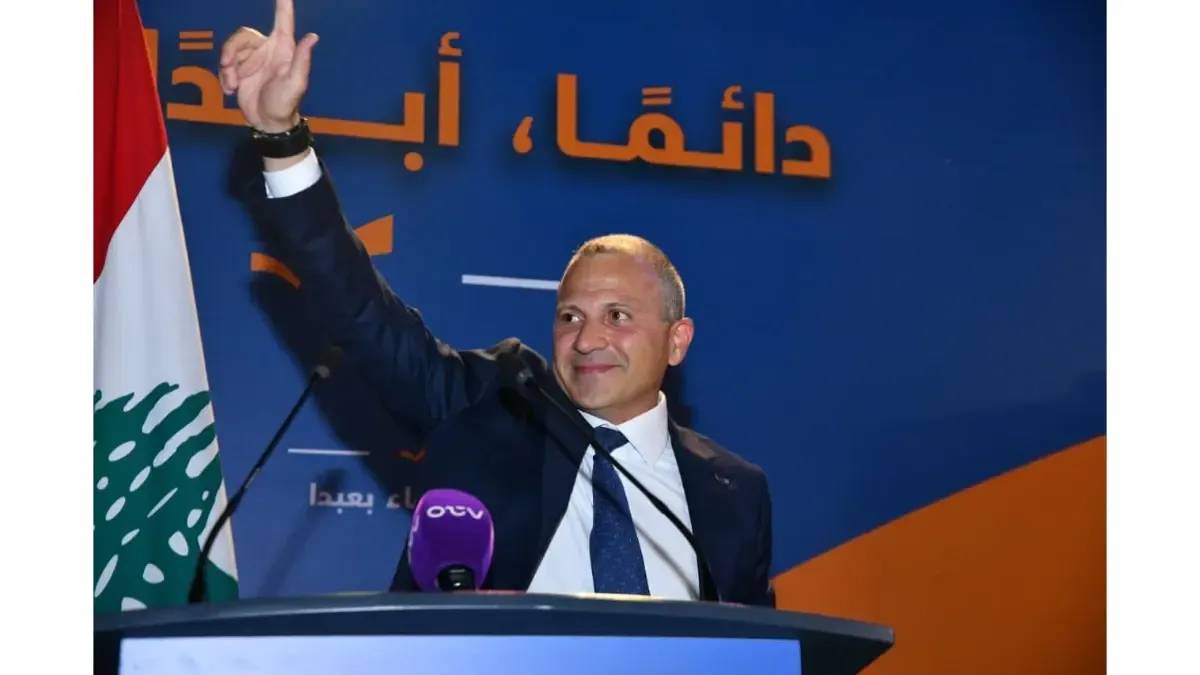
The head of the “Free Patriotic Movement,” MP Gebran Bassil, opened during the movement’s Baabda Judicial Authority dinner a series of political, judicial, and economic files, from the amnesty law and appeals before the Constitutional Council, to the exclusivity of weapons and the Israeli withdrawal, all the way to electricity and scrutiny of the ship file, stressing that the movement will continue to take what it described as “difficult positions,” regardless of the pressure.
Regarding the amnesty law file, Bassil stressed that his bloc’s resort to the Constitutional Council is a constitutional right, considering that the movement does not “monopolize justice,” but rather resorts to it. He said that addressing the conditions of Islamists who spent years in prison without trial must be done through a specific law that includes those who were wronged, not through a general amnesty.
Bassil rejected, as he put it, “bartering for the blood of the army,” considering that someone proven to have been involved in intentionally killing soldiers cannot be placed in the same category as someone who deserved to be released after years of detention. He warned that repeating amnesty laws reinforces the principle of impunity and encourages crime.
He also accused political parties of trying to give the file a sectarian dimension, stressing that the movement’s defense of the army does not target any sect, and that the rights of martyrs and victims should not be turned into material for political bargaining.
Bassil indicated that the law published under No. 70, according to his reading, will have dangerous effects on the judiciary, speaking about the existence of what he described as “manipulation” in the manner of its issuance and an attempt to open the door to amnesty for financial crimes and corruption related to public funds.
Regarding the political file, Bassil stressed that the “Free Patriotic Movement” supports any negotiation that leads to stopping the war and ending the occupation, but rejects, in return, any path that leads to perpetuating the occupation or giving it cover.
He said that the movement adheres at the same time to two demands: Israel’s withdrawal from Lebanese territory and the confinement of weapons to the state and the Lebanese army, refusing to place it in either of the two opposing camps because of this position.
He added that the balance of power has changed and that the weapon that, according to him, had the ability to defend Lebanon no longer has the same ability today, considering that the continuation of the current situation gives Israel pretexts to continue its attacks.
He believed that Lebanon must defend itself through the state, the army, diplomacy, and a strong economy, stressing that the solution lies in the establishment of a state in which all Lebanese, including Hezbollah, participate, and which is responsible for protecting the country.
Bassil moved to the electricity file, attacking the current performance of the Ministry of Energy, considering that the sector’s problem is not limited to generator bills, but rather to the failure to operate existing factories despite the availability of the necessary fuel for them.
He said that the movement has the right to file a complaint against the minister and the ministry against the backdrop of what he considered to be charging the Lebanese and the treasury an additional cost amounting to $3 billion as a result of reliance on generators.
In his response to talk about the criminal audit of the ships’ file, Bassil said: “We challenge them again with what will result from the audit,” stressing that the movement is not afraid of the results of any audit.
He added that the cost of electricity for generators, according to the numbers he presented, is about 55 cents per kilowatt, compared to 27 cents for state electricity, considering that the factories that the current has established since 2017 are among the least expensive, and that transporting electricity via ships was, according to him, less expensive than other alternatives.
He also criticized the tendency to import energy via cables from Cyprus or Türkiye, asking why not rely on ships if, according to his position, they are less expensive and closer to the Lebanese network.
Bassil concluded by stressing that “the Free Patriotic Movement is resistant to corruption, subjugation, occupation, and any guardianship,” whether it comes from Syria, Israel, Iran, or any other country, stressing that challenging the law and confronting political and economic files comes, according to him, from a position of defending the state, the army, and the rights of the Lebanese.
The post Basil opens all files… “We will not trade for the blood of the army.” appeared first on Lebanon Today website.