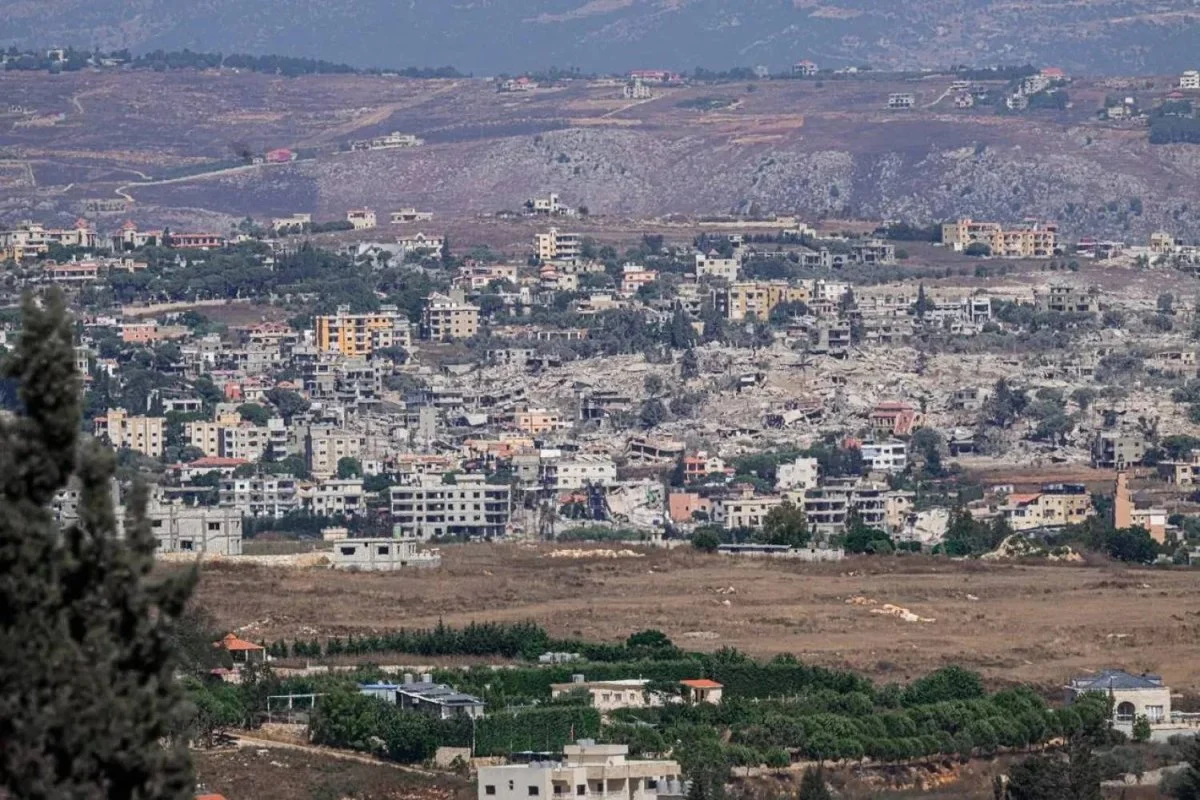
Israel revealed new details about the military operation in the Ali al-Tahir Heights in southern Lebanon, claiming that the two main tunnels in the area formed the “nerve center” of the party’s “Badr” force, and that controlling them represented a major operational and moral blow, while the Israeli army spoke of finding 15 bodies of militants inside the tunnels, and estimated that others had succeeded in escaping.
According to a report by journalist Avi Ashkenazi in the Israeli newspaper “Maariv”, the removal of censorship restrictions on the details of the operation came after the Israeli security establishment reached an assessment that the party, after losing what Israel considers one of its most important strategic assets, is trying to drag Iran into a direct military confrontation with Israel against the backdrop of the Ali al-Tahir Heights.
The Israeli army said this morning that the two main tunnels in the highlands effectively formed the “nerve center” of the Badr Force.
The report quoted a military official as saying, “The tunnels in the highlands served as the party’s central command headquarters in southern Lebanon. They were huge tunnels that included operations rooms, communications rooms, clinics, logistical means, and others.”
The official added that the fall of these tunnels into the hands of the Israeli army constitutes, as he described it, “a strategic, operational and moral blow to the party.”
According to Maariv, more details can now be revealed regarding the battles in the Ali al-Tahir area, which were led by the 36th Division, led by Brigadier General Yiftah Norkin.
According to the report, the operation began in Ali Al-Tahir Heights almost simultaneously with the control of Beaufort Castle, and began on the night of June 14.
During the night between June 18 and 19, the tank of the commander of the 52nd Battalion in the Armored Corps, Lieutenant Colonel Dor Gdalia Ben Chamoun, was exposed to the firing of an anti-tank missile and drones during widespread military activity facing the town of Tabnit.
The aim of the operation, according to the Israeli version, was to cut off communication between the highland tunnels and the Nabatieh area.
The targeting of the tank led to the death of the battalion commander, Dor Gedalia Ben Shimon, in addition to 3 soldiers: Staff Sergeant Yoav Klein, Staff Sergeant Liav Kababia, and Staff Sergeant Nave Habshush.
The Israeli army said that at the beginning of the battles, there were about 30 militants inside the tunnels.
A military official added that there were no members of the Iranian Revolutionary Guard or Iranian advisors inside the tunnels at any stage.
The Israeli army claimed that party members tried to push Iran to take military action to prevent the tunnels and heights from falling into the hands of the Israeli army.
The military official said: “Fifteen bodies of militants were found inside the tunnels,” while the Israeli army estimates that the rest were able to escape, and that some of them were injured during withdrawal attempts.
According to the report, the Israeli army remained above the tunnel areas for many weeks, while fighters from the “Yahlom” unit of combat engineering used robotic systems that scanned the tunnels, and in some cases carried out operations that led to the subjugation of the militants inside them.
In the vicinity of the tunnels, Commando Brigade forces and armored elements from the 7th Brigade operated.
The report quoted a military official as saying that the Commando Brigade Commander, Colonel “M,” remained in the field for more than 14 consecutive weekends, and refused to leave before completing full control of the heights.
The Israeli army indicated that the Northern Command decided to work in a calculated and focused manner, taking advantage of the army’s control over the tunnel openings, and preferred to use automated and robotic means instead of exposing the soldiers to danger by bringing them into direct confrontations inside the tunnels.
This approach, according to the report, led to the operation continuing for weeks.
The Israeli army also revealed that discussions took place during the past 24 hours regarding the timing of announcing the control and clearing of the tunnels.
According to the Israeli narrative, the assessment was that the party was trying to drag Iran into a direct confrontation, and that revealing the completion of the operation might remove part of Tehran’s motivation and legitimacy to move militarily against Israel.
Israel believes that announcing the end of the operation may contribute once again to separating the two arenas of Lebanon and Iran, at a time when it is trying to use control of Ali al-Tahir Heights as a field and strategic achievement in the confrontation with the party.
The post 15 bodies inside the tunnels… new Israeli details from Ali Al-Taher appeared first on Lebanon Today website.