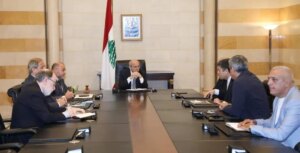
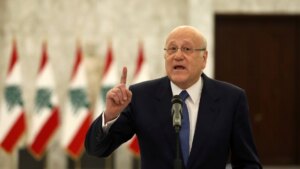
Speaker of the House of Representatives, Nabih Berri, received, at the headquarters of the Second Presidency in Ain El-Tineh, the Public Prosecutor of Cassation, Judge Ahmed Rami Al-Hajj, where the meeting discussed the general situation, especially the judicial ones.
Berri also received the Chairman of the Board of Directors of the National Social Security Fund, Bechara Al-Asmar, and members of the Fund’s new Board of Directors, in a protocol visit that followed their assumption of their duties, and constituted an occasion to present their work program at the current stage.
After the meeting, Al-Asmar said that the delegation put Berri in the atmosphere of the new launch of the Security Board of Directors, and requested his support for the projects being prepared, most notably increasing medical and hospitalization benefits, and putting the end-of-service compensation law into effect, which means moving from the compensation system to retirement, in cooperation with the Minister of Labor.
He pointed out that the work also includes adding new segments to the fund, including municipal workers, tobacco and tobacco cultivation workers, agricultural workers, and fishermen, with the aim of expanding the base of affiliates.
Al-Asmar pointed out the need to address the human resources and employment file in the Fund, in addition to mechanization and other files, stressing that the delegation sensed support from Berri for these trends.
He stressed the need for the new Board of Directors to be effective and responsible at the current stage, and to work in a spirit of solidarity and national brotherhood to achieve the required achievements.
Berri also received the Chairman of the Southern Council, Engineer Hashem Haider, accompanied by a delegation that included Vice President Rasha Abu Ghazaleh, Board Member Youssef Dogan, and Comptroller General Yasser Thebian.
The delegation presented Berri with the fifth part of the “White Hands” book series, which includes a summary of the work and projects implemented by the South Council in the south, Western Bekaa, and Rashaya between 2019 and 2025.
The meeting also discussed the activities and programs of the Southern Council related to confronting the repercussions of the Israeli aggression and keeping pace with the refugee relief issue.
Haider said that the book documents the council’s achievements in the field of infrastructure, while its work also includes helping citizens in reconstruction, supporting the sick and wounded, and providing relief to the displaced.
He added that the delegation briefed Berri on what the council was doing after the war and the ceasefire, especially in the file of relief for the displaced and the rehabilitation of schools to enable southern students to return to school, in addition to providing services aimed at strengthening the steadfastness of the people and encouraging them to return to their land and remain there.
He stressed that the Southern Council works in various villages without distinction or discrimination and under the umbrella of applicable laws.
Regarding the damage file, Haider said that the Council began surveying operations from the first moment, and has completed a damage survey in many villages and is working to prepare files in preparation for reconstruction as soon as the necessary funds are available.
He explained that the state’s current capabilities do not allow for the implementation of the reconstruction process, considering that this file requires international support, especially Arab and Gulf support.
He pointed out that reconstruction requires more time and is linked to some political solutions, pointing out in return that there are steps that can be implemented quickly, including providing ready-made homes for those who need them, stressing that the Council will not wait for the start of reconstruction to take care of the needs of citizens.