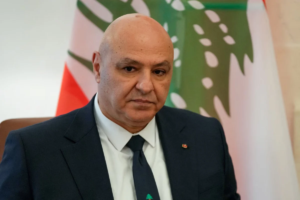
In a move that carries a direct political message to Beirut in the midst of the ongoing negotiations, Israel is preparing today, Thursday, to release 5 Lebanese prisoners and return them to Lebanon, including, according to Arab reports, Kamal Ghazi, who went missing about a year ago in an area near Mount Hermon. The decision comes after Benjamin Netanyahu’s meeting with the American ambassadors to Lebanon and Israel, in parallel with the continuing disagreements over the mechanism of action in southern Lebanon and the conditions for Israeli withdrawal.
According to a report by journalists Elisha Ben Kimon, Itamar Eichner, and Lior Ben Ari on the Israeli “Ynet” website, an Israeli official confirmed, after reports published by Arab media, that Israel will release the five Lebanese prisoners today, saying that “the matter is related to an Israeli gesture towards the Lebanese government.”
The official added, “The issue was discussed this week during Netanyahu’s meeting with the US Ambassador to Lebanon, Michel Issa, and the US Ambassador to Israel, Mike Huckabee, which was held in the Prime Minister’s office in Jerusalem.”
The report indicated that Israel had previously released Lebanese prisoners in March 2025, in a move that was also described as a gesture towards the Lebanese government.
This comes after Netanyahu met earlier this week with the US ambassador to Lebanon and the US ambassador to Israel to discuss the negotiations file.
However, the report indicated that, despite the initiative to release the prisoners, the Israeli army is still not satisfied with the “pilot project” currently underway in southern Lebanon, as it considers that the Lebanese army is not making sufficient progress in removing Hezbollah’s military structures in the villages included in the project.
According to the report, the mechanism that was supposed to lead to calming the northern border is facing obstacles, after the aim of the pilot project in southern Lebanon was to pave the way for the disarmament of Hezbollah south of the Litani, the withdrawal of the Israeli army, and the handing over of control to the Lebanese army, but implementation is not progressing according to Israeli expectations.
According to the report, the Israeli security establishment monitors that the Lebanese army is facing great difficulties and is not moving in accordance with the goals set for it, as its soldiers refrain, due to legal restrictions, from carrying out searches inside homes and buildings belonging to Hezbollah in the villages, preferring to limit their activity to open lands and public spaces.
The obstacles are not limited to the field situation, as the report believes that the basis of the problem remains political, in light of the fact that no agreement has yet been reached regarding the party that will supervise the work of the Lebanese army, the standards that it must adhere to, and the precise conditions that the Israeli army will demand to be met before starting to withdraw.
About two months ago, the Ynet website and Yedioth Ahronoth newspaper revealed a proposal requiring Italian army forces to supervise the implementation of the plan, but the project has not yet been implemented.
The Israeli report believes that this stumbling has two aspects, as it gives the Israeli army, on the one hand, an operating space that it considers necessary to complete its mission in the Ali al-Tahir Heights, where, according to the Israeli narrative contained in the report, there are dozens of Hezbollah members who are currently besieged.
This situation also allows the Israeli forces, according to the report, to improve their deployment model, create more advanced control structures, continue their operations in the region and remove the structures that Hezbollah has created over the years.
On the other hand, the long-term Israeli presence in southern Lebanon raises fears of what the report described as a return to the difficult and bloody days of the past.
Regarding Ali Al-Tahir Heights, the report said that the military operations there are progressing well from the Israeli point of view, and that they are raising great tension within Hezbollah, which appeared, according to the Israeli account, last night when the party launched two explosive drones towards the forces operating in the region.
The report indicated that the incident ended without injuries, after one of the two drones was intercepted while the second fell.
The report was also based on a study published by the Israeli “Alma” Center for Research on Security Challenges in the North, in which it said that Hezbollah is making a profound change in its mode of operation to adapt to the new reality.
According to the study, after the scenario of the incursion into the Galilee received a strong blow and the destruction of structures linked to the Radwan Force, the party abandoned broad operational plans and moved to a distributed work pattern that relies on small groups, in a manner similar, according to the center, to the model currently in place in the Gaza Strip.
Israeli security officials said, according to the report, that Hezbollah continues to collect intelligence information about Israeli army soldiers, study their modus operandi, draw maps of their locations and determine their movement routes, in preparation for the possibility of renewed confrontation in a format that relies on infiltration, ambushes, launching booby-trapped drones, and creating booby-trapped areas.
In an attempt to bring the pilot project out of a state of impasse, Israel is working to exert American pressure on the Lebanese government and the Lebanese army, based on an Israeli assessment that the completion of the Israeli army’s activity in Ali al-Tahir Heights, in parallel with political contacts mediated by the United States, will ultimately push the parties to move towards forming an agreed-upon oversight force and setting clear standards.
Thus, the release of the five prisoners comes at a time when the political and military tracks are moving side by side: an Israeli gesture directed at the Lebanese government on the one hand, and negotiations that are still pending on the details of deployment, control, and withdrawal on the other hand, while Ali Al-Taher Heights remains one of the most prominent points of field pressure at the negotiating table.