The issues of arms exclusivity, Israeli withdrawal, financial reform, and the return of displaced persons to the south topped the meetings of the President of the Republic, General Joseph Aoun, at Baabda Palace, in addition to discussing the situation of the Electricité du Liban and the political and security developments related to the post-framework agreement phase.
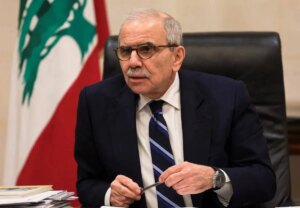
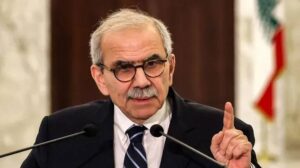
In this context, President Aoun received the head of the National Dialogue Party, MP Fouad Makhzoumi, who explained after the meeting that he discussed with the President of the Republic the internal and regional developments and the options facing Lebanon at the current stage.
Makhzoumi expressed his appreciation for President Aoun’s position and his adherence to the framework agreement, considering that it constitutes the realistic path available for Lebanon to emerge from the cycle of war and instability, restore its sovereignty, and open the door to a new phase of security, reconstruction, and economic advancement.
He stressed that Lebanon can no longer afford to waste more time and opportunities, and that what is required is a move from discussion to actual implementation, stressing that the exclusivity of weapons in the hands of the state is not a political slogan or an item that can be postponed, but rather the basis for the establishment of the state and the restoration of its sovereignty.
He said that Hezbollah’s weapons must be placed under the authority of the state, and that the Lebanese military institution alone must have weapons and authority over the entire Lebanese territory.
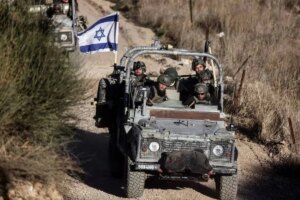
On the other hand, Makhzoumi stressed the rejection of any Lebanese territory remaining under Israeli control, calling for the implementation of Lebanon’s obligations to coincide with the complete Israeli withdrawal from Lebanese territory and respect for Lebanon’s sovereignty and territorial integrity.
He believed that the two paths are parallel and complementary, through the state restoring its decision and sovereignty at home, and Lebanon restoring its full rights and sovereignty over its land.
He stressed that Lebanon’s interest must be the sole reference for national decisions, stressing that it is not permissible to link Lebanon’s future or its strategic decision to Iran or any external axis.
He explained that Lebanon’s relations with countries must be based on common interests and mutual respect, while the decision on peace, war, and security and strategic policy must remain an exclusively Lebanese decision taken by constitutional institutions.
Regarding the economic file, Makhzoumi called for not postponing financial reform in parallel with the path of restoring sovereignty, considering that state building and economic recovery are two paths that must advance together.
He pointed out that after the adoption of the Banking Reform and Reorganization Law, the priority became to approve the Financial Gap Law on fair and clear foundations, protecting the rights of depositors, distributing responsibilities and losses fairly and in accordance with international standards, and putting the banking sector on the path to recovery and restoring confidence.
He also warned of the danger of the expansion of the monetary economy and its repercussions on the state’s ability to monitor, collect, and combat evasion, corruption, and money laundering, stressing that it is not possible to build a modern economy or attract investments and return Lebanon to the international financial system in light of the continuation of a large portion of economic activity outside the official banking and financial system.
He stressed that sovereignty and financial reform are not two separate issues, calling for implementing the framework agreement, restricting weapons to the state, supporting the Lebanese army, and working to achieve complete Israeli withdrawal, in parallel with financial, banking and judicial reforms and confronting the monetary economy.
Makhzoumi concluded by stressing that President Aoun’s adherence to the framework agreement and the logic of the state and institutions is a responsible position that deserves support, adding: “Our choice is clear: Lebanon first and the state first.” One state, one army, one weapon, and one decision in peace and war.”
President Aoun also received a member of the “Strong Republic” bloc, MP Melhem Riachi, as a delegation from the head of the “Lebanese Forces” party, Samir Geagea, and discussed with him political, national and administrative affairs, in addition to the relationship between the “Lebanese Forces” and the Presidency of the Republic.
In another meeting, President Aoun received from the delegation of the Southern Council, headed by Hashem Haidar, the fifth part of the “White Hands” book series, which includes a summary of the work and projects implemented by the Council in the South, Western Bekaa, and Rashaya between 2019 and 2025, within the framework of its role in the reconstruction and development of the regions.
The delegation included Vice President of the Southern Council Rasha Abu Ghazaleh, Board Member Youssef Dogan, and General Financial Controller Yasser Dhabian.
Haider explained that the Israeli attacks that began on October 8, 2023, led, at one stage, to the displacement of about a million people towards safer areas, noting that the Council worked to provide possible assistance to the displaced and the steadfast.
He added that after the ceasefire, the Southern Council launched a large workshop, during which the restoration of a number of public schools was completed, allowing the academic year to begin normally, in addition to the restoration of the government palaces in Nabatieh, Bint Jbeil and Tibnine.
He pointed out that the works also included hospitals in Nabatieh, Bint Jbeil, Mays al-Jabal and Beit Lev, as well as projects related to water and electricity.
Haider said that what the council is doing does not match the sacrifices and suffering of the people of the south, stressing that these sacrifices will remain “a banner of glory in the history of their struggle.”
For his part, President Aoun thanked the delegation for the activities of the Council of the South in the southern regions and the Western Bekaa, calling for working transparently and accelerating the completion of the required works, thus contributing to the return of the displaced to the villages and towns to which the security conditions allow them to return.
Aoun stressed the need to secure the necessary infrastructure to make return possible and facilitated, and to work to rebuild confidence in the state and its institutions at home and abroad, especially among countries that have expressed their willingness to help Lebanon overcome its current suffering.
Regarding the electricity file, President Aoun was informed by the Chairman of the Board of Directors and Director General of the Electricité du Liban, Kamal Hayek, about the conditions of the institution, and discussed with him ways to increase energy and raise electricity production.
Aoun also received the former US ambassador to Lebanon, David Hale, and conducted a horizon tour with him that dealt with local, regional and international affairs, in addition to the situation in the south and the post-framework agreement phase.
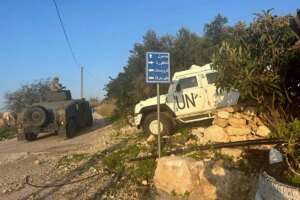
The Baabda meetings come in light of simultaneous official efforts to consolidate state authority, support the army, address the repercussions of the confrontations in the south, and return the displaced, in parallel with completing financial reforms and rebuilding the confidence of the Lebanese and the international community in state institutions.