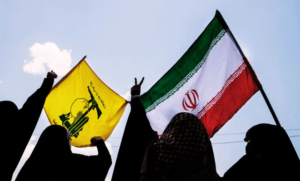
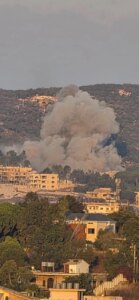
Israel has expanded its circle of accusations in southern Lebanon, no longer confining what it describes as the “Hezbollah structure” to military sites, weapons stores, and tunnels. Rather, it has now placed the health, social, and construction institutions active within the southern villages under the microscope.
In this context, the Israeli Broadcasting Corporation “Kan” published a report that focused on the “Islamic Health Authority” and the “And Cooperate” Association, based on estimates issued by an Israeli center specializing in monitoring armed organizations, which claimed that the two institutions are linked to “Hezbollah” or operate under its influence.
According to the Israeli narrative, the party resorts to medical, relief, and reconstruction institutions to maintain its presence within the southern villages, and to compensate for part of the decline that befell its military and political structure as a result of the war, destruction, and the expansion of the Lebanese army.
However, the report did not provide evidence proving that medical services or reconstruction work constitute military activity, nor did it present documented facts about the use of the two institutions’ facilities to store weapons or manage field operations. Therefore, the essence of what was stated in it remains within the framework of Israeli discretion, and not in the category of independently proven facts.
However, the importance of the report lies in the fact that it reveals Israel’s expansion of its definition of the concept of “Hezbollah influence.” After the focus was on weapons, personnel, and military sites, health, relief, and reconstruction activity is now presented as part of the structure that Israel wants to subject to control, and perhaps to targeting.
This transformation becomes especially dangerous during the reconstruction phase of the south. In light of the limited capabilities of the state and the delay in foreign aid, local associations and institutions are filling the void and providing services to the population. However, Israel seeks to link this role to the party’s political and security project, which may affect the positions of donors and the conditions they will set to finance the reconstruction process.
This approach may pave the way for demands to prevent specific institutions from participating in reconstruction, or to include them on sanctions lists, or even to expand the Israeli Target Bank to include facilities that provide civilian services, under the pretext of their connection to the party.
This intersects with the Israeli campaign against the performance of the Lebanese army. Tel Aviv claims that the army did not succeed in dismantling the party’s military structure, while at the same time claiming that the party is working to re-establish its presence through associations. In doing so, it is trying to build a narrative that the transfer of the land to state authority does not end the party’s influence, because it is able to return to it through the gates of health, relief, and reconstruction.
Therefore, the upcoming confrontation in the south may not revolve around weapons alone, but also about who has the ability to provide treatment, aid, and rebuild villages. Israel has actually begun to transfer these institutions to the accused, in a step that threatens to turn reconstruction itself into a new arena of conflict.