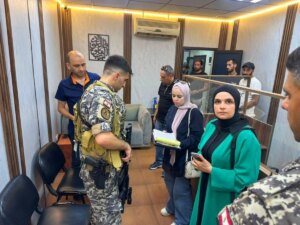
Minister of Education and Higher Education, Rima Karami, discussed with an educational and municipal delegation from the city of Nabatieh, preparations for the start of the academic year in light of the security and field conditions taking place in the region, in addition to the file of restoring damaged schools and securing alternative buildings for institutions that cannot be used.
The delegation included Nabatieh municipality member Muhammad Farran, Hassan Kamel Al-Sabah Public High School principal Abbas Shmeisani, Kafr Rumman Girls’ High School director Nisreen Mughrabel, Kafr Rumman Public Kindergarten Director Rana Farhat, Nanny Salma Muhammad Jaber Kindergarten Director Maryam Shmeisani, Al-Manar Institute Director Muhammad Atwi, Canadian Academy Director Ali Yassin, and Sanad School Director Muhammad Darwish.
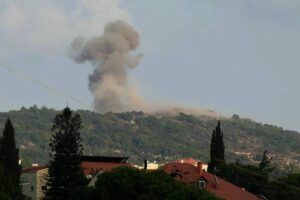
Karami briefed the delegation on the conditions of the educational institutions in the university district, Doha Kfar Rumman, and the Nabatieh region, and the specificity of the security situation surrounding them, while its members affirmed their desire to launch the academic year in person and on the specified date.
The research discussed the necessary measures to support this trend and ensure continuity of education, taking into account the safety of students, teachers, and administrations in light of field developments.
Karami praised the commitment of educational institutions to continue education, stressing that this approach is consistent with the ministry’s goals and its plan aimed at preserving and continuing public schools, including damaged or destroyed institutions.
She stressed the adoption of flexibility in the start of the academic year according to the geographical location and circumstances surrounding each institution, provided that schools choose the most appropriate method of education between in-person, integrated and distance education.
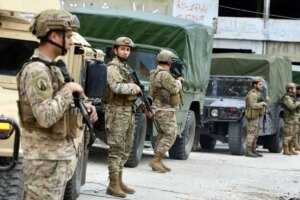
The delegation conveyed, through the Minister of Education, an appeal to the President of the Republic, Joseph Aoun, the Speaker of the House of Representatives, Nabih Berri, and the Prime Minister, Nawaf Salam, to take measures to enhance the survival of the people on their land, by intensifying the presence of the army and security forces and reopening the Public Security Center, in a way that enhances the population’s sense of reassurance.
Karami informed the delegation of her follow-up with the Southern Council to repair and restore damaged schools, explaining that the first 4 weeks of the school year will be flexible, with the possibility of modifying arrangements according to variables and the extent of the difficulty and complexity of the field situation.
She called on school principals to maintain continuous communication and monitoring with parents and teachers, and to know their whereabouts, to maintain the connection between the school, its students, and its educational staff.
She indicated the possibility of moving the damaged secondary schools and public schools to other available buildings, noting the readiness of the Southern Council to assist in carrying out the required restoration work.
As for private schools that need to move to alternative buildings, Karami agreed to facilitate their move and shorten a number of procedures, while emphasizing not to relax the conditions that prove the buildings’ durability, safety, and suitability for use.
She stressed that accelerating transactions will not be at the expense of the safety of students and members of the administrative and educational bodies, especially in light of the need to verify the structural and legal status of alternative buildings before receiving students.
The delegation also presented a request for private schools that were forced to temporarily stop working to be dealt with exceptionally by the Compensation Fund, to prevent the teachers’ relationship with the Fund being interrupted and them losing their compensation, while Karami promised to follow up the file with the relevant authorities.
Educational institutions in Nabatieh face challenges related to the damage to some of their buildings, the security conditions surrounding them, and the difficulty of ensuring access to them for all students and teachers, which prompted the Ministry to offer multiple educational options instead of adopting a unified formula in different regions.
The flexible launch plan focuses on keeping schools able to continue education, whether from their main buildings or from alternative headquarters, in parallel with restoration work and monitoring field developments on an ongoing basis.