The file for verifying the disarmament of Hezbollah has entered a new phase, with the introduction of a mechanism that may include the deployment of foreign forces inside Lebanon to search villages in the south and ensure that they are free of weapons, while Britain, Italy, Switzerland, and Indonesia have emerged as potential countries to participate in this mission, according to what was revealed by sources familiar with the negotiations between Lebanon and Israel.
According to a report by journalists Alexander Cornwell and Maya Al-Jubaili at Reuters, on August 12, 2026, Lebanon and Israel agreed to include Britain, Italy, Switzerland, and Indonesia among the list of countries that could contribute to a proposed mechanism that would allow the deployment of foreign forces in Lebanon to verify the disarmament of Hezbollah.
This list appeared during the US-brokered talks in Rome last week, which is the latest round of negotiations between Lebanon and Israel regarding the implementation of the June agreement, which links the gradual Israeli withdrawal from Lebanon to the disarmament of Hezbollah.
Three sources said that the proposed countries may contribute to defining the scope of the mechanism’s work, provide personnel to supervise its implementation, or send forces to monitor or participate in inspections with the aim of verifying disarmament.
A Lebanese official told Reuters on Friday that Lebanon and Israel had agreed on a list of potential countries that could send forces to participate in the verification process, but he declined to reveal their names, explaining that the United States would decide which countries would actually participate.
In late June, Lebanon and Israel reached an American-brokered framework, as part of Washington’s efforts to end the latest round of confrontation between Israel and Hezbollah, which broke out in March after the party attacked Israel following the American-Israeli war on Iran.
A source with direct knowledge of the file said that discussions regarding the countries included in the list are still in their early stages, but indicated that there is “cautious optimism” that these efforts can move forward.
The Israeli Prime Minister’s Office, the Lebanese Presidency, and the British, Italian and Indonesian Foreign Ministries did not immediately respond to requests for comment, while the Swiss Foreign Ministry said it had no immediate comment.
In one of the most sensitive aspects for Lebanon, sources said that Israel demands that inspections include private homes in villages in the south.
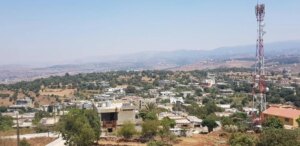
According to two sources, the proposed mechanism provides for searching villages in southern Lebanon and verifying that they are free of weapons, while Israel wants these operations to include private homes as well.
Over the past year, the Lebanese army has resisted pressure to conduct searches inside private property, fearing that this step would lead to tensions in the south and with Hezbollah on a broader scale.
Security officials told Reuters that the army would need separate judicial warrants to search each home.
A foreign security official said that the issue of private property needs to be addressed clearly, including determining how to inspect it and who will undertake it.
He added that the scope of freedom of movement of foreign forces inside Lebanon also needs to be clearly defined.
The sources indicated that any presence of foreign forces in Lebanon requires an agreed upon authorization, while the most likely scenario seems to be that they will be officially invited by the Lebanese government within a framework agreed upon by Israel.
According to the sources, the United States and Israel are unlikely to accept the United Nations’ participation in this mechanism, while European countries may object to placing it under the supervision of what is known as the “Peace Council” of US President Donald Trump.
Thus, the form of the mechanism, its powers, and the limits of its movement are still subject to negotiation, but the inclusion of the names of specific countries for the first time, and the possibility of foreign forces entering the villages of the south to verify disarmament, moves the file from the stage of political research to a more sensitive discussion about field implementation inside Lebanon.