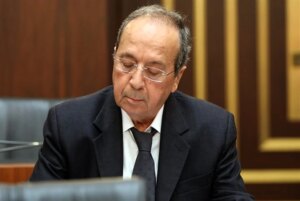
The scholar, Mr. Ali Fadlallah, stressed that the continuation of negotiations between the Lebanese state and Israel, in light of the continuing raids and attacks and the failure to fully implement the ceasefire agreement, requires a more resolute Lebanese position, calling on the state not to make any concessions and to adhere to the complete Israeli withdrawal from Lebanese territory, and to secure the return of the people of the south to their villages.
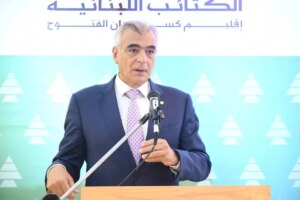
Fadlallah’s position came during the two Friday prayer sermons that he delivered from the pulpit of the Imam Al-Hassanin Mosque in Haret Hreik, in the presence of a number of scholarly, political and social figures and a crowd of believers.
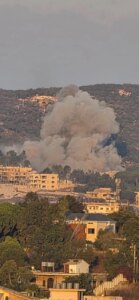
Fadlallah addressed the ongoing Israeli attacks, noting that raids are now targeting southern villages and towns on a daily basis, in conjunction with the continuation of bombing, bulldozing, and burning of buildings, infrastructure, and forests in areas controlled by Israel.
He considered that these operations aimed to remove any semblance of life in those areas, push the people to despair and prevent them from returning to their villages and homes.
Fadlallah said that, despite the continuation of these attacks, negotiations continued between the Lebanese state and Israel, at a time when the state was expected to take a position on what was happening, and not to continue negotiations in light of the continuation of the Israeli attacks and Israel’s failure to fully implement its obligations related to the ceasefire.
He indicated that he is aware of the amount of pressure being exerted on the Lebanese state, and the difficult reality that the country is suffering from due to the Israeli presence in Lebanese territory, but he stressed that this does not justify accepting what Israel is doing or remaining silent about its practices against Lebanon and the Lebanese.
He stressed that these pressures do not absolve the state of its responsibilities, nor do they justify making concessions, considering that it is its duty to be faithful to its people, its land, and its free decision, and not to neglect the capabilities of the Lebanese, their property, and the earnings of their lives.
Fadlallah called on the Lebanese state to continue to insist on complete Israeli withdrawal from all Lebanese territories, allowing the return of the people there, whether through ongoing negotiations or outside of them, or by raising the issue before international forums and platforms.
He also called for not being satisfied with the partial withdrawals proposed by Israel from some villages, considering that most of these withdrawals are taking place from villages that the Israeli army did not enter in the first place, and therefore they are, in his words, “from the Lebanese bag.”
He believed that the proposed withdrawal was rigged with Israeli conditions that made it unachievable or sustainable, especially in light of Israel’s repeated announcement that it would not leave the Lebanese territories it had controlled, considering it a security zone for it.
Regarding internal affairs, Fadlallah warned of the repercussions of the existing division, whether within state institutions or at the popular level, on the internal cohesion required at this stage to confront the challenges and strengthen the strength of the Lebanese position.
He stressed the need to prevent any strife that may be pursued by parties that do not want good for Lebanon, calling on everyone to stop the tense and provocative rhetoric that dominates media platforms, social media sites, officials’ statements, and political positions.
He called for a return to strengthening the language of dialogue in approaching differences, and adopting a rational, objective and calm discourse, as it is the way to address divisions and remove tensions and tensions.
Fadlallah reiterated his call on the Lebanese state to activate its role towards the citizens who paid the bill of war through displacement, destruction and sacrifices, and to make every effort to provide all the conditions that guarantee their return to their villages and secure a decent life for them, stressing that this is their right.
He praised the initiatives undertaken by individuals, institutions and associations to support the people and carry out this role, considering that they contribute, as much as possible, to filling the shortfall resulting from the state’s failure to fully fulfill its duties towards the citizens.