“Lebanon Debate”
Attention is focused on the tripartite meeting scheduled today to discuss the mechanism for implementing the pilot areas in the south, in the context of logistical preparations for moving the framework agreement from paper to the field. Given the crucial importance this title holds for the south, in terms of the success of the two model regions’ experience, the ability of the American military team to control the mechanism for implementing the agreement will largely determine the equation that will govern the next stage between Lebanon and Israel.
While there are conflicting reports, information and expectations regarding the geography of the model areas, which have multiplied over the past twenty-four hours, informed circles confirm that the serious discussion begins today, and that the tripartite military meeting will discuss the field formula that will be adopted, in addition to the timetable for the test areas, which has not been finally determined.
This development coincides with the preparation of the President of the Republic, General Joseph Aoun, to head to Washington tomorrow, Saturday, at a time when the scope of internal political conflict is expanding, following the unprecedented attack launched by “Hezbollah” on the Presidency of the Republic and the framework agreement, considering that it paves the way for “legalizing the occupation” and imposing new realities on Lebanon.
On the other hand, Foreign Minister Youssef Raji stressed, during a conference in the French Senate, that Lebanon had entered the stage of rebuilding the state that “alone monopolizes security and foreign policy decisions,” considering that “the decision to end the military presence of Hezbollah constituted a sovereign step taken by the state with a national will, not as a result of external pressure, and allowed progress towards the framework agreement.”
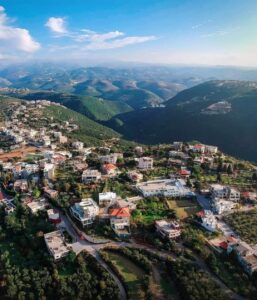
On the ground, the Lebanese army intensified its deployment in a number of towns in the south, including Faroun, Al-Ghandouria, Qalawayh, Burj Qalawayh, Kfardounine, Qaqaiyat Al-Jisr, and Srifa, where it set up barriers and observation points on the eve of the virtual military meeting, which is expected to finally decide the identification of the experimental areas and the mechanism for implementing them.
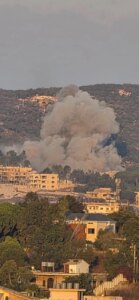
On the other hand, the Israeli army did not stop its military operations, and continued the systematic destruction of infrastructure in the villages through bombing, bombing, and burning buildings and homes.
In parallel, Israeli Defense Minister Yisrael Katz confirmed to his American counterpart, Pete Hegseth, Israel’s commitment to keeping its forces inside what it calls “security zones” in Lebanon, Syria, and the Gaza Strip, considering that this constitutes a guarantee of the security of the Israeli borders.
Internally, the legislative session of the House of Representatives was not devoid of sharp debates inside and outside the House hall, after the evening session was adjourned due to the loss of a quorum, following the withdrawal of representatives of the “Strong Republic” bloc at the beginning of the discussion of the fortieth item on the agenda, related to the proposal for a law to abolish the death penalty.
The Council had approved in its morning session an extension of the term of the President of the Lebanese University for six months, pending the formation of the University Council, while allowing him to run for a second term, amid the objection of a number of representatives who considered that the law was “detailed according to the size of one person.”
The session also witnessed a sharp argument during the discussion of amending the National Defense Law to allow the military to practice the teaching profession, as MPs Sami Gemayel and Jihad Al-Samad exchanged harsh words, before Parliament Speaker Nabih Berri intervened to stop the debate, asking the representatives not to boycott, so that the discussion ended with the approval of the project.