“Lebanon Debate”
As an agreement between the United States and Iran approaches, attention is turning to the potential repercussions of this development on various arenas in the region, most notably Lebanon, which is directly linked to the balances of the regional conflict. In this context, the writer and political analyst Ibrahim Bayram links the course of the Iranian-American negotiations to what is happening in Lebanon, considering that any potential agreement may open a new phase in the region, but the translation of its results remains dependent on the extent of the commitment of the regional parties, most notably Israel, to any understandings that may be built on its basis.
Bayram believes in an interview with “Lebanon Debate” that the agreement between the United States and Iran is closer than ever to signing, even if it needs some time to complete its final details, considering that its path has become almost settled.
He says: “The agreement may take days or an additional period before it is officially signed, but the available indicators indicate that it is close. As for the Lebanese, they are waiting for this agreement because it is directly linked to an essential part of the war going on here, whose roots go back to the conflict and explosion that occurred between Washington and Tehran.”
He adds that the Lebanese are awaiting the repercussions of this agreement on their internal reality, especially in light of repeated Iranian talk that the ceasefire in Lebanon forms part of the proposed understandings.
However, he stresses that the nature of these repercussions is still unclear, saying: “It is not possible to predict from now the shape of the next phase or the extent to which the agreement covers all Lebanese regions.” In this context, he draws attention to the importance of the questions raised by the former head of the Progressive Socialist Party, former MP Walid Jumblatt, about the extent of Israel’s commitment to any possible understandings, considering that the essence of the problem does not lie only in the ceasefire, but in what will come after it.
He continues: “Israel may agree to a ceasefire in southern Lebanon, but the real question is: What’s next? Will it withdraw? Therefore, there will be a new stage of tug-of-war between Lebanon and Israel, and will it accept a return to the reality that existed before March 2? And will Hezbollah, in turn, accept a return to a stage during which Israel enjoyed a different freedom of military and security movement, and here, in his opinion, is the ‘horse of the horse’.”
He confirms that the developments that the region has witnessed over the past months have brought about major changes that make it difficult to simply return to what existed before the war.
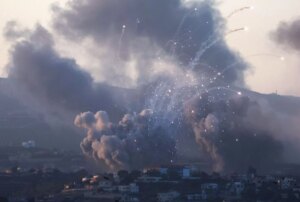
He considers that Lebanon today is in a waiting phase, and will inevitably benefit from any American-Iranian agreement, but the main challenge lies in knowing the nature of the next phase, because for the Israelis it is the phase of ending Hezbollah or tightening the siege on it. He pointed out that there are opinions that say that Israel will continue its war for about another month, and will continue its attack towards Tire and the highlands of Iqlim al-Tuffah, given the firepower because the party’s fire reserve is present in that area from Ali Al-Taher hill all the way to Al-Rayhan and part of Jezzine. It coincided with part of the war diary, that is, with warnings to villages and towns to evacuate, with his prior knowledge that they were almost empty.
He believes that the warnings are part of the Israeli pressure and intimidation in many forms, and its essence is the same, which is pressure on the environment. Most importantly, the Israeli considers that the end will be in Mleeta, and the story, in his opinion, is more moral than military. He is trying to achieve a great image of victory, and he continues to exercise various forms of field and political pressure to achieve this goal.
On the other hand, it is considered that the success of any US-Iranian agreement should be directly reflected in the Lebanese arena, and that Washington should be able to put actual pressure on Israel to implement what may be agreed upon.
He says: “If the United States really wants to make the agreement with Iran a success, then it must put pressure on Israel. But if Israel remains outside the framework of commitments, it will become difficult to talk about an integrated and sustainable agreement.”
He points out that the agreement must be integrated and not return to the November 27 agreement, which occurred between Lebanon and Israel under American sponsorship, but the latter did not adhere to the pledges it made. However, the situation with Iran today is different, and he considers that matters are still hot and have not ended.