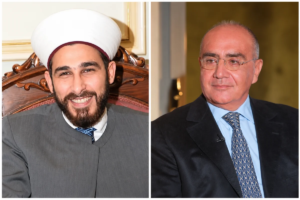
Prime Minister Nawaf Salam met in Paris with the Director-General of UNESCO, Khaled Al-Anani, where he expressed his deep gratitude for the continued support that UNESCO provides to Lebanon in this sensitive circumstance.
Salam praised the reactivation of the emergency plan for Lebanon, especially the “Dedicated Account for Lebanon,” noting that it represents a vital tool for mobilizing resources and coordinating the international response to confront the current difficulties, especially in the field of education.
He praised the hard work being done to ensure the continuation of the educational process despite the difficult conditions, by establishing temporary educational places and alternative learning centers, providing the necessary educational tools and supplies, in addition to supporting distance learning and training teachers and volunteers on teaching methods in emergency situations.
In parallel, he praised the ongoing efforts to protect the Lebanese cultural heritage and preserve archaeological sites, expressing his appreciation for the addition of 39 new sites to the “enhanced protection list,” in addition to 34 sites that had been previously included, considering this an essential step in preserving this heritage.
He also praised the role played by UNESCO in supporting press freedom and enhancing the safety of journalists, stressing the importance of these efforts in light of the current challenges.
This meeting comes within the context of an ongoing Lebanese movement on the international scene to mobilize support to confront the consequences of the accumulated crises, especially in the education and culture sectors, which are considered basic pillars of society’s resilience.
UNESCO is considered an essential partner for Lebanon, as it played an important role in previous periods in supporting the educational process, especially in times of crises, by providing alternative educational solutions that ensure that students do not stop studying.
The file of heritage protection is also considered a national priority, in light of the dangers threatening archaeological sites, whether as a result of security conditions or factors of neglect, which makes the inclusion of additional sites on the “protection lists” a crucial step to preserve cultural identity.
At the same time, supporting media freedom and the safety of journalists emerges as a necessary element in promoting stability, especially in light of the difficult circumstances that the media sector is going through.
These efforts come within the framework of broader international cooperation, which aims to support Lebanese institutions and enhance their ability to face challenges, at a stage that requires strong coordination between the state and international partners.