Muhammad Shuqair – Asharq Al-Awsat
Hezbollah surprised the Lebanese political community by evacuating the “Ali al-Taher” hills to the Israeli army’s control, instead of handing them over to the army after taking advice from depositing the hills’ paper in the custody of the Lebanese negotiating delegation in a way that would strengthen its negotiating position. It is preparing for the eighth round, which remains pending on Washington’s decision to set a date, which is likely to be in the second half of this September.
Hezbollah’s evacuation of the “hills” raised a set of questions, the most important of which is determining Iran’s opinion that it is not permissible, as a source involved in the negotiations told Asharq Al-Awsat, for the party to unilaterally make a decision like this without consulting it, especially since Iranian leaders had threatened to intervene to defend it, even though they refrained from supporting the party with concrete steps, especially since no one believes that the evacuation of “the hills” came by a unilateral decision that did not It is preceded by consultation with the Iranian leadership.
The culmination of an Iranian settlement
In this context, the source asked whether the evacuation of the “hills” was the culmination of a settlement in which Tehran participated and was developed by multinational mediators that allowed the safe exit of military experts, as was reported, belonging to the Iranian “Revolutionary Guard” who were present inside the military facility. This is despite the fact that Iranian officials had previously spoken about their communication with those inside the facility, and were threatening to intervene to prevent Israel from closing in on it.
The source pointed out that “Iran’s threat to intervene in support of Hezbollah in its defense of the Hills remained a dead letter and was not translated into practical steps,” similar to their threat in response to Israel’s assassination of former Hezbollah Secretary-General Hassan Nasrallah. He said that Tehran gave the party the green light to evacuate the Hills.
An excuse to keep weapons
The source stopped at the party’s insistence on not handing over the “hills” to the army. He wondered whether his reluctance to respond to the advice given to him was because his leadership was not willing to respond in the first place. Not because it fears that the Israeli army will take over “Ali al-Taher,” similar to the positions the Lebanese army occupied and withdrew from as part of its repositioning south of the Litani, but because its mere deployment there means that the party will lose the opportunity for its fighters to remain north of the Litani.
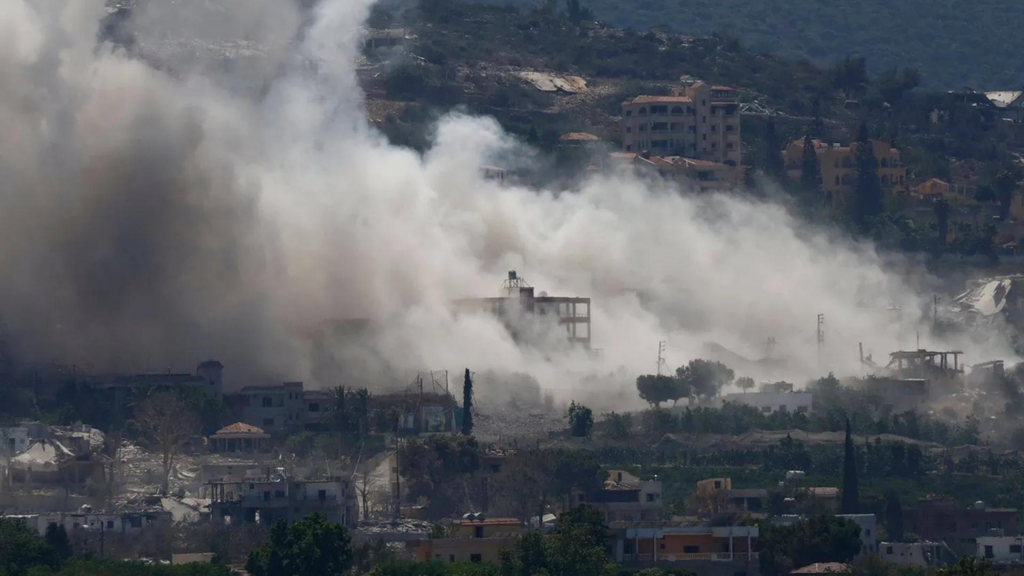
Consequently, the source believed that the party preferred to evacuate the “hills” while the Israeli army had surrounded it after taking control of its entrances and outlets adjacent to the towns of Nabatiyeh Al-Fawqa and Kafr Benit, then the outskirts of Doha and the town of Kafr Rumman. He stressed that the party’s evacuation of “the hills” does not mean the departure of its fighters from northern Litani, but rather comes in the context of their redeployment to justify its retention of its weapons under the pretext of confronting Israel.
He said: “Didn’t the official authorities have any information about whether the Israeli army fully controlled the hills, or were there paths and branches inside them that it was working to close in?”
He added: “It would have been better for the party to hand over the hills to the Lebanese army to strengthen the position of the negotiating delegation instead of evacuating them to the Israeli army, making its control of the hills a fait accompli that tops the agenda of the eighth round of negotiations, while preparations are currently being made for the international preparatory conference hosted by Paris to support the army and internal security forces in the middle of this month.” The source revealed that, according to the information available to him, “there has never been a confrontation between Israel and the party that required the evacuation of the hills, out of appreciation for the imbalance of power,” especially since the data we have confirms that the party evacuated the hills after it was able to withdraw its fighters who remained alive.”
The source is surprised that Hezbollah did not respond to the advice to hand over the Ali al-Taher Hills to the Lebanese army under the pretext of keeping its weapons north of the Litani River, as if its political presence was linked to its keeping its weapons and refraining from handing them over without any political price, in reference to its linking its abandonment to agreeing on a strategy for national security. He believed that the Hezbollah delegation’s tour of most of the political and party leaders, which it began with a meeting with the Free Patriotic Movement, did not achieve what it aspired to in light of the Lebanese consensus on the exclusive control of weapons in the hands of the state, and it no longer had an ally to justify its retention of its weapons.
The source asked about the feasibility of linking Lebanon to the US-Iranian “memorandum of understanding”, the implementation of which is still dependent on the escalation of campaigns and accusations between the two parties, while from time to time it is interspersed with Washington’s pressure on the Iranian leadership to submit to the conditions set by US President Donald Trump?
On the other hand, what prevents the party from supporting the negotiating delegation and giving it the opportunity to implement the “framework agreement” instead of keeping the country hostage to the “memorandum of understanding” that does not seem to see the light in the foreseeable future? The source says, adding that Lebanon is maintaining its position of establishing a ceasefire, releasing prisoners, rebuilding destroyed towns, and Israel’s withdrawal, and this is what the negotiating delegation is adhering to based on the instructions of the President of the Republic, General Joseph Aoun.
The source pointed out that there is no longer any justification for maintaining Hezbollah’s weapons in light of the imbalance of power, its failure to maintain the rules of engagement, and its monopoly on the decision of peace and war, which has cost the country a heavy price. Otherwise, why does he keep weapons as long as he evacuated the hills without any compensation and even holds the government responsible for the burdens of supporting him from Gaza and Iran?
Prisoners in exchange for remains
In addition, the source believed that Israel’s release of five kidnapped persons, at the request of the US ambassador to Beirut, Michel Issa, who succeeded in extracting his approval from its Prime Minister, Benjamin Netanyahu, to release them, is tantamount to opening a loophole in the way of re-proposing the release of Lebanese prisoners, in an attempt to get the negotiations out of a stalemate, even though Tel Aviv insists on knowing where the Lebanese Jews who died during the outbreak of the civil war in Lebanon are buried, in preparation for the recovery of their remains.
Asharq Al-Awsat learned from a ministerial source concerned with the negotiations that Netanyahu handed Issa maps related to identifying the places where they were believed to be buried, as if he were stipulating the recovery of their remains in exchange for research and the release of the Lebanese prisoners.
The source revealed that Lebanon has lists of the names of Lebanese Jews and the places where an official in the Jewish synagogue in Beirut said they were buried. He said that Lebanon has accomplished everything required of it through the competent authorities, but it has not yet found any remains according to the regulations in its possession.
The source confirmed that Lebanon is continuing to search for the remains of Lebanese Jews, although it is facing difficulty in the absence of anyone to guide it to burial places. He said that cooperation is still ongoing between an official in charge of the Jewish synagogue and the security services, so that they may determine the locations.