On Sunday, the people of the Marjayoun and Hasbaya regions staged a sit-in in the town of Qalaia, demanding that the Lebanese state take urgent action to reopen the Khardali Road, considering that its continued closure has turned the region into an almost isolated state, and has exacerbated the living and economic burdens on the population.
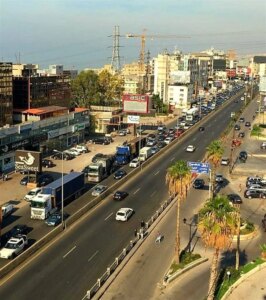
Participants in the sit-in stressed that Al-Khardali Road is not just a main road, but rather constitutes the vital artery that connects the regions of Marjayoun and Hasbaya to Nabatieh, Sidon, and Beirut, while its closure led to a doubling of travel distances and exhausting citizens financially and temporally.
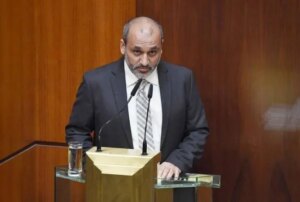
The mayor of Qulaya, Hanna Daher, said that the continued closure of the road directly affects the lives of the people, especially patients who now need additional hours to reach hospitals, in addition to university students studying in Nabatieh, Sidon, and Beirut, who are facing great difficulties in continuing their studies due to the length of alternative roads and the high cost of transportation.
Daher called on the Lebanese state to assume its responsibilities and work with all concerned parties, including the Ceasefire Monitoring Committee, UNIFIL forces, and sponsoring countries, in order to secure the reopening of the road and ensure the safety of civilians.
He pointed out that the crisis is no longer limited to freedom of movement, but has turned into an economic and living crisis, after the cost of transporting goods and daily needs rose, while several companies refrained from delivering their services to the region, forcing citizens to travel hundreds of kilometers to obtain their supplies.
He added that farmers are also facing great difficulties in transporting their production to markets, which threatens their source of livelihood, warning that the continuation of this reality will push more families to leave the region, stressing that resilience requires providing the basic necessities of life, most notably safe roads, education, hospitalization, and job opportunities.
For his part, the Deputy Mayor of Jdeidet Marjayoun, Hikmat Farha, confirmed that the suffering of the people of the region has exceeded all limits, pointing out that dozens of employees working in Nabatieh and Sidon have become daily forced to take long alternative routes, which doubles the cost of transportation and consumes hours of their day in light of the stifling economic crisis.
Farha appealed to the Lebanese state and all concerned parties to take immediate action to reopen the Khardali Road, considering that it is the lifeline that connects the region to its surroundings, and that its continued closure threatens the livelihood of the people and increases the pace of displacement from the border villages.
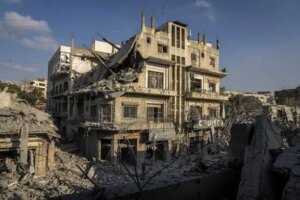
This popular movement comes at a time when large areas of southern Lebanon are still suffering from the repercussions of the recent war, as damage to the infrastructure and security considerations have led to the closure of a number of vital roads, most notably the Khardali Road, which is the shortest and most widely used route between Marjayoun, Hasbaya and the rest of the Lebanese governorates.
The people of the region confirm that reopening the road is no longer just a development requirement, but has become a humanitarian and economic necessity, because of its essential role in securing access to hospitals, universities, markets, and official institutions, and alleviating the burdens on thousands of citizens who continue to cling to staying in their villages despite the difficult circumstances.