“Lebanon Debate”
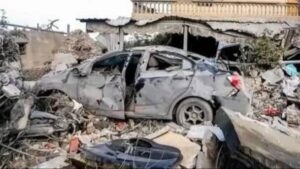
At a time when international efforts are continuing to stabilize the ceasefire in southern Lebanon, questions are increasing about the nature of the existing negotiating path between Lebanon and Israel, and the limits of the American role in sponsoring this path, especially in light of the continued Israeli occupation of points inside Lebanese territory, and the continuation of field attacks and violations, and between betting on diplomacy and warning of its collapse, readings differ regarding the future of the next stage, and whether it will lead to stabilization or a new round of military confrontation.
In this context, the writer and political analyst Tawfiq Shoman, in an interview with Lebanon Debate, provides a reading of the ongoing negotiations and Hezbollah’s position on them, considering that the party does not object to the principle of negotiation, but rather to the rules that govern it, warning at the same time that the failure of this path may open the door to a new war.
Hezbollah and indirect negotiation
Shoman says that Hezbollah is not against the principle of negotiation. Rather, it supports indirect negotiation, but it opposes direct negotiation. This is a basic point that needs clarification, because the objection is not related to the negotiations themselves, but rather to the rules on which the negotiating process is based.
He points out that the party objects to the current negotiation rules that move the issue of the Israeli occupation from being a problem of occupation to being a problem between the Lebanese and the Lebanese, which constitutes the core of Hezbollah’s objection.
Shoman explains that one of the most prominent objections is related to the framework agreement, as Lebanon agreed, according to his reading, that any Israeli move to redeploy would be linked to the disarmament of Hezbollah.
It is considered that this matter transfers responsibility to the Lebanese state and the Lebanese authority, which Hezbollah objects to, because the issue of occupation becomes linked to an internal Lebanese issue.
No call for a ceasefire
He adds that there are other points of objection in the framework agreement, as there is no call for a ceasefire, nor a clear call for the withdrawal of the Israeli enemy from the occupied Lebanese territories, nor does it include stopping the bulldozing operations to which border villages are being exposed.
It also indicates that Lebanon agreed not to file any political or legal complaints against the Israeli occupation, considering that these points constitute the core of the party’s objection.
Betting on American promises
Shoman believes that these objections are valid from Hezbollah’s point of view, at a time when the Lebanese state is betting on American promises that may take years, without Lebanon seeing direct practical results on the border.
He points out that the discussion today in the virtual military meeting revolves around agreeing on the so-called “experimental areas,” which it is said will include six areas out of seven, in six unoccupied villages, while there is only one occupied village, which is Zawtar al-Sharqiya.
Shoman wonders how to deal with these areas, as the presence of an occupied area versus many unoccupied areas will lead to them being subsequently subjected to Israeli evaluation.
He explains that the implementation of the first area will be subject to an Israeli security assessment, and this process may extend for weeks, and if the Israelis agree to the assessment and the Lebanese experimental area obtains approval, it is possible to move to another experimental area, according to what the Israelis and Lebanese negotiators say, and he believes that this path may take years, considering that it is a long and complex path.
Experimental areas and buffer zone
Shoman points out that the Israelis distinguish between the experimental areas and the buffer zone, considering that it is an essential point that must be focused on. According to the Israeli view, the experimental areas, in their opinion, are located outside the yellow line, while the buffer zone is located inside it. Therefore, Israel, according to this interpretation, is carrying out bulldozing operations in the villages located within these areas and turning them into areas devoid of population.
President Aoun’s visit: achievement or recognition of the fait accompli?
Regarding the visit of the President of the Lebanese Republic and whether it represents an acknowledgment and acknowledgment of what has been reached, or whether it may aim to obtain gains from the American side, Shoman says that this expectation had previously been raised in previous stages, whether at the start of the first round or on the eve of signing the framework agreement twenty years ago.
He believes that the matter is being repeated today with the Presidency of the Republic, and there is confirmation of a kind of relationship between the Lebanese Presidency and the American Presidency, especially since US President Donald Trump spoke more than once about the necessity of Israel’s withdrawal from southern Lebanon and southern Syria, but he did not specify a clear timing, and the Israeli withdrawal did not happen, and Trump reaffirms at every period a certain Syrian role in Lebanon, and these two issues need clarification by the Presidency of the Lebanese Republic.
Lack of clarity and blurring of the path
Shoman confirms that there is a need for enlightenment from the Lebanese presidency on a number of files, considering that the absence of clear answers creates a state of ambiguity and ambiguity.
It is not believed that President Aoun will receive more than one media image from Washington because there is no American pressure on Benjamin Netanyahu, despite the clear discrepancy between Trump and Netanyahu. There are many American speeches, but on the ground no one sees any implementation. Trump said more than once that Israel should withdraw, but that did not happen, and perhaps in the press conference with President Aoun he will repeat the same thing, but will Netanyahu respond without any American pressure? This is completely unlikely.
Failure of the negotiating track and the possibility of a return to war
Regarding the possibility of returning to a large-scale war in the event of the failure of the experimental areas and the failure of the negotiating path, Shoman believes that this possibility remains present, and he says that Israel, according to what he confirms, “has its hand on the trigger,” anticipating that war may occur at any moment.
At the same time, what reinforces this hypothesis is the faltering Iranian-American memorandum of understanding that gives the war trend within the United States of America a sign in its favor, which is a trend that is very close to Netanyahu, considering that a return to the war option is possible and highly inevitable as well.