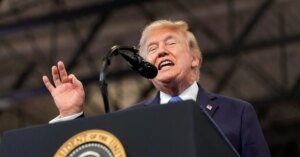
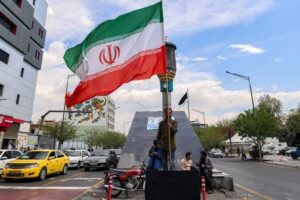
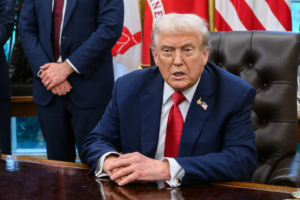
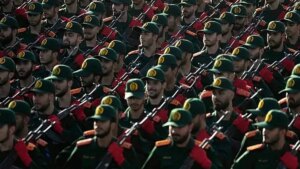
The administration of US President Donald Trump gave Iran a deadline until Saturday to announce a public position on the Strait of Hormuz, in a step that may determine the fate of the recent understandings between Washington and Tehran, amid US warnings of “harsh consequences” if Iran refuses to respond.
According to a report by journalist Barak Ravid published by the Axios website, officials in the Trump administration called on Iran to officially declare that the Strait of Hormuz is open to navigation, and to pledge to stop targeting commercial ships, stressing that the message was conveyed to Tehran directly and through regional mediators.
American officials believe that Iran violated the memorandum of understanding that it signed with the United States three weeks ago, after it repeatedly targeted commercial ships inside and around the Strait, which led to an exchange of military strikes and pushed the agreement to the brink of collapse, before President Trump announced this week the end of the ceasefire.
The US administration believes that Iran’s inability to adhere to this “simple” pledge, as it describes it, raises major doubts about its ability to implement a more complex nuclear agreement.
Iranian Foreign Minister Abbas Araqchi is scheduled to hold a meeting today, Saturday, with Omani Foreign Minister Badr al-Busaidi in Muscat to discuss the Strait of Hormuz crisis.
The report indicates that, before signing the memorandum of understanding, the Sultanate of Oman had opened a southern shipping lane near its coast in coordination with the United States and the Gulf states, which angered Tehran, which considered that this step weakened its negotiating position.
American officials claim that Iranian negotiators informed Washington that “extremist elements” within the Iranian regime were the ones who opened fire on commercial ships, in an attempt to regain pressure cards.
On the other hand, Iranian Foreign Ministry spokesman Ismail Baghaei confirmed that Araqchi’s visit to the Sultanate of Oman will focus on the security of navigation in the Strait of Hormuz, stressing that Iran “accepted a clear responsibility regarding the regulation of navigation and maritime services, and was firm in implementing this responsibility,” denying at the same time that Tehran had requested the resumption of negotiations with the United States, and stressing that the participation came in response to a request from the Qatari mediators.
An American official revealed, according to Axios, that Iran contacted Washington two days after the military confrontations this week, requesting the resumption of talks to resolve the crisis. He said: “They told us: We made a mistake, we made a mistake, so let’s continue talking.”
American officials added that an internal conflict is taking place within the Iranian regime regarding how to implement the memorandum of understanding and the future of negotiations with the Trump administration, noting that there is a movement that wants to reach an agreement, but it faces opposition from other parties within the regime.
An American official confirmed that Washington expects a statement from Iran to be issued following the Muscat meeting, including a declaration to stop targeting commercial ships, and an acknowledgment, directly or indirectly, of responsibility for the recent events, in addition to a confirmation that all lanes of the Strait of Hormuz will be open to navigation and without fees.
Another US official warned that Iran’s refusal to issue this position would result in a “very bad day” for it, indicating the possibility of additional measures being taken.
The report concludes by noting that the United States and Iran have achieved progress in the nuclear negotiations during the past three weeks, but the Strait of Hormuz crisis has raised serious questions within Washington about the extent of Tehran’s readiness to conclude a new nuclear agreement and adhere to it in the long term, at a time when the US administration has begun preparing alternatives in the event that the diplomatic path fails.