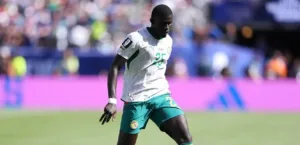
What distinguishes Morocco in this tournament is not only the qualification, but the way it reached it. The team did not rely on individual moments or exceptional circumstances, but rather played organized football based on defensive discipline, quick transitions, and the ability to exploit spaces with the fewest possible touches. And against Canada, the difference appeared in managing the details, as the Moroccan team knew when to press, when to calm the pace of the match, and when to deliver the decisive blow.
On the individual level, the Moroccan national team is no longer tied to one star. It is true that the presence of players such as Achraf Hakimi, Ibrahim Diaz, and Yacine Bounou gives the team great quality, but more importantly, the system has become able to distribute roles, so that a different player emerges in each match, while collective performance remains the constant element. Even when one of the stars does not score, the system is still able to produce opportunities and maintain its balance.
This development did not come from nowhere.
The Moroccan Federation has invested over the past years in infrastructure, developing training centers, and expanding the talent base inside and outside Morocco.
The team also benefited from the presence of a large number of players active in the strongest European leagues, which raised the level of competition within the squad and made the coach have multiple options in each position.
The team also gained clear experience in dealing with knockout matches.
In the current version, it overcame the Netherlands on penalties, then dealt calmly with the confrontation with Canada, which reflects a psychological maturity that was not available to many African teams in the past.
The team is no longer easily affected by pressure, but is now able to impose its personality even against teams with long World Cup experience.
One of the most prominent strengths is that Morocco has not lost its identity despite the change in the technical staff and some names.
The Moroccan national team is no longer competing to represent Africa in an honorable manner, but is now entering tournaments with the aim of competing for the title, which raises expectations for the rest of the continent’s national teams, which now see that reaching the advanced stages is no longer a distant dream.
Current indicators suggest that Morocco does not rely on enthusiasm alone, but rather on an integrated football project that has proven, during two successive tournaments, that it is capable of remaining among the world’s top players, and not just visiting them once.