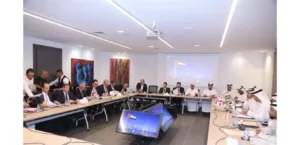
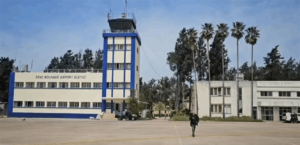
The workshop was attended by the Minister of Economy and Trade, Amer Al-Bassat, the Resident Representative of the United Nations Development Program in Lebanon, Belerta Aliko, the Director General of the Ministry of Economy, Mohamed Abu Haidar, and representatives of the Government of Canada and the Lebanese Ministry of the Interior and Customs, in addition to economic attachés, experts, representatives of the private sector and major exporters, as well as dozens of Lebanese, industrial and agricultural exporters in person and online.
In his speech, Al-Bassat said: “Today represents an important milestone in the economic relationship between Lebanon and the Kingdom of Saudi Arabia,” noting that the lifting of the ban on Lebanese exports and the launch of the first shipment from the port of Beirut to Jeddah “reflect the confidence of the Saudis in our options, and all of us, government and private sector, must live up to this confidence.”
He addressed exporters and all concerned parties by saying: “Lifting the ban does not automatically return us to the Saudi market, but rather we must rebuild confidence,” pointing out that the ban “was not related to the quality of Lebanese products, but rather to security, compliance and trust,” and that Lebanese products “had and still have an excellent reputation in the Saudi market.”
He pointed out that Lebanon enjoys strong historical and commercial relations within the Kingdom, and is characterized by a large and well-established community there, and that the Saudi market has witnessed significant growth over the past years, stressing that Lebanese exporters are returning today to a larger and more diverse market than before. Al-Bassat stressed that lifting the ban “also opens the door for re-shipping to the Gulf Cooperation Council countries,” noting that the land corridor through Syria, Jordan, and Saudi Arabia constitutes “our gateway to the broader Gulf market.”
He explained that returning to the Saudi market will not be easy, because competitors have filled the shelves, distribution networks, and supply contracts,” stressing that the mission today is “to restore our clients and customers.” He pointed out that the Saudi market has become more demanding in terms of compliance and control standards, stressing that meeting the new requirements requires additional effort from exporters and concerned parties, in light of logistical challenges related to transportation, crossings, and shipping costs.
He said that the government is working on “new crossings between Lebanon and Syria” and modernizing the ports of Beirut and Tripoli and Qlayaat Airport, and is also coordinating with the Syrian side “to facilitate crossing and reduce delays.”
He added: “We are coordinating with the Saudi authorities regarding implementation, and we are studying the establishment of a dedicated cell to facilitate exports,” revealing that the government is negotiating “fourteen agreements and memorandums of understanding with the Saudi side,” eight of which relate directly to the private sector and exporters.
He expected the return of exports to be “gradual” in the first phase, led by agricultural and food products, with Lebanese brands regaining their presence in the Saudi market in the coming years, hoping to once again reach export levels that exceeded half a billion dollars years ago.
He stressed that “failure is not allowed,” considering that the responsibility lies with the state and the private sector together “to cross this door with professionalism, compliance, and determination.”
He concluded by thanking the Government of Canada and the United Nations Development Program for their support for the initiative and the “National Trade Assistance Office,” which was established to support small and medium-sized companies and facilitate their trade path.