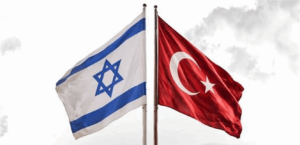
Israeli Foreign Minister Gideon Saar announced the severing of “all communications” with European Union foreign policy chief Kaya Kallas, in a new diplomatic escalation between Tel Aviv and Brussels against the backdrop of the war in Gaza and settlement violence in the West Bank.
Saar said that the decision came due to recent statements attributed to Callas, in which she compared Israel to South Africa during the apartheid period, in reference to reports that spoke of positions made by the European official during high-level talks in Mexico.
Callas responded to the Israeli Foreign Minister’s announcement with a post on the “X” platform, in which she affirmed that she values dialogue and communication with him, and that she is ready to continue this approach “respectfully and constructively.”
The European Union foreign policy official stressed that the European bloc remains committed to the two-state solution, and also reiterated its condemnation of the Israeli settlements in the West Bank, in a position that reflects the continuing European-Israeli dispute over Israeli policies in the Palestinian territories.
According to what was reported by the “Euractiv” website, during closed meetings in Mexico City, Callas compared Israel’s treatment of Palestinians in Gaza and the West Bank to the apartheid policies that were applied in South Africa until the early 1990s.
The website quoted officials and diplomats who participated in those meetings as saying that Callas spoke of being influenced by a visit she made last year to South Africa, which included the Apartheid Museum in Johannesburg. On the other hand, the Kalas team did not confirm or deny this information.
The crisis comes in the context of escalating tensions between Israel and the European Union, after the bloc decided last May to review the partnership agreement with Tel Aviv, against the backdrop of concerns related to human rights, military operations in Gaza, and settlement violence in the West Bank.
Callas had previously presented possible punitive options against Israel, including suspending the Association Agreement completely, restricting trade, imposing an arms embargo, or stopping visa exemptions, but these measures have not yet entered into force.
On the other hand, in May 2026, the European Union imposed sanctions on Israeli settlers due to acts of violence in the West Bank, in a move that reflected the rising level of European criticism of Israeli policies.
Sa’ar’s move reveals that the relationship between Israel and the European Union has entered a more tense stage, as the dispute is no longer limited to political positions or statements, but rather includes channels of diplomatic communication with the highest European foreign policy official.
Thus, statements attributed to Kallas turn from a political debate into an open diplomatic crisis, while the core of the dispute remains related to the future of Gaza, the expansion of settlement in the West Bank, and the limits of European pressure on Israel in light of the continuing war and increasing international criticism of Tel Aviv’s behavior.