“Lebanon Debate” – Political Editor
It is clear that the understanding, or even the attempt to reach an appropriate timing for negotiations between Washington and Tehran, is still not fixed and unclear yet, as all the facts open to various possibilities related to alleviating the interim tension and international relief for matters that are not directly related to the agreement between the two parties, nor even to the war itself.
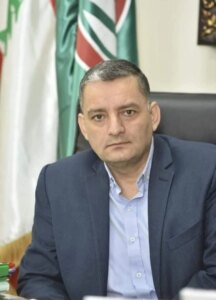
The European Commission’s legal advisor, Dr. Muhyiddin Shehimi, notes that the war began on the basis of three postulates: the zeroing of the Iranian nuclear project, ballistic missile capabilities, and Iranian armed arms outside Iran. However, the compass for the solution and temporary truces turned towards the issue of opening the Strait of Hormuz, which was not originally presented as a problem before the war, which indicates that the reasons for ending the conflict are still not available, nor are they a subject of agreement between the parties concerned.
Shehimi confirms that there is a huge difference between what Washington wants and what Tehran can provide in any understanding, revealing to “Lebanon Debate” that the terms offered by Iran are not at all consistent with the vision of the Trump administration, especially since the real demands of US President Donald Trump are, according to his description, “the break and defeat of the mullahs’ regime,” while this regime still presents itself with the narrative of the victor, which puts reality in the face of a war in which everyone claims victory, and dissipates the possibility of reaching a unified draft settlement. It defines the framework for negotiating behavior in the next stage.
Shehimi believes that the ambiguity, ambiguity, and contradiction in the approach to the memorandum of understanding between the two parties will push the world into a stage of “distorted uncertainty about what has actually been agreed upon.” He warns that what is happening is nothing more than a lull that Trump wants to keep pace with internal entitlements and celebrations in the United States, from the World Cup to his birthday and the 250th anniversary of the founding of the United States, while Iran is benefiting from this period to strengthen the cohesion of its regime, and the world is also benefiting from the decrease in pressure on oil prices and the easing of congestion in the Strait of Hormuz.
Therefore, Shehimi believes that if there is no agreement on fundamental points that constitute an entry point to an actual settlement, the world will remain immersed in a fragile phase of temporary truces that do not portend an end to the battles, but may even postpone them before they return and expand later.
On the Lebanese level, Chehimi notes that Lebanon stands today at the intersection of two contradictory projects: the project of a national state based on the constitution, sovereignty, and internationally recognized borders, and a cross-border project that derives its reference from the Iranian Revolution and the principle of “Guardianship of the Jurist,” which deepens questions about Lebanon’s true position in the regional equation, and about the state’s ability to restore its sovereign decision.
Shehimi conveys the perception of the party’s critics of the current crisis, who believe that the dispute is no longer limited to the party’s weapons, but rather has become linked to a broader concept related to the nature of the state, its borders, and its role.
According to them, the party does not deal with Lebanon as the final political framework for its activity, but rather as part of a broader strategic space led by Tehran and whose priorities are determined by its regional calculations.
In this context, Shehimi points out that the party links the continuation of its military and political options to regional developments, whether with regard to the confrontation with Israel or the Iranian-American negotiations, and what is reported about a memorandum of understanding that is being worked to be signed in Geneva.
On the other hand, Shehimi reveals the point of view of the party’s opponents, explaining that they believe that its association with the “state” turns Lebanon into an arena within the Iranian network of influence, and places decisions on war and peace outside the Lebanese constitutional institutions. This reality would raise a fundamental problem related to the concept of Lebanon’s political geography. While the Lebanese state is based on clear borders and internationally recognized sovereignty, “Hezbollah” adopts a vision based on the reference of the “state of the jurist,” where considerations take precedence. Ideological and cross-border strategy over traditional national considerations.
Accordingly, the party’s critics, according to Shehimi, consider that this approach weakens the concept of the state and marginalizes constitutional institutions, as Lebanon becomes part of a larger regional equation, not just an independent state that defines its own interests and choices. They also believe that clinging to weapons outside the framework of the state reflects the continuation of this logic, despite the transformations that the region has witnessed and the challenges that Lebanon faces internally.
As for the party itself, Shehimi confirms that it adheres to its discourse based on the priority of “resistance” and the necessity of maintaining elements of military force in the face of Israel, considering that these options constitute a guarantee of national security, while controversy remains over whether this approach strengthens state sovereignty or perpetuates duality of authority and decision-making.
This contradiction between the logic of the national state and the logic of regional axes leads to raising a major question mark about the ability of official Lebanon to re-establish the concept of sovereignty as a unifying reference for all Lebanese, or whether the country will remain an arena contested by political geographies that exceed its borders.