In controversial testimony that reopened files from the most sensitive stages in Syria’s modern history, former Syrian Air Force officer Abdul Ghani Qassas revealed details related to a coup attempt prepared against the late Syrian President Hafez al-Assad in the early 1980s, in addition to allegations regarding chemical experiments conducted on political prisoners during that period.
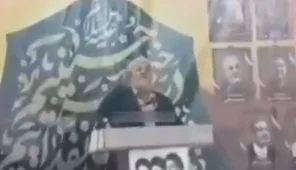
Qassas’s statements came during his hosting of the “The Syrian Story” program on the “Syrian News” channel, where he talked about his participation in planning the coup attempt, which he said extended between 1979 and 1982, with the participation of dozens of officers in the Syrian Air Force, most of whom were from Damascus.
He explained that the late Brigadier General Nazir Al-Saqqa was one of the most prominent officials responsible for organizing and preparing the attempt, noting that the plan was exposed as a result of “snitching,” which led to the implementation of a massive and simultaneous arrest campaign against all participants, before subjecting them to harsh investigations within the Air Force Intelligence branches.
In the most sensitive part of his testimony, Qassas spoke about chemical experiments that he said were carried out on political prisoners after they were transferred from a detention center to the Mezzeh Military Airport, where they underwent medical examinations before being informed that they were on their way to release.
According to his account, the prisoners were later transferred to the Abu Al-Shamat area, where some were placed inside trenches and others in closed rooms, before being exposed to chemical gases in order to monitor their effects.
He pointed out that five prisoners were placed inside a closed room and exposed to the nerve gas “Sarin,” which, according to his account, led to auditory and visual hallucinations that led them to harm themselves and assault each other.
He added that prominent security officials at the time, including Ali Mamlouk, Ibrahim Hawija, and Muhammad Al-Khouli, were supervising the follow-up of the experiment from outside the room.
Qassas also recalled the details of his arrest, saying that he was tortured during investigations before being transferred to Saydnaya prison, where he spent many years in detention before his release in 1999, after about 17 years of imprisonment.
This testimony comes at a time when files related to previous periods of Syria’s history continue to be uncovered, amid growing interest in documenting the violations the country has witnessed over the past decades.