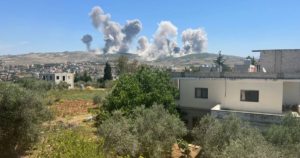
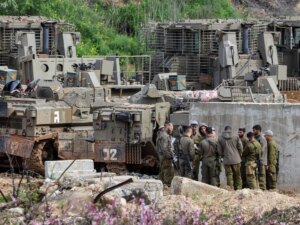
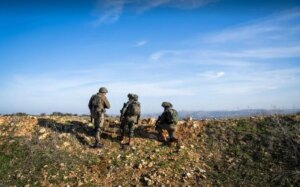
At a time when Israeli military operations are continuing inside Lebanese territory, the Israeli newspaper “Walla” revealed details of what it described as the “new security zone” that the Israeli army is working to establish in southern Lebanon, based on a field reality based, according to the Israeli narrative, on the absence of residents from a large number of southern villages and towns, allowing wide freedom of movement for Israeli forces and targeting Hezbollah’s military structure.
According to a report by journalist Amir Bouhbut on the Walla website, one of the most prominent components of the Israeli military maneuver currently underway is the establishment of an advanced security system outside Israel’s borders inside southern Lebanon, in an area that the Israeli security establishment says allows preventing the establishment of military infrastructure and preventing any future infiltrations or attacks by Hezbollah.
The report indicated that the main difference between this plan and what was known as the “security belt” before the Israeli withdrawal from southern Lebanon in 2000, is that the targeted area today is “devoid of civilians,” at a time when the Israeli army continues to control large areas and work to remove what it describes as Hezbollah’s military structures.
The report quoted an Israeli security source as saying that “Bint Jbeil and Qantara today resemble Beit Hanoun,” noting that Israeli military engineering units are currently operating in more than 60 villages and towns in southern Lebanon, including areas around the city of Tyre, which he said have been “emptied of their residents.”
According to the report, the Israeli army attaches special importance to controlling the heights of Tal al-Tahir, where Beaufort Castle is located, as it is a strategic point that grants broad supervision over the region and limits, according to Israeli estimates, Hezbollah’s ability to monitor and launch missiles and drones towards Israel.
The report also considered that the Israeli military presence in these highlands may contribute to reducing smuggling operations between Syria and Lebanon. An Israeli officer familiar with the details of the operations was quoted as saying, “Hezbollah tried with all its might to prevent the military maneuver in the vicinity of Shaqif, and when it failed, it began to express its frustration by launching missiles, drones, and drones.”
The report added that the second pillar of the Israeli plan is based on maintaining “complete freedom of action” against Hezbollah and its infrastructure in southern Lebanon, while the third pillar is seeking to dismantle what the report described as the close relationship between Iran and Hezbollah, including the headquarters and infrastructure shared between the two sides.
On the other hand, the report indicated that there is an obstacle to the implementation of this plan, represented by American opposition to any Israeli military operations inside Beirut, in light of the ongoing negotiations between the Lebanese and Israeli governments.
He also pointed out that the Israeli security establishment does not ignore the growing criticism in northern Israel as a result of the continued firing of missiles and the operation of drones against Israeli forces and northern settlements, stressing that Israeli officials consider that the threat does not constitute an existential threat, but at the same time they acknowledge the existence of operational gaps that they seek to address quickly.
The report concluded by noting that Israeli security circles consider that the ongoing operations in southern Lebanon, the Gaza Strip, and Syria establish a new security concept based on establishing advanced defense systems inside adversary territories instead of being limited to border lines. Meanwhile, circles within the security establishment describe this stage as a “new security reality” that Israel must adapt to, stressing that the Israeli army does not intend to withdraw from the areas it controls in Gaza, Lebanon, and Syria, which forces the General Staff to prepare plans. Long-term operations for the coming year on various fronts.