“Lebanon Debate”
The visit of French envoy Jean-Yves Le Drian to Beirut next week is of exceptional importance, amid growing talk about international arrangements being prepared in the next stage.
In this context, writer and political analyst Ali Hamadeh believes, in an interview with “Lebanon Debate,” that “Le Drian’s visit goes beyond traditional political files, to focus mainly on preparing for the period after the end of the mandate of the UNIFIL forces in southern Lebanon.”
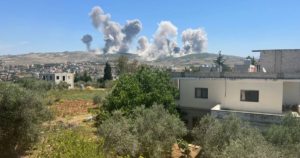
According to Hamadeh, this file has become one of the most prominent elements of French foreign policy towards Lebanon, in light of Paris’s growing conviction that it does not have the actual ability to stop the ongoing war in the south, whether through diplomatic tools or political pressure, especially since the confrontation is being waged directly between “Hezbollah” and Israel, while the role of the Lebanese government and the United Nations in this context has practically been bypassed.
He points out that Le Drian’s focus for weeks, specifically since the renewed military escalation last March, has been on working and preparing to form a new international force that may be deployed in southern Lebanon, and perhaps also on the eastern border with Syria, to be an alternative to the UNIFIL forces.
According to Hamadeh, this approach is presented against the background of considering that the mission of UNIFIL has practically ended, after it has transformed, according to observers’ description, into a force whose primary mission is to count violations from both sides, without an actual ability to control the territory or prevent security deterioration.
He explains that “this proposal is based on what some consider to be a failure to prevent Hezbollah from establishing infrastructure and military sites within the UNIFIL area of operations, which made the area, according to this reading, completely subject to the party’s influence, before things spiraled towards a broad military confrontation with Israel.”
Hamadeh stresses that “France seeks to play a fundamental role within any new international force that may be established in the future, but this matter remains directly linked to the American position, as it is not possible, according to estimates, to form or deploy such a force without American sponsorship, decision, and guarantees, even if it includes French or European units.”
He considers that “the political positions and statements made by Le Drian during his visits to Lebanon, related to economic reforms or the financial and banking situation, are considered, according to this approach, to have a limited impact, in light of the priority of the security and military file at the current stage.”